
RFQ means request for quotation. Outsole quotations are difficult to compare when buyers have not agreed the sneaker use, construction, material reference and sample checks. Fix those inputs before comparing material or tooling prices.
Compare outsole options against the approved shoe sample, measurement records, material confirmations and the evidence behind each quotation.
Use the material and tooling checks below to prepare one outsole specification, compare itemized quotes and retain the sample approval for reorders.
For importers and private-label footwear brands, keep the outsole request quote-ready: agree the construction and material reference, request the relevant proof, and record sample and reorder approvals.
What buyers should confirm before choosing casual sneaker outsole material
The material name alone does not define an outsole. Buyers need one approval record that connects intended use, compound reference, construction route, sample evidence, and quote assumptions. Acceptance conditions should come from the buyer’s market, product brief, and applicable test method rather than a generic supplier default.
| Specification | Acceptable range or condition | approval risk | Verification check | buyer follow-up |
|---|---|---|---|---|
| Use environment | Defined surface, climate, wear expectation, and price tier for the intended channel | An unsuitable compound may wear, slip, compress, or age differently from the sample expectation | Link the buyer use brief to the style and sample revision | Compare only material routes evaluated for the same application |
| Compound and construction | Approved material family, compound code, color, molding route, and bonding method | A visually similar substitute can change weight, wear, finish, or bond performance | Review the material data sheet, process route, and approved sample reference | Lock the accepted combination in the signed specification |
| Performance criteria | Buyer-defined abrasion, flex, adhesion, and slip requirements where relevant | Appearance-only approval can miss early field failure | Record method, specimen, result, and acceptance limit beside the sample ID | Hold approval until applicable evidence is complete |
| Tooling and size coverage | Mold ownership, cavity and size coverage, revision allowance, storage, and replacement responsibility | Unpriced or unverified tooling can create size variation and reorder cost | Check the tooling schedule and required size samples | Separate one-time tooling from repeat-order cost |
| Commercial program | Category, style, colorway, size run, material, packing, and schedule confirmed in the quote | A headline MOQ can hide allocation or component constraints | Compare the RFQ response with KEYTOP’s casual sneaker MOQ of 1,000 pairs for one style, one color and one size; styles, colors and sizes cannot be mixed to reach this minimum | Confirm that each style, color and size meets the minimum; they cannot be mixed to reach it |
Keep material checks separate from checks on the finished shoe. The SATRA TM92 scope makes that distinction explicit for flexing: a whole-shoe result does not replace a test of an isolated material. Ask the supplier or laboratory to identify which result answers the selected compound, construction or assembly question, and agree the acceptance criteria before testing.
This record helps the buyer check whether a low unit price reflects a different compound, an unpriced mold, or a test limit that was never agreed. It also gives the QC team a repeatable reference for bulk production and reorders.
Use the What buyers should confirm before choosing casual sneaker outsole material table to lock one measurable construction and finish basis. The sample record should show the accepted material, width, color or artwork, and packing reference so production is judged against the same physical target.
Which casual sneaker outsole material category fits the buyer’s channel
Use the channel and failure risk to narrow the material family, then ask the supplier to confirm the exact compound. EVA, rubber, TPR, and TPU are categories with many formulations; no category name guarantees a specific wear, grip, weight, or bonding result.
- Weight-sensitive casual programs: ask whether an EVA-based route can meet the buyer’s comfort, compression, abrasion, and bonding requirements. Approve the compound only after the buyer-defined test record matches the sample.
- Wear-intensive or outdoor-facing channels: compare rubber or other suitable compounds using the same abrasion method and acceptance limit. The report must state the method, result, specimen, and date; “tested” without those fields is not evidence.
- Molded lifestyle programs: compare TPR or TPU routes for finish, flexibility, grip, tooling, and bond preparation. Confirm whether color and surface texture can be repeated across sizes and production lots.
- Retail programs with slip requirements: define the relevant surface, contaminant, footwear condition, test method, and pass limit before sampling. A generic slip-resistance certificate does not establish fitness for every market.
Reorder-sensitive programs: require a compound identifier, approved color reference, retained sample, and change-notification rule so the next lot is not approved against memory.
The shortlist should show why a material route fits the intended use and what evidence will release it. If the application changes, the buyer should reopen the test and quote assumptions instead of carrying the old approval forward.
Review casual shoes products.
RFQ checkpoint
Share the shoe reference, outsole construction and material direction, size run and quantities so the quotation and sample inputs can be reviewed.
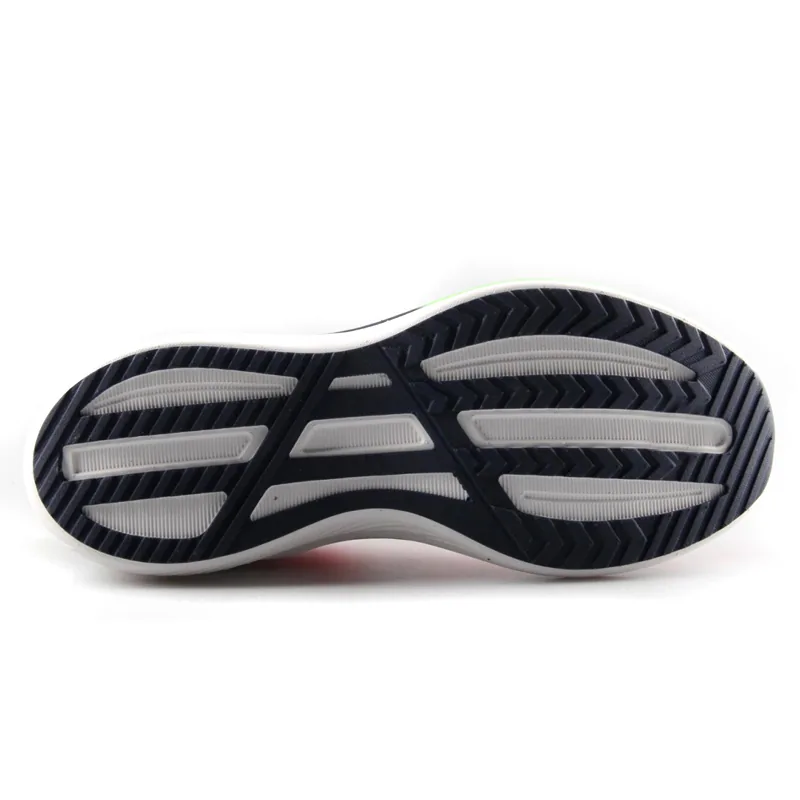
What casual sneaker outsole material specs buyers should confirm before sampling
Put every candidate on the same comparison sheet. Test values are not universal recommendations: the buyer or qualified test party must select the method and limit for the intended market and application.
| Specification | What can go wrong | Verification record | Buyer decision |
|---|---|---|---|
| Compound identity and color | A visually similar substitute changes weight, wear, bonding, or finish | Supplier material code, data sheet, color reference, and approved sample ID | Accept only the documented compound or a separately approved substitution |
| Abrasion performance | Premature wear creates returns even when the sample looks acceptable | Named test method, specimen details, measured result, and buyer-defined limit | Compare candidates tested under the same method and conditions |
| Flex performance | Cracking can appear after repeated bending or at low temperature | Method, conditioning, cycles completed, failure observation, and sample ID | Set the limit for the actual use case; do not copy a number from another shoe |
| Upper-to-outsole bond | An incompatible primer, cement, or surface preparation causes delamination | Material pairing, preparation route, peel-test method, result, and failure mode | Approve the full material-and-process combination, not the outsole in isolation |
| Size and mold coverage | One approved size hides cavity, shrinkage, or finish variation across the run | Mold list, size-run samples, dimensions, weight checks, and deviation log | Define which sizes need physical confirmation before bulk release |
Packing and aging conditions. Heat, moisture, compression, or migration changes finish or bonding after packing; Buyer-defined conditioning or packing trial and observation record; Add the check only where the channel and material combination requires it.
For standards, distinguish the product test method from the lot-sampling plan. A footwear test method describes how a property is measured; ISO 2859-1 describes an acceptance-sampling framework for inspection by attributes. It does not choose the outsole’s performance limit for the buyer.
Use solutions for the applicable product specifications and RFQ inputs.
How outsole construction changes tooling, bonding, and quote assumptions
During quote review, verify that the outsole construction method is documented with tooling ownership, bonding route, and cost breakdown before shortlisting the supplier. Missing these details can hide one-time tooling costs or bonding risks that affect reorder pricing.
- Confirm who owns the tooling and whether mold-change costs are included in the quote or charged separately.
- Check the bonding method (cemented, vulcanized, injection) and whether the factory has proven compatibility with the selected outsole material.
- Request a quote that separates one-time tooling costs from per-pair material, labor, and packing costs.
- Verify that the MOQ and lead time assume the chosen construction method and tooling availability.
Tooling ownership and mold-change assumptions
If the factory owns the mold, confirm the mold life and revision allowance. If the buyer owns it, confirm storage and maintenance terms. Mold-change costs often reset the unit price. For a material comparison that affects tooling choice, see Footwear Outsole Materials Comparison PVC, PU, TPU, EVA. Ask: ‘What is the cost and lead time for a mold change?’
Bonding route and material compatibility
Not all outsole materials bond well with all upper materials. For example, certain EVA compounds require primer or a specific cement. Request a sample bond test report before bulk production. For bonding and material compatibility specs, refer to OEM and ODM footwear manufacturing. The bonding failure risk is delamination and returns.
Quote inputs that separate one-time and repeat costs
A complete quote should list: mold fee, sample fee, per-pair material cost, labor, packing, and any surcharges (e.g., custom color). This allows you to compare initial vs. repeat order costs. Without separation, a low first order may hide high reorder costs.
What test evidence should support outsole approval
A useful report lets another reviewer identify the sample, reproduce the method, read the result, and see who accepted it. Ask for a de-identified record where commercial confidentiality matters; buyer names, logos, and order numbers are not required to prove that a control exists.
- Define the property to verify and the failure it is intended to prevent.
- Name the test method, conditioning, specimen, equipment or laboratory, and buyer-defined acceptance limit.
- Link the result to the sample ID, compound code, bonding route, and report date.
- Record the measured result, pass/fail decision, reviewer, and any approved deviation.
Carry the same applicable criteria into in-line control, final inspection, and reorder comparison.
Wear, flex, and adhesion evidence to request
Abrasion, flex, and adhesion are separate questions. The abrasion record should identify the method and material loss result; the flex record should show conditioning, cycle result, and observed failure; the bond record should show the material pairing, preparation route, measured result, and where the failure occurred. A supplier summary without sample identity or raw result should remain pending.
Sample approval limits
| Report field | Illustrative report template (fictional identifiers) | Why it matters |
|---|---|---|
| Sample and material reference | Style CS-01, outsole compound R-02, sample revision C | Stops a result from being reused for a different compound or revision |
| Method and conditions | Buyer-selected method; conditioned sample; equipment ID recorded | Makes results comparable and auditable |
| Acceptance limit | Value supplied in the buyer’s specification | Keeps the supplier from setting its own pass line after testing |
| Measured result and observation | Numeric result plus crack, wear, or bond-failure location | Shows what actually happened instead of only “pass” |
| Disposition | Accepted, rejected, or deviation approved by named role and date | Creates an accountable production handoff |
Shipment release records
Final inspection should confirm lot identity, visual and dimensional checks, applicable performance evidence, deviations, and corrective action before shipment. ISO 2859-1 may support the agreed attribute-sampling plan, but the buyer’s product specification or applicable market requirement still defines what counts as a defect and which performance limit applies. Keep the release record with the retained sample so the next reorder can be compared against the same baseline.
For related specifications, sample inputs, and RFQ details, review KEYTOP factory.
- Decision matrix: choose the casual sneaker outsole material route only after product fit, customization scope, quote assumptions, sample approval, and reorder control are comparable.
- Best-for check: match the casual sneaker outsole material route to the use case and approved specification before comparing price.
- Outsole comparison: record the proposed compound, tooling responsibility, sample checks, itemized price assumptions and reapproval triggers for material changes.
In conclusion
Approving a casual sneaker outsole material comes down to checking the spec against your channel’s wear and cost requirements, verifying the supplier’s test evidence, and documenting the quote inputs before sample handoff. Compare the outsole’s abrasion, flex, and adhesion test limits against your target price and MOQ, then confirm that the mold ownership, bonding route, and per-pair material cost are itemized in the quote. Without these checks, a low first order can hide tooling costs or delamination risk that erodes margin on reorders. Shortlist only suppliers that provide written test standards and acceptance values, and record the approved limits on the sample form so the production QC team uses the same benchmark.
For bonded constructions, ISO 17708:2018 describes a whole-shoe method for evaluating upper-to-sole adhesion. Use the standard to specify the test method, while keeping the buyer’s acceptance value tied to the product, material system, and market requirement.
To request a quote, visit casual sneakers products and confirm the final specification, quote assumptions, sample approval, QC evidence, approval risk, and supplier follow-up before bulk order.
Casual sneaker outsole material FAQ
What should buyers specify before requesting a casual sneaker outsole quote?
State the intended use and approved sneaker reference, then identify the outsole compound, construction, size run, tooling route and bonding assumptions. Ask the supplier to itemize the material and tooling basis of the quote, return exceptions in writing and provide the sample or test evidence needed for approval.
Which MOQ and timing assumptions belong in an outsole quotation?
Compare an itemized total, not the pair price alone. Separate material, labor, tooling, sample, packing, testing, freight assumptions, and change charges. KEYTOP’s standard production range is 35–45 days after specifications, sample approval, material assumptions, packing, and the production slot are confirmed; a route that requires new tooling or unresolved testing should not be presented as having the same readiness.
What sample, quality, or supplier checks reduce risk?
Keep a sample-linked record for compound identity, color, abrasion, flex, adhesion, mold coverage, and deviations. Ask for incoming-material, in-line, and final-inspection checkpoints. Where ISO 2859-1 is used, document the agreed lot-sampling plan separately from the buyer’s product performance criteria. Release production only when the sample, report fields, and signed specification refer to the same revision.
To request a quotation, share the intended shoe, outsole construction and material reference, size run, quantity by variant, tooling needs, packing and target date. Ask the supplier to identify assumptions that remain open before sampling. Send Specs for Review.
Updated October 12, 2026: clarified the buyer approval questions and the illustrative example and resource links.