
An outsole for shoe branding needs a route decision before a tooling quote: use a mark on an existing sole, change a logo insert, or commission a new outsole mould.
Compare the actual tool scope, quote items, ownership terms and approved sample records so the footwear order and a later reorder use the same assumptions.
Direct answer: Compare an applied mark, a defined tool or insert modification, and a fully new mould. Confirm the proposed method on the selected material, separate tooling and pair-price assumptions, and record tool-use and sample approvals before ordering.
What "branded outsole" can mean, and what it commits you to
An applied logo and a newly tooled outsole can look similar on a finished shoe while carrying different development commitments. Compare the base sole, proposed marking method, affected tool parts and approval samples before accepting the quote. An ownership question also remains if production later moves to another supplier.
The visible difference on the finished shoe is often small. The difference in what you have signed up for is not. Decide which of these three routes you are buying before the sample stage, because after the mould is cut the decision is expensive to reverse.
Use this branding-route comparison table to compare the tooling, ownership and approval trade-offs for your order.
| Route | Best fit | Tooling and cost impact | Risk to avoid | How to verify | Buyer follow-up |
|---|---|---|---|---|---|
| Applied mark on an existing sole | A programme that can use an available sole | Ask for artwork, fixture and marking setup charges; confirm whether any tool changes | Approving a method without seeing it on the chosen material | Review the actual-material sample and agreed marking checks | Record the sole reference, artwork revision and approval criteria |
| Modified mould or replaceable insert | A suitable base sole with a defined logo-area change | Separate the base tool from the insert or modification and quote each required change | Assuming the buyer owns the base mould as well as the modification | Ask for the marked drawing, size coverage and trial sample | Record ownership and use terms for each relevant part |
| Fully new mould | An outsole design that the available tool cannot produce | Request a tooling specification, itemised charge and dated trial schedule | Funding a tool without defined scope or transfer terms | Approve drawings, size coverage, fit and trial-sample evidence | Agree tool ownership, storage, maintenance and transfer terms |
For every route, ask what happens to the base tool, any buyer-specific insert and the artwork if the supplier changes. Record the agreed ownership, permitted use and transfer terms before approving the relevant charge. The appearance of the logo cannot establish those rights.
SATRA’s TM362 method addresses abrasion of footwear soles. Agree separately how the proposed logo will be assessed on the selected sole; a sole-abrasion method does not by itself define your logo-appearance acceptance criteria.
Match the selected outsole to the complete footwear products and its ordered sizes before asking which branding route fits. A logo proposal alone does not settle the sole-to-upper fit.
Routes that use an existing outsole
An existing outsole is a useful starting point when its shape and size coverage fit the order and the proposed logo can be approved on its actual material. Agree the relevant wear assessment with the supplier; SATRA’s sole-abrasion scope illustrates a method for the sole, while logo appearance needs its own acceptance criteria. Record which tool changes, finish checks and setup charges the quotation includes.
| Requirement | Supplier confirmation | Evidence to verify | Order risk | RFQ follow-up |
|---|---|---|---|---|
| Branding route | Identify the actual sole, proposed process and tool or insert change | Annotated drawing and sample made using the proposed route | The quote and approved sample may describe different work | Separate artwork, setup, insert and mould charges |
| Artwork and position | Confirm revision, dimensions, location and appearance on the selected sole | Approved artwork file, marked sole drawing and clear sample photographs | An unrecorded revision can reach production | Include the approved file reference and open questions |
| Material and finish | Confirm the proposed material and the relevant marking checks | Actual-material sample and agreed inspection or test criteria | Evidence for one material may not establish approval for another | Ask what evidence supports the selected material and method |
| Size coverage and fit | Identify the soles and tool parts needed for the ordered sizes | Size coverage map and fit checks against the selected upper and last | One approved size may leave other ordered sizes unresolved | Quote the required sizes and identify additional tool work |
| Handling and packing | Confirm how approved samples and production marks will be protected and identified | Agreed packing instructions and labelled sample records | Mix-ups or handling damage can invalidate the comparison | Include identification and handling requirements in the handoff |
Printing, engraving, and applied logos
Ask how the proposed logo will be made on the chosen outsole, rather than accepting “custom branding” as a process description. For casual shoes products, request the sole reference, an annotated logo position, the proposed marking method and a sample on the actual material. The supplier should identify any insert, fixture, artwork setup or new-tool charge in the quote.
Durability and how each wears
Approve the mark on a physical sample, including its position relative to tread features and flex areas. Agree the relevant wear or adhesion check, test conditions and acceptance criteria with the supplier before testing. A method name alone does not establish how long a logo will remain legible; retain the approved sample and its inspection record for comparison with production.
Private-label programme
Connect the selected sole, artwork, size coverage and tooling scope with the complete footwear specification.
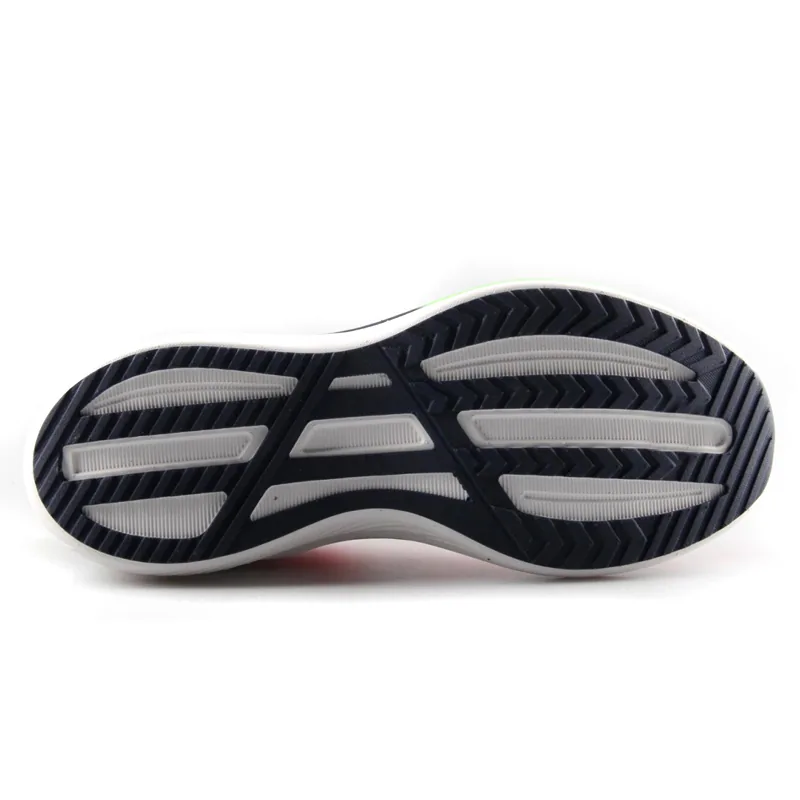
Routes that need new tooling
For footwear products, distinguish a change to an existing tool from a new outsole design. A supplier may propose an insert or another modification when the base geometry remains suitable. Ask which parts of the tool change, which sizes are affected and whether the proposed sole still fits the selected upper and last. A new design needs its own drawing, tool specification and trial-sample approval. Quote the affected tool parts and any re-trial work separately before approving a change; otherwise the approved route and its price basis may differ.
Modified mould versus a fully new one
Request a dated schedule for the actual tooling route. Separate drawing confirmation, tool work, first trial, sample review and any revision round. A generic two-week or eight-week estimate cannot establish your delivery date. Ask what starts the clock, which inputs you must approve and which milestones could move the production slot.
Below is a summary of the two routes and their typical implications:
| Route | Tooling change | First-sample milestones to obtain | Key buyer check |
|---|---|---|---|
| Modified mould or insert | Identify exactly which part changes and which base tool is reused | Drawing confirmation, modification, trial sample, review and any revision | Ask for a dated schedule and approval dependencies |
| Fully new mould | Identify the new design, required tool parts and size coverage | Design approval, tool work, first trial, fit checks and any revision | Ask what is included in the charge and what starts each milestone |
Verify fit and branding after the proposed tool change on the sizes relevant to the order. Ask the supplier to record dimensional checks, logo position and any open deviations against the approved drawing and sample. Reusing a base tool is useful evidence, but it does not replace approval of the changed part.
What the lead time looks like for each
Compare the supplier’s dated schedule for the work actually proposed. Identify drawing approval, tool or insert work, first trial, fit checks, sample review and any revision allowance. Ask which approvals are prerequisites and how a change affects the schedule. If the launch date is fixed, request a feasible route and its outstanding dependencies rather than deriving a delivery date from the mould category.
Include the selected upper, last and size coverage in the solutions so the trial checks the complete shoe rather than an isolated logo insert.
Mould cost, ownership, and where it sits on the invoice
The itemised tooling quote and written use agreement should identify the same assets. Compare that record with the drawing, sample approval and proposed storage arrangement before paying; an unnamed insert or missing file can delay a later supplier transfer.
- What does this tooling payment cover? Ask for each artwork, setup, insert and mould item, its quantity and payment basis. This separates overlapping charges and helps avoid paying for the same tool twice. Retain the itemised quote with the approval record.
- Which tool parts and files can we own, use or transfer? Request written terms naming the base mould, buyer-specific modifications and technical files. This exposes a transfer restriction before it can delay production; ownership alone does not demonstrate compatibility at the receiving factory.
- What evidence supports this proposed process? Request shareable trial results for the material and tool scope, including sample photographs, fit measurements and agreed logo checks. Record unresolved deviations before approving work so an untested change does not become a production defect.
Amortised into unit price or charged separately
Ask for the tooling charge as a separate quote item and, if offered, as an allocation in the pair price. Record the volume assumed, when the charge is considered paid and whether later orders still include it. Compare like-for-like totals so an artwork fee, insert fee or new-mould charge is not counted twice.
What ownership actually gets you at supplier change
Documented ownership is one part of a supplier-transfer decision. Confirm whether transfer is permitted, which physical tool parts and files are available, and what the receiving supplier needs to assess. A transfer may involve transport, adaptation, setup or new trials; ownership alone cannot establish compatibility or remove those costs.
Check the KEYTOP factory against the entity named in the tooling quote and agreement. Ask who will make, store and maintain the actual tool, including any outside mould shop, before approving payment.
Volume that justifies tooling
Put the tooling payment basis and reuse terms into the quote before comparing per-pair prices. Ask whether the charge is upfront, allocated across an agreed quantity or included in another item, and how it changes on a reorder. Keep the quoted amount and payment schedule separate from the ownership and permitted-use agreement.
The order size where a custom mould pays back
Compare tooling investment against the volume you can support, including realistic repeat-order assumptions. Ask each supplier how the quoted tooling charge is allocated to the first order and reorders, and when that allocation ends. Keep the shoe-order minimum, the tooling charge and the volume forecast as separate quote inputs.
How reorder assumptions change that maths
Request reorder prices for the quantities and size mix you are likely to buy. Ask which costs change when the quantity, compound, colour, sole size or artwork changes. Record the agreed tooling-payment and reuse terms so a smaller reorder is not evaluated using an unconfirmed first-order assumption.
| Checkpoint | Buyer verification question |
|---|---|
| Mould cost per pair | What is the mould cost per pair at the quoted MOQ? |
| Reorder volume | Does the unit price change if reorder volume is below initial MOQ? |
| Mould ownership | Who owns the mould after the first production run? |
Agree the defect definitions, inspection method and dimensional tolerances for the selected outsole. A sampling plan determines which items are inspected and the acceptance decision; it does not define a go/no-go fixture or a measurement tolerance. Keep the sampling reference and the product-specific inspection criteria together in the approval record.
For a retail footwear sourcing, separate the initial store allocation from quantities you can support on a reorder. Quote the planned size mix for each run; an optimistic repeat-order forecast should not stand in for a confirmed tooling-payment basis.
IP and approval steps on a branded sole
Confirm that the brand owner has supplied or authorised the logo artwork and that the proposed use of the base outsole and tool is permitted. If trademark clearance is needed, obtain the appropriate review for the intended market. A database search is a research step, not permission to use another party’s mark; the USPTO guidance on trademark confusion illustrates why clearance considers related goods as well as the mark’s appearance.
What to confirm before artwork goes to the mould shop
- Artwork rights and permitted use: Identify the artwork owner, approved revision and the use authorised for this order. Record any licensing or confidentiality terms that apply.
- Artwork clearance: Obtain the brand owner’s confirmation that the requested use is authorised. Seek the appropriate professional review where market-specific rights need to be checked.
- Tool and artwork compatibility: Ask the supplier to confirm the required line detail, spacing, relief and location for the actual proposed tool and marking method. Record any requested artwork changes and approve the resulting sample.
- Material and finish approval: Request the proposed marking method on the actual outsole material and agree the relevant appearance and durability checks before approval.
Approval evidence to keep for later production
Retain an approval record covering the following items for the actual proposed route. Link it to the quote and artwork revision so both teams can identify what was approved and which deviations remain open.
| Evidence item | Purpose |
|---|---|
| Signed artwork approval (with date and version number) | Records approval of the artwork revision for the actual proposed sole and branding scope |
| Mould trial report (first shot sample) | Records the observed trial result against the agreed appearance and dimensional criteria |
| Colour standard chip (if applicable) | Provides a physical reference for the branded colour on the outsole |
| Agreed sampling plan and product-specific inspection record | Verifies that the branded outsole meets dimensional and visual criteria during production |
Retain the drawings, artwork revision, trial-sample photographs, approval record and agreed inspection criteria in one accessible handoff file. These records support a later reorder or supplier transfer. The receiving supplier still needs to assess tool compatibility and any new setup or trial work before accepting the job.
For an ecommerce brands solutions, use product photographs that match the approved artwork revision and actual sole sample. If a logo or sole detail changes before launch, identify which sample approval and product image need review before using them.
Deciding the route before sampling
Before approving a tooling charge, record the proposed route, who pays for each tool or insert, who owns it and what use or transfer rights are agreed. Distinguish the base mould from a buyer-specific modification. Keep those terms with the quote and sample approval so the team can check the same assumptions when ordering again.
Route decision checklist for the sample request
- Specify outsole branding type: engraved, embossed, debossed, or applied logo.
- Confirm mould cost and whether it is amortised per pair or paid upfront.
- Define mould ownership in writing: buyer-owned, factory-owned with exclusivity, or shared.
- Request the supplier’s declared tooling-maintenance, storage and reuse assumptions for the proposed tool.
What to ask the factory to confirm back
Ask the supplier to confirm the actual tool or insert specification, the dated trial-sample schedule and the quoted charge. Record ownership, authorised use, storage, maintenance and transfer terms for the relevant parts. Link this record to the artwork revision and approval sample before releasing tooling work or production.
Bring the chosen branding route, sole reference, artwork revision and tooling questions to the sample request. Each approval should identify the same proposed work and the evidence still outstanding.
Sampling reference: ISO 2859-1:2026 addresses acceptance sampling by attributes for lot inspection. Select the applicable sampling scheme separately from the outsole drawing, measurement method and agreed defect criteria.
Use the private label footwear programs sourcing solutions page to connect the outsole decision with the wider footwear specification, sample approval and quote handoff.
In conclusion
Choose the branding route before committing to tooling. The useful comparison is the supplier’s written scope: the sole reference, proposed mark, tool or insert change, quote items, size coverage, ownership terms and sample evidence. Keep the approved artwork and physical sample linked to that scope so the next order can be reviewed against the same record.
Review private label footwear programs to connect the outsole scope with the complete shoe specification, quantity by size and colour, sample approval and quote handoff.
FAQ
Does a branded outsole always require a new mould?
Ask for a written assessment of the artwork and the selected sole. An existing outsole may accept an applied mark or a change to an insert, while a different sole geometry may require new tooling. A raised or recessed logo does not by itself establish which tool is needed; the supplier should identify the actual proposed route.
Who owns the outsole mould after the tooling fee is paid?
Ownership and use rights depend on the written agreement. Record who owns the base mould and any buyer-specific insert or modification, together with storage, authorised use, maintenance and transfer terms. Paying upfront or through the pair price does not, by itself, tell you what rights have been agreed.
What volume justifies custom outsole tooling?
Compare the tooling charge with realistic first-order and reorder quantities rather than using one universal break-even volume. KEYTOP’s confirmed shoe-order minimums are 1,000 pairs per style, colour and size for casual sneakers, casual shoes, boots and outdoor footwear, and 1,500 pairs per style, colour and size for sandals, slippers and slides. These are footwear-order minimums; a custom outsole or tool still needs a separate scope and quote.
Can branding be added to an existing outsole?
It may be possible, depending on the actual outsole, material and marking method. Ask the supplier which existing sole is proposed and what setup, insert, fixture or tooling change is required. Approve a sample using the chosen material and artwork; confirm the cost and schedule instead of assuming an existing sole removes every tooling charge.
What should buyers verify before approving outsole shoe branding?
Check the artwork revision and scale, the sole reference, the position and appearance of the mark, and the agreed inspection criteria. If tooling is involved, retain its scope and ownership record. Approve the sample and record open deviations before production, then use the same evidence when reviewing a reorder.
Send the chosen sole, logo artwork and open tooling questions for supplier review: Send Specs for Review.