
Moving from an approved sample to bulk production needs a written specification covering the use case, specs, MOQ, sample approval path, and supplier quote process; otherwise suppliers may quote different product and approval assumptions.
This guide maps approved sample specifications and evidence to comparable sample requests and RFQ fields.
Direct answer: Release bulk production only after the specification, application fit, sample route, quantity rule, and supplier exceptions have been confirmed in writing.
Which approved sample vs production quality gates buyers should control
The approved sample is the pass line for bulk production. Every later check should answer one question: does the shipped lot still match the revision the buyer signed, or has it quietly become a different product?
A written sampling basis makes that question concrete. The ISO 2859-1:2026 sampling inspection standard provides AQL-indexed plans for inspecting production lots by attributes. Agree the lot definition, inspection level, defect classes, selection method and acceptance/rejection numbers before inspection. Agree construction-specific performance methods separately. Acceptance of a lot under a sampling plan does not prove that every unit in the lot is defect-free, and this reference is not a claim that KEYTOP is certified to the standard.
| Specification | Acceptable range | approval risk | Verification check | Next action |
|---|---|---|---|---|
| Construction and stitching | Matches the signed sample stitch pattern and panel alignment | Loose or skipped stitching reaches bulk and the pair fails final inspection | Compare the first bulk piece with the retained sample | Freeze the construction in the RFQ |
| Upper-to-sole bonding | Agreed method, specimens, conditioning and acceptance criteria for this construction | The bond line opens after flexing and the lot is rejected | Request the agreed test report with specimen IDs, method and conditions; a hand flex check is only an initial screen | Record the bonding method and curing control |
| Material and component identity | Same material code and hand feel as the approved sample | A substitution changes weight, feel, or cost | Compare the material code on the production sheet with the specification | Request written material confirmation |
| Color and artwork | Signed color reference and artwork position, with agreed tolerances | Color drift or a misplaced logo creates a visible mismatch | Record the reference ID, viewing/lighting conditions and approved color and artwork measurements | Approve the color and art standard with the sample |
| Size run and packing | Approved size chart, measurement points, units, tolerances and packing revision | Wrong labels, barcode, or carton cause retail chargebacks | Record the size-set/sample IDs and measurements against the agreed method and packing revision | Confirm the chart and packing in the RFQ |
For sole-bond checks, use the public scope of SATRA TM411 to confirm whether the proposed footwear construction fits that peel-test method before commissioning a report. Agree specimens, conditions and acceptance criteria with the test provider; a method reference is not a product test result.
The quantity basis is part of the gate as well. Casual sneakers, casual shoes, boots and outdoor footwear have a minimum order quantity of 1,000 pairs for one style, one color, and one size in KEYTOP orders, with no mixing of styles, colors or sizes to reach the minimum. Set this allocation before agreeing the inspection and order plans.
What approved sample vs production packaging and reorder proof buyers should keep
Keep the proof that lets a new planner or inspector rebuild the approved order without you. The physical reference, signed specification and measurement record work together; they are not interchangeable options. Link their reference ID, revision/date and custodian to the bulk lot and written deviation disposition in the order file. Where third-party inspection is commissioned, its report must reference that same specification revision; remote photos cannot replace the physical standard.
Buyers comparing casual sneakers programs can see how the record set travels from sample to shipment.
| Record | Use in the approval file | approval risk | Verification check | Next action |
|---|---|---|---|---|
| Retained sample plus signed specification | Physical construction and finish reference, paired with the signed specification | A lost sample removes the reference and the next lot drifts | Compare each lot against the retained sample and revision number | Archive the sample with its revision before production |
| Photo and measurement record | Measurements and images that supplement the retained reference for remote review | Photos hide hand feel, small defects, and scale | Require measured values, not only images | Store the record with the order file |
| Third-party inspection report | Independent lot observations when inspection is commissioned, using the same specification revision | A report that ignores the approved specification cannot release the lot | Confirm the report uses the approved specification and defect list | Add the specification to the inspection brief |
The main cost drivers in a reorder are a sample revision, a material lot change, a new artwork setup, and a packing change, so each one should be treated as a decision with a cost and a schedule effect rather than a routine update.
Sample-to-bulk planning
Review the OEM/ODM workflow, then define the approved sample and specification revision, recorded exceptions, and changes that need a new approval.
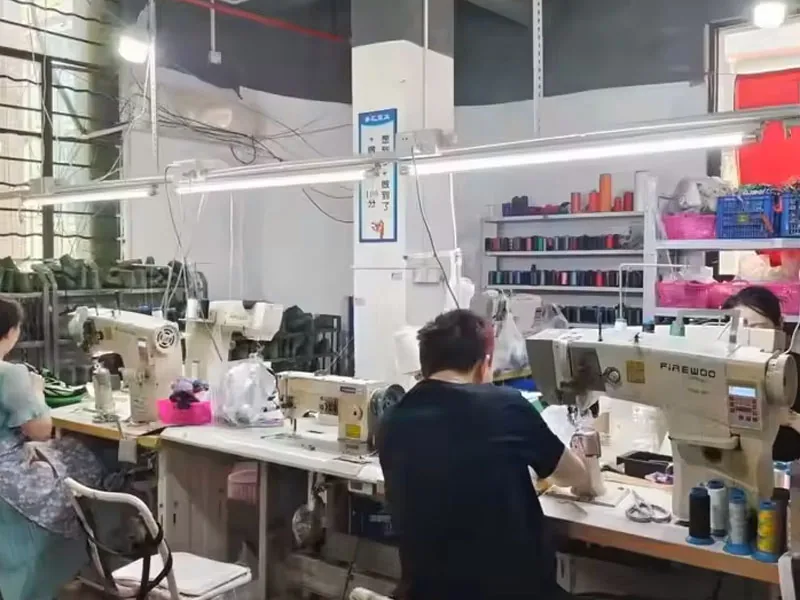
How to stop approved sample vs production material substitution
Substitution is not always dishonest; it often starts as a small sourcing shortcut when a material runs short. The control is to make the approved material code the only thing the factory can buy against, and to give the supplier a clear owner and a re-approval rule.
- Step 1 – lock the material code at sample approval, using the approved specification as the input. A generic material entering production is the risk here, so the verification step compares the material code on the production sheet with the signed specification. Write the code into the purchase order.
- Step 2 – require an incoming-material record for each lot, owned by the factory quality team. Verify lot identity, supplier reference, and color, because an unverified lot can be mixed into bulk. Make the record a release condition.
- Step 3 – compare the first bulk piece with the retained sample. A side-by-side check of construction and finish catches a drift before the whole run follows it, so hold the line until the piece is approved.
- Step 4 – trigger re-approval on any change, using a written change request as the input. Require a dated approval that names the new value, otherwise an unapproved revision reaches shipment.
- Step 5 – audit reorder consistency, owned by the buyer sourcing team. Compare lot, tooling, artwork, and packing, then recheck against the retained sample before release, because a reorder can drift from the baseline.
KEYTOP’s sample lead time is 7–15 days after sample requirements and usable specifications are confirmed. Standard production is 35–45 days after specifications, sample approval, material assumptions, packing and the production slot are confirmed. Keep these triggers separate, and obtain a revised dated schedule for any changed input.
Use a supplier that can name the owner of each check and show the record behind it. Route the program through footwear sourcing solutions when you need the sourcing route and the approval gates planned together before the quote.
Which approved sample vs production inspection points to request
Inspection should confirm that bulk still matches the approved sample, so the points to request are the ones that can still change the outcome: incoming material, in-line work, and final packing. A single end check cannot recover a defect that was set at the start of the run.
Inline and final inspection points
Ask the factory to record incoming-material identity, first-piece approval against the retained sample, in-line checks at the agreed production points, and final inspection before shipment. KEYTOP’s documented quality stages are incoming materials, in-line inspection, and final inspection before shipment, which gives the buyer a sequence to verify rather than a single promise. For each point, confirm the input, the method, the acceptance rule, the record, and the owner.
AQL basis and defect definitions
Agree the sampling basis and the defect definitions before production. A pass line set after the result is known cannot contain a defect, so the buyer and the factory should write down which defects are critical, which are major, and which are minor, and how the sample size is chosen. Buyers who need development support can review OEM and ODM footwear manufacturing before the inspection brief is finalized.
Agree who holds a rejected lot, which corrective work or reinspection closes the issue, and who authorizes release. Keep affected goods on hold until the required decisions and records are closed.
- Confirm the defect list and the critical, major, and minor split.
- Confirm the sample size and the acceptance rule for each defect class.
- Confirm who signs the release and which record the buyer receives.
How to keep approved sample vs production reorders consistent
A reorder is a new production run, not a repeat of the last one. Material lots, tooling, and artwork can all change between runs, so the buyer should recheck the same version markers that were frozen at sample approval rather than assume the factory remembers them.
Retained sample and last code
Identify the retained sample, approved specification revision and shoe-last/tooling code on the reorder. Recheck changes to construction or component codes against the agreed fit, finish and measurement criteria; close any resulting approval requirements before releasing affected work.
Material lot and artwork version
A new material lot needs its own ID mapped to the approved material code and specification, rather than reuse of the previous lot number. Record equivalence checks and reapprove relevant deviations; also identify the artwork revision and verify any change in logo placement or color. For KEYTOP’s factory profile, see KEYTOP factory.
| Version marker | What it controls | approval risk | Verification check | Next action |
|---|---|---|---|---|
| Retained sample revision | Construction, fit, and finish | A lost reference causes a silent drift | Compare the new first piece with the retained sample | Reconfirm the revision before the run |
| Material lot reference | Shade, hand feel, and weight | An unverified new lot may change shade, feel or weight | Map the new lot ID to the approved material specification and record any required reapproval | Require the lot reference in the order file |
| Artwork version | Logo placement and color | A revised file moves the logo | Compare the printed sample with the approved file | Approve the file version in writing |
In conclusion
Approved-sample control comes down to one habit: keep the signed revision visible at every stage. Freeze the specification and defect list with the sample, compare bulk against that baseline instead of memory, and treat any material or artwork change as a new approval.
When the record set is complete, a reorder becomes a controlled repeat rather than a fresh gamble, and a dispute can be resolved from evidence rather than opinion. Send an RFQ with the style/material and specification revision; size-by-color quantity allocation; retained-sample/approval ID; open deviations; packing/artwork revision; requested checks and record owner; and target dates. Ask for a revised quotation and schedule when those inputs change.
Before you approve bulk, review the related footwear products range, then request the sample inputs and send the specification, quantity, size run, and packing version for review.
Approved sample vs production FAQ
How Many Samples Are “Normal” before production?
Agree the required sample outputs and approval dependencies for this construction with the supplier. The number of rounds depends on unresolved fit, materials, tooling and changes; retain the result and disposition of each required check instead of assuming every program needs a fixed two- or three-round sequence.
Which fit and function checks must a revised sample close?
The revised sample is where fit and function are validated against the buyer’s use case, not only against a drawing. Measure the size, check the last shape and closure, and test the pair in the way the end customer will wear it before you approve bulk.
What must the material-and-construction confirmation prove?
The required confirmation sample should use the selected material and construction and close the named deviations. Record which checks, specification revision and approver release the affected work. A later substitution reopens the relevant evidence and schedule; a numbered sample round alone does not authorize production.
How do customization and design changes affect sampling and bulk?
Every logo, colorway, material, or silhouette change reopens part of the sample process. Confirm the change in writing with the old value, the new value, and the cost and schedule effect, and re-approve the affected component before production continues.
Which sample or QC proof should buyers request?
Ask for the signed specification, the retained sample, incoming-material records, in-line records, the final inspection report, and any corrective-action record. KEYTOP’s quality checkpoints are incoming materials, in-line inspection, and final inspection before shipment, and the order should state what each stage checks.
RFQ handoff: Send Specs for Review.