
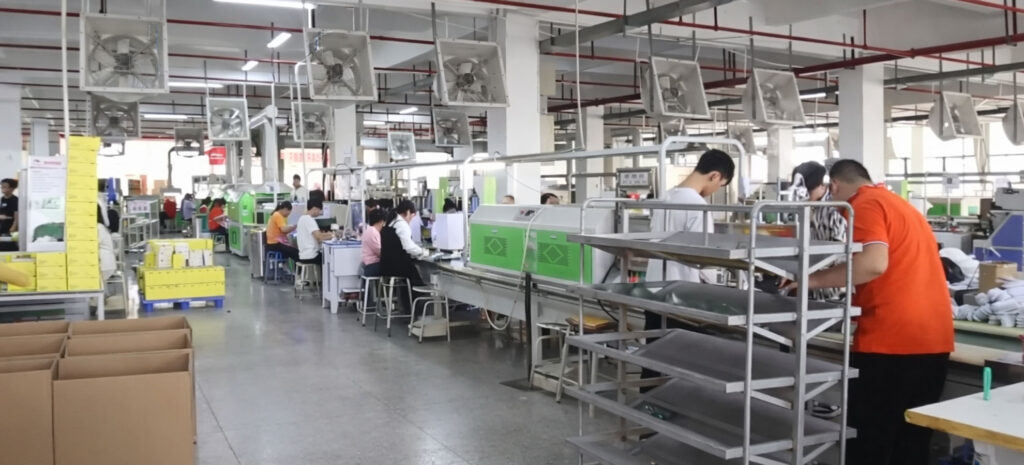
“China shoe factories” is too broad to be useful unless the buyer turns it into a supplier verification process.
A serious B2B buyer is not only looking for styles. The buyer needs to know whether the supplier can support the required category range, MOQ, sample process, packaging, QC, export workflow, and communication after deposit. A long product list does not prove that the supplier can control a bulk order.
For Keytop buyers, the practical decision is this: compare China shoe factories by product range plus order-control proof, not by price list alone.
Keytop’s confirmed product focus includes casual sneakers, casual shoes, boots, outdoor footwear, sandals, and slippers & slides. Confirmed commercial baselines include an MOQ of 1,500 pairs for sandals, slippers and slides and 1,000 pairs for casual sneakers, casual shoes, boots and outdoor footwear, counted per style, color and size (styles, colors and sizes cannot be mixed to reach the minimum); 7-15 days for samples after sample requirements and usable specifications are confirmed; 35-45 days for standard production after specifications, sample approval, material assumptions, packaging and production slot are confirmed; and QC at incoming materials, in-line inspection, and final inspection before shipment.
This guide helps importers, distributors, retail buyers, and sourcing teams turn a broad factory search into a practical shortlist.
Quick Verdict: Verify The Supplier Before You Verify The Style
The right China shoe factory should prove category range, MOQ logic, sample process, packaging readiness, QC checkpoints, export-market fit, and communication ownership before the buyer pays for samples or deposit.
If you start with style photos and unit price only, you may miss the commercial risk. The supplier may not control the factory floor, may not fit your category, may not handle your packaging, or may not be able to repeat the order after the first shipment.
Use this decision rule:
| Buyer need | What to verify first | Why it matters |
|---|---|---|
| Multi-category footwear range | Supplier’s normal product categories | Prevents category mismatch |
| First manufacturing order | MOQ by category, style, color, and size run | Avoids an unworkable SKU plan |
| Private-label program | Logo surfaces and packaging workflow | Branding adds approval points |
| Retail or distributor order | Carton marks, barcode, size ratio, packing photos | Receiving errors can delay resale |
| Repeat supply | Capacity, QC process, sample records, communication owner | Repeat orders need process stability |
The factory should route you into the right product category quickly. If every category receives the same answer, the supplier may not be thinking deeply enough.
Red Flags When Verifying a China Shoe Factory
Use this red-flag list before sample payment or deposit.
| Red flag | What it may indicate | Buyer action |
|---|---|---|
| Supplier sends only catalog and price list | No order-control discussion yet | Ask for MOQ, sample, QC, packaging, and export workflow |
| Claims every footwear category equally | Category fit may be shallow | Ask what categories are normal production focus |
| MOQ is vague or changes repeatedly | SKU plan may not be workable | Ask MOQ by category, style, color, and size run |
| Sample approval is informal | Bulk may not follow a controlled reference | Require approved sample record |
| Packaging is left until late | Retail/ecommerce receiving risk | Confirm box, barcode, labels, carton marks early |
| QC is described only as final inspection | Defects may be caught too late | Ask incoming, in-line, and final inspection process |
| Export market is not discussed | Destination needs may be missed | Ask whether supplier has shipped to your target region |
| Communication changes after payment | Accountability risk | Confirm project owner before deposit |
One red flag does not always disqualify a supplier. Several red flags together should stop the buyer from moving forward until the missing proof is resolved.
Buyer Questions To Ask Before Shortlisting A Supplier
These questions turn a broad factory search into a controlled B2B supplier review.
| Question | What a useful answer should include |
|---|---|
| Which footwear categories do you normally produce or support? | Category-specific samples or records identified to the proposed producer and site, with date and scope; keep unverified explanations separate from evidence |
| What is the MOQ by category, style, color, and size run? | Order-specific minimums, not only a single number |
| How do samples work before bulk production? | Sample timing, revision process, and approval record |
| What changes bulk lead time? | Material, packaging, approval, production slot, and buyer delays |
| How do you check quality before shipment? | Incoming material checks, in-line inspection, final inspection, and packing review |
| What packaging details do you need before production? | Box, barcode, label, insert, carton mark, SKU and size information |
| Which export markets do you already serve? | Region names and practical shipment-preparation experience |
| Who manages communication after payment? | Named role or team ownership |
If the supplier answers only in general marketing language, ask again with your exact product category and quantity. The goal is to see how the supplier handles a real order, not a generic inquiry.
Send your product category, target quantity, logo scope, packaging needs, and delivery window. Keytop will review the project fit and confirm the next sampling step.
Group Factory RFQs By Category
A mixed factory inquiry can become confusing if the buyer sends all categories in one loose message.
Sneakers, casual shoes, boots, outdoor footwear, sandals, slippers, and slides have different material, size, mold, packaging, and QC concerns. A supplier can respond more accurately when the buyer groups the RFQ by category.
Use this RFQ structure:
| RFQ block | What to include | Why it helps |
|---|---|---|
| Category | Casual sneakers, casual shoes, boots, outdoor footwear, sandals, slippers/slides | Routes the inquiry correctly |
| Quantity | Pairs by category and style | Tests MOQ fit |
| Size run | Target market sizes and ratio | Supports inventory and carton planning |
| Reference | Photos, sample, tech pack, catalog target | Clarifies construction level |
| Branding | Logo, label, insole, box, carton | Identifies private-label needs |
| Packaging | Box, polybag, barcode, insert, carton marks | Prevents late packing problems |
| Timing | Sample and shipment window | Tests feasibility before deposit |
| QC | Material, production, final, and packing checks | Sets inspection expectations |
The buyer does not need a perfect brief to start. But each category should have enough detail for the supplier to answer without guessing everything.
Verify MOQ, Samples, And Bulk Timing Before Deposit
OEM buyers often focus on total order value, but factories plan production by category, style, color, size run, material, and packaging.
Keytop’s confirmed baseline is an MOQ of 1,500 pairs for sandals, slippers and slides and 1,000 pairs for casual sneakers, casual shoes, boots and outdoor footwear, counted per style, color and size with no mixing; 7-15 days for samples after sample requirements and usable specifications are confirmed; and 35-45 days for standard production after specifications, sample approval, material assumptions, packaging and production slot are confirmed. Those numbers still need order-level confirmation. A multi-category manufacturing program can have different sample and packing requirements across categories.
Before deposit, confirm:
- Does MOQ apply by category, style, colorway, or size run?
- Can the first order be split across multiple categories?
- Does each category require its own sample approval?
- When does the sample lead time start?
- When does the bulk lead time start?
- What packaging files are required before production or packing?
- What buyer-side delay would push the shipment window?
This protects the buyer from assuming that one broad OEM timeline applies to every style.
Check Packaging And QC As Part Of Factory Verification
Manufacturing orders often fail at the details: wrong size ratio, missing barcode, weak carton marks, inconsistent labeling, or defects discovered after production.
Packaging and QC should be discussed before bulk starts, not near shipment.
| Control area | What to check | Why it matters |
|---|---|---|
| Carton marks | SKU, color, size range, quantity, destination, buyer mark | Supports receiving and warehouse handling |
| Unit packaging | Shoebox, polybag, sticker, insert, barcode | Supports retail or ecommerce readiness |
| Size ratio | Pairs by size and carton split | Prevents inventory imbalance |
| Incoming material QC | Upper, outsole, EVA, trims, packaging inputs | Prevents wrong materials entering production |
| In-line QC | Stitching, assembly, logo, size run, visible defects | Catches issues before they repeat |
| Final inspection | Finished shoes, cartons, labels, quantity, visible defects | Confirms shipment readiness |
Keytop’s confirmed QC checkpoints are incoming materials, in-line inspection, and final inspection before shipment. Buyers should ask how these checkpoints apply to the exact categories in the OEM order.
FAQs For OEM Footwear Buyers
What should I verify before placing an order with a China shoe factory?
Verify product category fit, MOQ, sample timing, bulk lead time, QC checkpoints, packaging, export-market fit, and communication ownership. Do this before comparing price lists.
Is OEM shoe sourcing only about unit price?
No. Unit price matters, but material assumptions, MOQ, sample approval, packaging, QC, delivery timing, and supplier reliability determine the real order risk.
What MOQ should OEM buyers expect?
Keytop’s confirmed MOQ is 1,500 pairs for sandals, slippers and slides and 1,000 pairs for casual sneakers, casual shoes, boots and outdoor footwear, counted per style, color and size; styles, colors and sizes cannot be mixed to reach the minimum.
Can manufacturing orders include private-label branding?
Yes, if the supplier supports branding and packaging. Buyers should confirm logo surfaces, shoebox, barcode, inserts, carton marks, and sample approval before bulk starts.
How should I send a OEM RFQ?
Group the RFQ by category. Include target quantity, size run, reference styles, market, branding, packaging, delivery window, and inspection expectations.
Final Decision: A Broad Factory Search Needs A Narrow Verification Process
Verifying a China shoe factory should go beyond catalog browsing or price comparison.
The buyer should narrow the decision by category range, MOQ, sample approval, packaging, QC, export readiness, and supplier communication. That creates a shortlist that can move safely into RFQ or sample stage.
Send Keytop your target categories, quantity by category, reference styles, size range, branding needs, packaging needs, and destination market. The team can review whether the program fits Keytop’s lifestyle-footwear range and confirm the next sample step.