
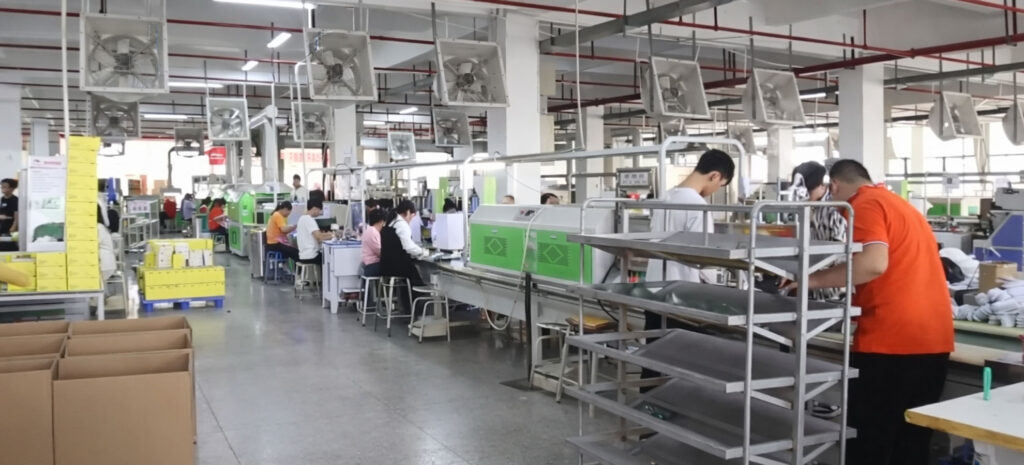
Choosing a shoe manufacturer in China is not mainly a price search. It is a proof check.
The supplier worth shortlisting is the one that can show how your order moves from product brief to sample, approved reference, bulk production, inspection, packing, and export handoff. If those steps are vague before deposit, a low quote does not protect your launch date, margin, or buyer relationship.
For Keytop buyers, the practical decision is this: use the factory that can prove category fit, sample control, MOQ clarity, lead time, QC checkpoints, packaging readiness, and export workflow before you pay for a sample or bulk order.
Keytop is a Fujian-based lifestyle footwear manufacturer founded in 2006. Confirmed business facts available for buyer review include an MOQ of 1,500 pairs for sandals, slippers and slides and 1,000 pairs for casual sneakers, casual shoes, boots and outdoor footwear, counted per style, color and size (styles, colors and sizes cannot be mixed to reach the minimum); 7-15 days for samples after sample requirements and usable specifications are confirmed; 35-45 days for standard production after specifications, sample approval, material assumptions, packaging and production slot are confirmed; and QC checkpoints at incoming materials, in-line inspection, and final inspection before shipment. The documented product focus is casual sneakers, casual shoes, boots, outdoor footwear, sandals, and slippers & slides.
This guide gives importers, brand owners, and sourcing teams a factory verification workflow they can use before sending a tech pack, sample fee, or deposit.
Quick Verdict: Choose The Factory That Can Prove Control Before Deposit
A reliable shoe manufacturer should give you usable proof before the order starts: factory role, category fit, sample process, MOQ basis, lead time assumptions, QC checkpoints, packaging scope, and export coordination.
Do not treat every supplier quote as equal. One quote may assume standard packaging, one may exclude logo work, one may use a different outsole, and one may be coming from a trading company that has not confirmed the production floor. The quote with the lowest number is not always the cheapest order after sample revisions, carton corrections, late inspection findings, and missed delivery windows.
Use this decision rule:
| Buyer situation | Best next action | Why it matters |
|---|---|---|
| You only have catalog photos and a unit price | Ask for factory role, category focus, sample workflow, and QC checkpoints | Photos do not prove production control |
| You have a tech pack or reference sample | Ask for sample lead time, revision process, material assumptions, and approval record | Bulk production should follow an approved sample, not a chat thread |
| You are comparing several China shoe manufacturers | Score each supplier against the same proof checklist | Equal criteria make weak quotes easier to remove |
| You need private label or OEM/ODM work | Confirm logo surfaces, packaging, material choices, and file handling before sample payment | Custom work creates more approval points than stock buying |
| You need repeat orders | Check capacity, QC process, size-run control, carton records, and export-market fit | Repeat supply depends on process stability |
If the supplier cannot answer these points clearly, keep it on a watchlist instead of moving it to sample or deposit stage.
Supplier Verification Scorecard For China Shoe Manufacturers
Use this scorecard before you ask for a final quotation. It is designed for B2B footwear buyers who need a controlled sourcing decision, not a casual supplier list.
Score each item from 0 to 2:
0= missing or vague1= partly answered but not order-specific2= clear, specific, and tied to your product or order
| Verification area | What the supplier should prove | Score |
|---|---|---|
| Factory role | It can explain whether it is the direct manufacturer and how production is controlled | 0-2 |
| Category fit | Your product category is inside its normal production range | 0-2 |
| Order fit | MOQ, size run, color plan, and target quantity are commercially workable | 0-2 |
| Sample process | Sample lead time, revision path, and approval standard are clear | 0-2 |
| Bulk timing | Bulk lead time is stated with assumptions, not promised blindly | 0-2 |
| QC checkpoints | Incoming materials, in-line inspection, and final inspection are explained | 0-2 |
| Customization scope | Logo, material, colorway, box, carton, and label needs are understood | 0-2 |
| Packaging readiness | Carton marks, barcode, inserts, and retail packaging are discussed early | 0-2 |
| Export workflow | The supplier understands destination-market and shipment preparation needs | 0-2 |
| Communication owner | You know who manages updates after sample payment or deposit | 0-2 |
Decision use: The scores record how complete each supplier response is; they are an illustrative comparison aid, not a validated qualification threshold. Keep any supplier with unresolved material, sample, MOQ, ownership or QC evidence conditional. A high total cannot close a missing requirement or authorize sample payment or a deposit.
This is not a legal audit and it does not replace an on-site inspection. It gives the buyer a practical way to remove weak suppliers before money is committed.
Proof To Request Before You Share A Tech Pack
The strongest factory conversations happen before the buyer sends sensitive product files. A serious supplier should be able to discuss capability and workflow without requiring every design detail at the first message.
Ask for proof in this order:
| Proof request | What to ask | Good answer looks like | Warning sign |
|---|---|---|---|
| Factory and category role | “Which footwear categories do you normally produce?” | A focused category list and process explanation | “We can make all shoes” with no detail |
| Sample workflow | “How does a sample become the production reference?” | Clear steps: brief review, sample, revision, approval, bulk reference | Sample approval is treated as informal |
| MOQ basis | “Is MOQ by style, color, category, or size run?” | MOQ is tied to order structure and materials | MOQ changes when you ask detailed questions |
| Lead time basis | “What changes the sample and bulk timeline?” | Materials, tooling, branding, packaging, and approval timing are named | A fixed date is promised before specs are known |
| QC process | “When do you inspect materials, production, and finished goods?” | Incoming, in-line, and final checks are all discussed | Only final carton inspection is mentioned |
| Packaging and export | “When do we confirm box, carton, labels, and marks?” | Packaging is included before bulk starts | Packaging is left until production is nearly finished |
For Keytop specifically, buyers can use the confirmed baseline facts as a starting point: an MOQ of 1,500 pairs for sandals, slippers and slides and 1,000 pairs for casual sneakers, casual shoes, boots and outdoor footwear, counted per style, color and size with no mixing; 7-15 days for sampling after sample requirements and usable specifications are confirmed; 35-45 days for standard production after specifications, sample approval, material assumptions, packaging and production slot are confirmed; and QC at incoming materials, in-line inspection, and final inspection. These numbers still need order-level confirmation by product, material, size run, logo method, packaging, and production slot.
Send your product category, target quantity, logo scope, packaging needs, and delivery window. Keytop will review the project fit and confirm the next sampling step.
Match The Factory To Your Footwear Category Before Comparing Price
Category fit should come before price comparison because different shoes require different materials, molds, stitching, assembly methods, fit checks, and packaging assumptions.
A factory that is strong in lifestyle footwear may be the right fit for casual sneakers, casual shoes, sandals, slippers, slides, boots, and outdoor-inspired lifestyle footwear. That does not automatically make it the right supplier for technical running shoes, basketball shoes, football boots, safety-certified work boots, or medical footwear. Buyers should separate confirmed category capability from broad supplier claims.
Keytop’s documented product focus is:
| Category | Buyer should confirm | Why it affects sourcing |
|---|---|---|
| Casual sneakers | Upper material, outsole option, size run, logo surfaces, box needs | Sneaker cost often changes with upper, sole, branding, and packaging |
| Casual shoes | Material, last, stitching details, outsole, retail channel | Comfort and finish consistency matter for repeat orders |
| Boots | Boot height, upper, lining, outsole, seasonal use | Construction details affect sample accuracy and lead time |
| Outdoor footwear | Intended use, outsole, upper, water-resistance claims, packaging | Claims must be verified before buyers use them in retail copy |
| Sandals | Strap material, footbed, outsole, size range, logo method | Small construction differences can change fit and defect risk |
| Slippers & slides | EVA/material grade, mold, color, logo, carton plan | Material and mold assumptions drive cost and consistency |
The supplier should ask questions too. If you send a reference photo and the supplier replies only with a price, that is weak qualification. A better factory asks about market, size range, material preference, logo placement, packaging, inspection requirements, and target delivery window.
Confirm MOQ, Sample Time, And Bulk Lead Time With Order Assumptions
MOQ and lead time are not useful unless the buyer knows what they include.
For Keytop, the published baseline is an MOQ of 1,500 pairs for sandals, slippers and slides and 1,000 pairs for casual sneakers, casual shoes, boots and outdoor footwear, counted per style, color and size with no mixing; 7-15 days for sampling after sample requirements and usable specifications are confirmed; and 35-45 days for standard production after specifications, sample approval, material assumptions, packaging and production slot are confirmed. A buyer should still confirm whether those numbers apply to the exact style, color plan, material sourcing, logo method, packaging, and approval schedule.
Use this checklist before treating any MOQ or lead time as final:
- Is MOQ counted by category, style, color, SKU, or size run?
- Does the MOQ include private-label branding, or is branding quoted separately?
- Does the sample lead time start after the factory receives complete specs?
- Ask each supplier to define the full start condition. For KEYTOP standard production, specifications, sample approval, material assumptions, packaging and the production slot must all be confirmed.
- Are packaging artwork, carton marks, labels, and barcodes included in the schedule?
- What buyer delay would push the production timeline back?
The commercial risk is simple: a buyer may think the order is approved, while the factory is still waiting for final materials, logo files, packaging artwork, or size breakdown. That delay is not always visible in the first quote.
A serious RFQ should therefore include the product category, reference photos or tech pack, target quantity, size range, color plan, destination market, logo scope, packaging needs, inspection expectations, and target delivery window. Without those inputs, the supplier can only guess.
Check Sample Control Before You Pay For Bulk Production
In footwear, the approved sample is the buyer’s strongest control point.
The sample should not be treated as a rough preview if the buyer expects the bulk order to match it. It should become the working reference for materials, color, construction, logo placement, size fit, packaging, and finish quality.
Before paying for bulk production, confirm these points:
| Sample control point | Buyer question | Why it matters |
|---|---|---|
| Sample basis | “Was this sample made from final or substitute materials?” | Substitute materials can change color, hand feel, and performance claims |
| Revision record | “What changed from the first sample to the approved sample?” | Revision history prevents old instructions from returning later |
| Approval owner | “Who signs off the final sample on both sides?” | Clear ownership prevents production from starting on a disputed reference |
| Bulk reference | “Will production follow this physical sample or only the tech pack?” | Footwear often needs both document and physical reference |
| Packaging sample | “Do we approve box, label, carton, and inserts before bulk packing?” | Packaging errors are expensive when discovered at final inspection |
The buyer’s next action is to create a simple approval record. It can be a document or spreadsheet with sample photos, date, version, material notes, logo notes, packaging notes, and the final “approved for bulk” decision. This gives both sides a reference if questions appear during production.
Review QC Checkpoints, Not Just Final Inspection
Final inspection is important, but it is late. A factory that only talks about finished goods may miss problems that should have been caught earlier.
For a bulk footwear order, ask how the supplier checks quality at three stages:
| QC stage | What should be checked | Buyer risk if skipped |
|---|---|---|
| Incoming materials | Upper material, outsole, EVA, textiles, trims, packaging inputs | Wrong materials enter production and become expensive to correct |
| In-line inspection | Stitching, cementing, assembly, logo placement, size run, visible defects | Problems repeat across many pairs before anyone stops the line |
| Final inspection | Finished shoes, packing, carton marks, labels, quantity, visible defects | Defects are found after production time has already been spent |
Keytop’s confirmed QC checkpoints are incoming materials, in-line inspection, and final inspection before shipment. Buyers should ask how those checkpoints apply to their own order, especially when the order includes custom materials, private-label branding, multiple colorways, or retail packaging.
The buyer does not need to turn every email into an audit. But before deposit, the buyer should know when inspection happens, what records are used, and what happens if a problem appears before shipment.
Red Flags That Should Stop A Supplier From Moving Forward
Red flags are not proof that a supplier is bad. They are signs that the buyer should slow down before sending money or files.
Watch for these behaviors:
- The supplier gives a price without asking about materials, size run, market, logo, or packaging.
- The supplier claims every footwear category without explaining normal production focus.
- MOQ changes after you ask how it applies to colorways or size runs.
- Sample timing is promised before specs are complete.
- The supplier pushes for deposit before the sample process is clear.
- QC is described only as “we check before shipment.”
- Packaging is treated as a final detail rather than part of order planning.
- The supplier cannot explain who will communicate after payment.
- The supplier avoids questions about whether it is a manufacturer, trader, or mixed model.
One red flag may be fixable. Several together usually mean the buyer should keep searching or move the supplier into a backup position.
RFQ Inputs That Get A Better Factory Response
A strong RFQ makes the factory think in production terms. A weak RFQ invites a fast quote with hidden assumptions.
Send these inputs when you want a serious response:
| RFQ input | What to provide | What the factory can confirm |
|---|---|---|
| Product category | Casual sneaker, boot, sandal, slipper, slide, or casual shoe | Category fit and normal workflow |
| Reference | Tech pack, photos, physical sample, or product link | Construction path and possible material options |
| Quantity plan | Pairs by style, color, and size run | MOQ, price basis, and production planning |
| Target market | Europe, North America, Australia & New Zealand, Middle East, South America, or other | Size, packaging, documentation, and buyer expectations |
| Material direction | PU, mesh, textile, EVA, rubber, unknown, or open to suggestions | Cost drivers and sample feasibility |
| Branding scope | Insole, outsole, upper, tongue, box, carton, hangtag, insert | Sample and packaging approval path |
| Packaging needs | Shoebox, polybag, barcode, carton mark, insert card | Packing cost, artwork timing, and final inspection scope |
| Delivery window | Target shipment date or retail launch date | Whether the timeline is realistic |
Ask the supplier to reply in the same structure. This makes supplier comparison easier and prevents the strongest communicator from looking better than the strongest factory.
FAQs For B2B Shoe Buyers
How do I know if a China shoe supplier is a factory or a trading company?
Ask the supplier to explain its factory role, production workflow, category focus, sample process, and QC checkpoints. Ask the proposed manufacturer to explain that workflow and link the explanation to identified sample, production and inspection records for the selected order. If the answer stays only at catalog and price level, keep verifying.
What MOQ should I expect for a bulk shoe order?
For Keytop, the confirmed MOQ is 1,500 pairs for sandals, slippers and slides and 1,000 pairs for casual sneakers, casual shoes, boots and outdoor footwear. Both are counted per style, color and size, and styles, colors and sizes cannot be mixed to reach the minimum.
How long does a shoe sample usually take?
Keytop’s confirmed sample lead time is 7-15 days after sample requirements and usable specifications are confirmed. The exact timing can change if the project needs special materials, new tooling, complex branding, packaging artwork, or several sample revisions.
Should I choose the lowest quoted shoe manufacturer?
Not until you know what the quote includes. Compare materials, sample process, MOQ, lead time, QC checkpoints, packaging, export workflow, and communication ownership. A low price can become expensive if the bulk order fails inspection or misses a launch window.
What should I send before asking Keytop for a quote?
Send product category, reference photos or tech pack, target quantity, size run, market, material direction, logo placement, packaging needs, and target delivery window. This lets Keytop check whether the project fits its lifestyle-footwear manufacturing range and confirm the next sampling step.
Final Decision: Verify Proof Before You Compare Price
The right China shoe manufacturer is not the supplier with the fastest reply or the lowest first quote. It is the supplier that gives enough proof for a controlled sourcing decision.
For bulk footwear, that proof means factory role, category fit, MOQ, sample control, lead time assumptions, QC checkpoints, packaging readiness, and export workflow. These details help buyers avoid supplier mismatch before they share sensitive files, pay for samples, or reserve production.
Send Keytop your product category, target quantity, tech pack or reference photos, logo scope, packaging needs, and market. The team can review the project fit, confirm whether it matches Keytop’s lifestyle-footwear production range, and advise the next sampling step.