Oem shoe development needs a written specification before the buyer can decide whether OEM (original equipment manufacturer) Shoe Development fits the use case, specs, MOQ, sample approval path, and supplier quote process; otherwise suppliers may quote different product and approval assumptions.
This guide maps oem shoe development specifications and evidence to comparable sample requests and RFQ (request for quotation) fields.
Direct answer: Use oem shoe development only after its specification, application fit, sample route, quantity rule, and supplier exceptions have been confirmed in writing.
What oem shoe development inputs buyers should prepare before RFQ
Prepare the inputs first, because a factory can only return a comparable, defensible quote when every supplier receives the same brief. The buyer’s job at this stage is to decide which factories ask for the right inputs before pricing — a supplier that quotes instantly from a photograph is assuming the specification for you, and those assumptions are what make two quotations for the same shoe impossible to reconcile. Run the questions below against every shortlisted factory before an oem shoe development brief goes out, and score the answers as proof, not as promises.
Treat supplier transparency as a shortlist filter in its own right. Factories that publish verifiable company facts and product scope give procurement something to check against the claims made in a sales call. Where a factory cannot document a capability, write the gap into the RFQ as a question instead of accepting a verbal answer.
| Buyer question | Why to ask it | Risk it reduces | Expected answer or proof | RFQ follow-up |
|---|---|---|---|---|
| Can you quote from our tech pack, or only from a reference sample? | Establishes who owns the specification gaps before pricing starts. | Each factory fills missing specs with its own defaults, so two quotes stop describing the same shoe. | A written list of required inputs: tech pack pages, material references, color codes, logo artwork files. | Send the most complete input you hold and list the missing items as open RFQ fields. |
| What is your minimum per style, color and size, and can styles be mixed? | The minimum determines whether your size run is orderable at all. | An approved sample that cannot be ordered, or surcharges added after the order is placed. | A written number plus the allocation rule. KEYTOP, for example, counts 1,000 pairs per style, color and size for casual sneakers, casual shoes, boots and outdoor footwear and 1,500 pairs for sandals, slippers and slides, with no mixing between styles, colors or sizes. | Reconcile the planned size run against the rule before paying for samples. |
| Which destination-market compliance documents can you provide before shipment? | Importers and retail chains ask for restricted-substance and labeling paperwork before accepting a shipment, and a factory that cannot name its documents creates a customs risk. | Shipments held at customs or rejected by retail chains after arrival. | Named documents, such as REACH restricted-substance paperwork for the EU, rather than a verbal assurance of compliance. | Add the document list as a required deliverable line in the RFQ. |
| Which inspection sampling plan do you apply at final inspection? | A named plan turns defect disputes into a measurement question instead of an argument. | A rejected lot with no agreed yardstick, since lot-by-lot sampling is governed by standards such as ISO 2859-1 rather than by opinion. | The plan name and the acceptance quality limit written into the order terms. | Print the plan and the AQL onto the purchase order. |
| What are your sample and bulk lead times, and what event starts the clock? | Factory lead times run from confirmed inputs, not from the order date. | Schedule slippage attributed to late confirmations that nobody tracked. | Day ranges with trigger conditions. KEYTOP quotes 7 to 15 days for samples after sample requirements and usable specifications are confirmed and 35 to 45 days for bulk after specs, sample approval, materials, packaging and the production slot are confirmed. | Sequence your approval dates backward from the required delivery date. |
| Who checks logo authorization, and how do you refuse protected-brand copies? | OEM production runs on the buyer’s own design assets; unauthorized copies create legal exposure. | Goods detained or destroyed for trademark infringement at the destination. | A written statement that only buyer-authorized assets are used, plus a refusal policy for replica requests. | Attach a trademark authorization for every logo in the brief. |
Return every answered question to the shortlist as a scored sheet. Factories that answered with documents move to sampling; factories that answered with assurances stay on hold until they produce the same paperwork.
How to approve oem shoe development samples before bulk
Approve the sample against a written specification sheet, not against the excitement of holding the first physical pair. The sample is the last cheap correction point: every specification left loose at approval becomes a factory default in bulk. This is also the stage to recheck the minimum-order arithmetic, because the approved size run still has to land inside the factory’s allocation. KEYTOP counts its minimum per style, per color and per size, with no mixing. Casual sneakers, casual shoes, boots and outdoor OEM and ODM (original design manufacturer) footwear manufacturing carry a minimum of 1,000 pairs. Sandals, slippers and slides carry a minimum of 1,500 pairs. A beautifully approved sample that misses that minimum therefore cannot ship. Judge every line of the sample with the table below.
| Specification | Acceptable range | approval risk | Verification check | Sample decision |
|---|---|---|---|---|
| Last and fit reference | Last number recorded on the sample tag; graded run fits consistently | Fit drifts silently between sample rounds | Match the tag number to your approval sheet and try graded sizes, not only the base size | Reject an untagged sample and record the last number on the approval sheet |
| Material grade | Named grade and composition from the approved swatch card | Bulk is cut with a cheaper substitute | Compare the sample against the signed swatch and request the material specification sheet | Sign and date the material spec before bulk cutting |
| Colorway | Approved lab-dip or physical swatch with a version number | Shade variation across bulk dye lots | View the sample under daylight and store lighting; request bulk-lot color photos | Lock the approved reference with its version number |
| Logo and branding | Position, size and application method as specified | Marks crack or peel before retail sale | Flex and rub the marked area on the sample; approve the method per surface | Record the approved method on the approval sheet |
| Construction and bonding | Named construction; bond and stitch lines intact | Sole separation in the field | Inspect bond lines and stitches as a preliminary screen. Where strength is required, obtain applicable measured adhesion evidence for the identified completed construction | Write the construction name into the purchase order |
| Packaging sample | Box, labels and carton marks matching the approved artwork version | Wrong barcodes or labeling discovered at destination | Assemble one full carton and check it against the artwork file | Approve the carton mark set before bulk packing starts |
Every defect caught at this stage is cheap to correct; the same defect found after bulk cutting turns into a unit-price dispute, a redip, or a reorder. Sign the approval sheet line by line and return one corrected copy to the factory. Release bulk production only when the minimum allocation, the specification sheet and the approved sample all reference each other by version.
Compare the supplier record with the buyer’s documented private-label requirements before accepting the requirement.
RFQ checkpoint
Which oem shoe development logo surfaces survive production
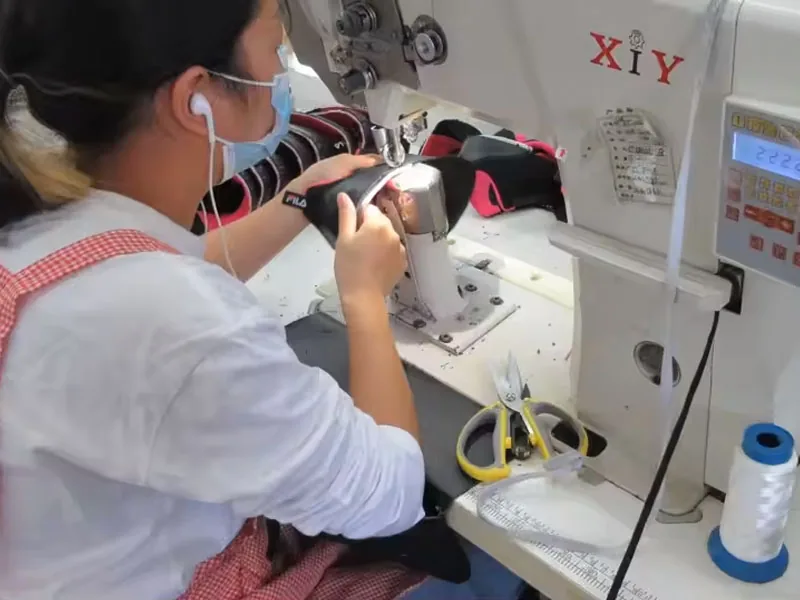
Pick the logo method by surface and flex behavior, not by the mock-up: a mark that looks right on a flat render can crack on a flex point or peel in the first wash. The quote drivers to name in the quote request are the application method itself, the number of logo positions, any secondary tooling such as embossing dies, badge molds or print screens, and the rework rate when a method fails on the chosen material — those four items explain most of the spread between two branding quotations. Logo engineering is a real discipline in footwear development; structured programs such as Lasell University’s footwear design and development certificate train developers to balance form, function and performance before a sample is cut, and a supplier’s development brief should show the same rigor about where a mark can live. Use the matrix to assign one method per surface before sampling.
| Logo option | Best fit | approval risk | Verification check | Branding sign-off |
|---|---|---|---|---|
| Embossed or debossed mark | Structured panels that flex little, such as heels and counters | Shallow marks fade after repeated wear | Screen appearance and location on the sample; hand flexing is not a formal durability result. Agree relevant evaluation conditions and quote die costs separately | Approve mark depth on the sample before the die is released |
| Screen or pad print | Flat, smooth synthetic panels carrying multicolor artwork | Ink cracks at flex points | Use hand flexing only as a preliminary screen. For flex or wash claims, agree an applicable method, conditions, specimen and acceptance criterion, then retain the actual result | Restrict print positions to low-flex zones in the spec sheet |
| TPU (thermoplastic polyurethane) or rubber badge | Mesh and textile uppers where a badge is proposed and its attachment must be checked on the actual material — tongue, quarter, toe cap | Badge edges lift after washing | Check edge bonding on the sample and ask whether a stitch-down backup is quoted | Specify stitch-down as the fallback if the bond test fails |
| Woven or sewn label | Tongue and heel branding on casual shoes products and lifestyle styles | Label edges curl or scratch the foot | Inspect stitch density and rub the label against the lining | Approve label position on a worn sample, not a shelf sample |
| Outsole or heel branding | Brand visibility from behind, in a high-abrasion zone | Raised marks wear away or reduce grip | Check mark depth against tread depth and ask which rubber compound is used | Keep branding shallow enough to preserve the tread pattern |
Ask each shortlisted factory to produce a marked sample piece for every method in the matrix. A supplier that cannot show the method on your material is telling you the method is unproven — drop that row rather than discount the rework risk.
How to lock oem shoe development materials and colorways
Lock materials and color references before bulk material is cut, because a correction after cutting is a full material reorder rather than a paperwork fix. The buyer’s decision point is simple: nothing enters the cutting schedule until the grade, the color reference and the lab-dip approval all carry a signed version number.
Material grade and color reference
Ask for a material specification sheet per component: composition, thickness or weight, backing type, supplier name and lot number. Approve a physical swatch card rather than a screen color, sign and date it, and keep one copy at your office — the signed card is the artifact that settles a substitution dispute. If the style ships to the EU, request REACH restricted-substance documentation for the materials; For EU-market programs, REACH/SVHC-related documents can be confirmed or provided for the selected product and materials. Where a style uses recycled content, ask for the GRS scope documents as well — GRS coverage applies only to recycled-material styles, so a whole-factory sustainability claim based on GRS is a red flag, not a proof.
Lab-dip approval
A lab-dip is the small dye lot the factory produces so you can approve the actual dyed color before bulk dyeing starts. Approve it under a standard light source, record the approved version, and reject screen-based color judgments: monitors cannot settle a shade dispute. If the first dip misses, order a redip and keep numbering versions, because an unversioned approval lets either side lose the argument later. Shade drift between bulk dye lots is the failure mode this gate exists to catch.
- Material spec sheet signed per component, with supplier and lot named.
- Physical swatch card signed and dated; one copy held by the buyer.
- REACH/SVHC documentation listed as a deliverable for EU-bound styles.
- Lab-dip approved under standard lighting with a version number recorded.
- In private label footwear programs, the swatch file belongs to the brand — request its return when the order closes.
Which oem shoe development packaging and carton marks to approve
Approve packaging with the same version discipline as the shoe, because a wrong barcode or carton mark costs more at the port than at the factory: the error ships inside every carton. The decision point is one assembled, photographed carton checked against the approved artwork files before bulk packing begins.
Box artwork and inner packing
Approve the box dieline as a file with a version number, then approve a physical print proof: print registration, brand color against the signed swatch, and box rigidity with the shoe inside. Specify inner packing in writing — tissue, stuffing, bag type and any desiccant — because inner packing is the part buyers forget and factories default. KEYTOP factory’s customization scope includes box and carton branding alongside logo, insole and outsole branding, so packaging artwork belongs in the same approval trail as the shoe. The failure mode is artwork drift between print runs: a reprinted box from an old file reaches the retail shelf with an obsolete barcode.
Label placement and carton mark
Fix the size label position, the country-of-origin labeling required by your destination market, and the carton mark set: PO number, SKU, barcode, quantity, destination and any handling marks. Ask which destination labeling rules the factory has documented, then approve the whole set from photographs of one fully packed carton held against the artwork file. A scan test on the barcode before packing is cheap; a rescan failure at the destination distribution center is not.
- Box dieline file version recorded; physical print proof approved before bulk print.
- Inner packing specified line by line in the order documents.
- Carton mark set approved from a photographed, fully packed carton.
- Check encoded data, association with the actual SKU/carton, placement and receiving-system scan. Where barcode symbol quality is required, retain the applicable verification report; one scan is not full verification.
In conclusion
OEM shoe development rewards buyers who arrive with complete inputs: a usable tech pack or reference sample, a quantity that clears the per-style minimum, and signed approvals on materials, color, branding and packaging before bulk is cut. Every check in this guide exists to keep the factory from deciding on your behalf — because the cheapest moment to change a specification is always before the material order, and the most expensive is after shipment.
| Your decision output | Matching route | Why this route | Risk if skipped | Buyer action |
|---|---|---|---|---|
| Complete brief: tech pack or reference sample plus quantity above the per-style minimum | KEYTOP | The development stages, approval gates and quote path are described on that page | Quotation built on factory assumptions instead of your specification | Send the spec sheet and quantity plan for RFQ review |
| Design direction only, factory-side development needed | OEM and ODM footwear manufacturing page | It compares the OEM and ODM paths so the brief goes to the right one | Paying OEM sample fees for what is really an ODM request | Compare the two routes before sampling starts |
| Approved spec, materials and packaging ready for pricing | RFQ checkpoint (contact route below) | A complete, versioned brief gets a firm price instead of a range | Three partial briefs producing three incomparable quotes | Submit all signed artifacts together in one request |
Send the specification sheet, the reference sample notes and the quantity plan together: one complete brief earns a firmer answer than three partial ones, and it is the difference between comparing quotes and collecting them.
Oem shoe development FAQ
Which quote terms should buyers compare before RFQ?
Compare the unit-price basis (FOB or EXW and the named Incoterm), mold or tooling charges, sample fee and refund policy, quotation validity period, and what the unit price includes — packaging, labeling, compliance documents. Ask each factory to break the price down by driver so two quotations describe the same shoe; a lump-sum number hides exactly the items that change between suppliers.
Which sample or QC proof should buyers request?
Request a pre-production sample in a graded size run, a written approval sheet, and inspection reports that name the sampling plan and acceptance limit used. Ask each supplier which checkpoints it runs; KEYTOP’s quality control runs at incoming materials, in-line inspection and final inspection before shipment.
Which logo placement and application method holds on this material through wear, flexing, and washing?
The one proven on a marked sample piece from your material. Ask the factory to flex and wash-test the marked area and show the result before approval, then assign the method per surface using the decision matrix above. A supplier that declines to produce a tested sample piece is telling you the method is unproven on your construction.
What should buyers verify before approving oem shoe development for bulk?
Five signed artifacts: the approved sample with its reference tag, the versioned specification sheet, the locked material and lab-dip approvals, the approved packaging artwork version, and the minimum-order allocation rechecked against the size run. Anything unsigned at that moment becomes a factory default in bulk, and defaults are much harder to argue with after the material is cut.
How long does OEM shoe development take from tech pack to bulk?
Obtain dated milestones for the actual concept review, tooling, prototypes, revisions and approvals. KEYTOP samples take 7 to 15 days after sample requirements and usable specifications are confirmed; standard production takes 35 to 45 days after specifications, sample approval, material assumptions, packaging and the production slot are confirmed. Plan buyer decisions, changed tooling and transport separately, and retain the dated order schedule with its start conditions.
Next step: Send Specs for Review.