
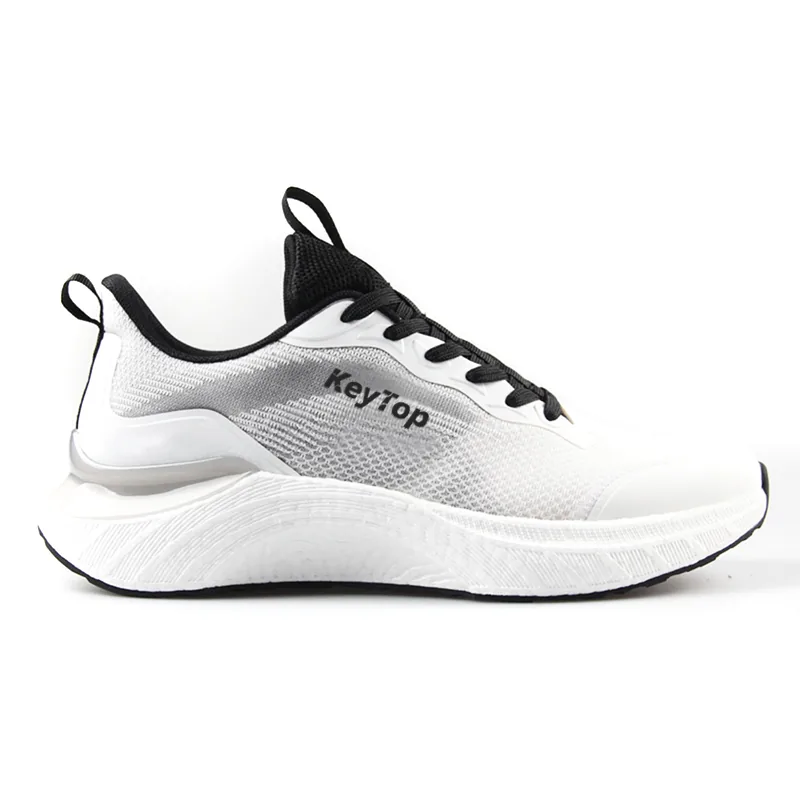
Start a private-label protective-footwear review with the intended hazards, target market, responsible legal parties and exact product configuration. Check that the conformity documents and actual test scope cover the branded model and proposed changes. KEYTOP manufactures lifestyle footwear; this guide does not offer a certified safety-footwear program or safety-product test results.
For the actual target market, compare the branded configuration and named entities with the assessed product scope and applicable document requirements. Resolve any mismatch with the competent reviewer before using those records for the proposed protective product.
Direct answer: For protective footwear, identify the actual market requirements and qualified supply route before requesting product evidence; lifestyle footwear cannot replace a certified protective product.
What changes when a safety shoe carries your brand
| Option | Scope to establish | Evidence to review | Open decision |
|---|---|---|---|
| Existing protective model with proposed branding | Exact product, permitted labeling and responsible legal parties | Applicable conformity documents and assessment scope for the proposed branded configuration | Does the actual route cover the intended market and identified model? |
| Modified protective construction | Changed components, intended protective claims and configuration | Competent technical review identifying affected assessment and evidence | What must be resolved before the changed model can be released? |
| Unchanged model and label proposal | Actual supplier, model and permitted brand arrangement | Document identity, product coverage and applicable labeling obligations | Keep gaps open; an unchanged construction alone does not settle brand or legal responsibilities |
For an existing protective model, compare the proposed branded configuration with its actual conformity documentation and assessment scope. Have the designated competent reviewer resolve the applicable parties, labeling and product coverage before accepting the supplier route.
For private label safety shoes, preserve the current-specification decision under one revision number: keep the supplier response, marked sample, approved specification, quotation, and approval owner together. If the evidence conflicts with the approved record, hold the quote, sample, or production release until the deviation is explained in writing. Once the buyer and designated technical authority have accepted the evidence, carry the signed decision record into the purchase order, production handoff, shipment release, and later reorder review so every team works from the same baseline.
Where the certificate stops travelling with the product
Read the actual conformity documents for product identity, covered configuration, named parties and assessment scope. Do not assume that adding a brand either transfers every document or automatically invalidates all existing evidence; determine the effect for the actual market, product and proposed change.
The obligation that lands on the brand owner
Establish the applicable manufacturer, importer, distributor and other responsibilities for the actual market and legal entities. Resolve the product conformity route and contractual risk allocation separately. A general sourcing article or an indemnity clause does not determine liability or replace required conformity evidence.
Certification: who is named, and on what
Use the table below to decide which supplier or factory signals are strong enough for a shortlist: what to confirm, what supplier proof to request, and which RFQ, sample, or approval step follows.
| Requirement | Factory control | Evidence to verify | Order risk | RFQ follow-up |
|---|---|---|---|---|
| Sample approval | Factory holds pre-production sample for sign-off before bulk. | Compare sample to spec; measure dimensions, material, and function. | Deviation in bulk without approved sample leads to reject. | Request RFQ for sample turnaround and sign-off procedure. |
| Material / substrate | Incoming material lot tested for grade and origin compliance. | Request mill certificate and cross-check against approved substrate list. | Substituted material can fail safety rating or wear life. | Shortlist suppliers who provide material traceability with RFQ. |
| Finish or color control | Batch-to-batch color standard held against master swatch. | Visual check under the agreed viewing conditions; spectrophotometer reading if disputed. | Color drift across production runs creates mismatched inventory. | Document acceptable delta-E value in RFQ follow-up. |
| Packing format | Inner box, master carton, and pallet pattern per packing spec. | Inspect first carton for label, barcode, and carton strength. | Wrong packing leads to shelf rejection or shipping damage. | Verify packing details in RFQ and approve sample carton. |
Product certification versus factory audit
Review product conformity evidence and factory system evidence as different records. The product file concerns the identified protective model and applicable requirements; an ISO 9001 certificate concerns the stated quality-management-system scope. A factory audit or signed sample alone does not demonstrate protective performance or market conformity.
Reading a certificate for scope and holder
Check the model, configuration, applicable requirements, named parties, document validity and covered variants in the actual product file. Ask the competent assessment party to confirm any unresolved brand or construction change; do not assume that every market requires the brand to be the named certificate holder.
RFQ checkpoint
Verifying the factory before the RFQ
- Which product and system records can this supplier return? Review any applicable ISO 9001 certificate as system evidence, with its actual site and scope. Separately request the protective product’s identified conformity file and test reports through a qualified supply route. Neither the ISO certificate nor an available sample certifies a safety shoe.
- What is the factory's process for approving a new private label safety shoe model before bulk production? The approval gate determines whether your design and safety specifications are checked before materials are cut, reducing costly rework. They describe a documented first-article inspection that checks materials, dimensions, and safety component placement. A missing or informal approval step can lead to bulk runs that fail your safety or branding requirements. Request their approval checklist and confirm it includes a signed-off sample before production starts.
- How are order materials and finished goods identified? Request the actual storage, lot-identification and reconciliation controls for the proposed order. Dedicated space or a tour is not itself proof of correct components. The KEYTOP footwear products is lifestyle footwear and supplies no protective-product conformity evidence.
Evidence worth requesting, and what it proves
A valid ISO 9001 certificate proves the factory has a quality management system, but only if the scope explicitly covers safety shoe production. Request a copy and verify the scope line. A third-party component test report is evidence only for its identified sample, method, conditions and reported result. Have the competent reviewer establish its relevance to the proposed protective configuration; it does not by itself establish complete-footwear conformity. Batch traceability records prove the factory can isolate defective material lots, which is critical for recall management.
Signals that the certificate does not match the line
If the ISO 9001 certificate lists a different address than the production site, or the scope excludes safety footwear, the certificate may not apply to your line. Also check the certificate issue date against the factory's claimed experience. A mismatch signals that the supplier is not fully qualified for your order.
Specification points that carry compliance
For a private-label protective-footwear RFQ, record the proposed components and the applicable standard, edition and protection classification for the identified model. Have the competent reviewer confirm the relevant test methods and criteria. Match every listed buyer input to written supplier confirmation, approval evidence, and the risk that would hold the quote.
- Define the protective claims and applicable requirements: Record the hazards, target market, governing standard and edition where applicable, exact model and relevant test methods. Have the competent technical reviewer define the evidence needed for the chosen construction; do not select a protection class or acceptance value from a generic article.
- Confirm the actual quantity basis with the qualified protective-footwear supplier: Obtain its written style/color/size allocation and quotation. KEYTOP’s separately stated lifestyle MOQ remains unchanged and is not evidence of an available safety-footwear program.
- Separate development, assessment and production milestones: Obtain the qualified supplier’s actual dated schedule and start conditions, including changed construction and conformity review where needed. Do not apply a lifestyle sample or production window to an unconfirmed protective-footwear route.
- Specify the quality control checkpoints: in-process inspection, final random sampling, and test report review. Without defined QC gates, you may receive shoes that pass factory internal checks but fail your market's requirements. A factory may skip the slip-resistance test on the first production batch unless you require a third-party report. You could ship non-compliant shoes, leading to returns, fines, or brand damage. Add QC checkpoints to the purchase order and request a copy of the inspection report before shipment.
Toe cap, midsole, and slip rating basics
Select protection claims from the intended hazards and actual applicable market requirements, then identify the component and complete-footwear evidence for those claims. Cap material, sole compound or a legacy slip-rating abbreviation alone does not establish the product’s protection level. Record the governing method and edition with the competent reviewer’s acceptance criteria.
Where a material substitution voids the claim
For a material, tooling or assembly change, have the competent technical party identify its effect on the actual protective model’s conformity file and the assessment work required before release. Do not assume that every substitution either preserves or voids all claims. KEYTOP’s OEM and ODM footwear manufacturing route concerns lifestyle footwear; it is not a protective-product certification service.
Sampling and test evidence
Without a clear specification and approval record, a single failed market surveillance check can halt your shipment and trigger costly recalls. The commercial consequence is direct: unclear test criteria in the quote request lead to rejected batches and lost shelf time.
What to test on a pre-production sample
Request an identified pre-production sample and reports for the exact protective configuration under review. Check the product/component identity, relevant method and edition, conditions, reported result and assessed scope. The designated technical reviewer must resolve uncovered requirements; a report title alone does not establish conformity.
Retaining evidence for market surveillance
Keep the applicable product/conformity documents, configuration and revision records, relevant reports and production-lot traceability in the actual technical file. A branded photograph, sample signature or RFQ confirmation alone is not a complete market-conformity record.
Use this checklist during sample handoff:
| Check | Evidence question |
|---|---|
| Protective configuration | Do the actual model, components and variants match the assessed scope? |
| Relevant performance claim | Which applicable method, edition, conditions, criteria and result support the claim? |
| Slip evidence | Does the report cover the actual outsole and applicable intended-use conditions? |
| Release decision | Has the competent reviewer closed the applicable product requirements and open deviations? |
For more on sourcing checks, see our blog on blog.
Approval and change control after launch
Before production begins, the approved sample and specification sheet must be signed off by both parties. After launch, any deviation from this baseline requires formal change control.
What a supplier must not change without telling you
- Toe cap material (steel vs. composite vs. alloy) – alters impact rating and weight.
- Outsole rubber compound – affects slip resistance and durability.
- Last shape or size grading – changes fit and could cause returns.
- Lining or insole material – impacts breathability and comfort claims.
- Adhesive or stitching method – can reduce bond strength and cause delamination.
Changes requiring an assessment-scope review
Record changes for an affected-scope technical review, then identify any additional assessment or testing required for the actual product and market. Review objects include:
| Changed object | Technical review to commission |
|---|---|
| Protective component | Identify affected claims, configuration and applicable assessment scope |
| Outsole compound | Identify relevant slip and other affected performance evidence |
| Last or size geometry | Review fit, covered variants and affected protective configuration |
| Lining or other material | Review affected product requirements and method-specific evidence |
Without a clear specification and approval record, a single failed market surveillance check can halt your shipment and damage your brand. Always require written approval before any change, and keep a log of all revisions with dates and signatories.
The verification pack to assemble before ordering
Without a clear specification and approval record, a single failed market surveillance check can halt your shipment and trigger costly recalls. Before you place a private label safety shoe order, assemble a verification pack that covers specs, cost basis, production risk, factory execution, and quote request/sample handoff. Start with a copy-ready supplier verification checklist: confirm the toe cap material (steel, composite, or alloy), impact rating, sole slip resistance, and closure type. Ask the factory to confirm back the exact minimum order per style, unit price FOB, and payment terms. Then verify production risk by requesting a process flow chart and quality control checkpoints. Finally, ensure quote request and sample handoff documents include a signed approval record for materials, colors, and logos. This pack protects your brand from specification drift and compliance gaps.
Copy-ready supplier verification checklist
- Toe cap material and impact rating
- Sole slip resistance and closure type
- Unit price FOB and payment terms
- Process flow chart and QC checkpoints
What to ask the factory to confirm back
Request the factory to confirm back the minimum order per style, lead time for first sample, and the approval record format for materials, colors, and logos. This ensures alignment before production.
Source scope: The European Commission PPE overview describes the EU PPE regulatory and conformity-assessment framework. It is not a KEYTOP product file or proof for another market. An ISO 9001 system certificate answers a different question and does not approve a protective shoe.
KEYTOP’s footwear sourcing solutions serves lifestyle footwear. Keep an unresolved protective-footwear project with a qualified protective-product supplier and the appropriate technical/conformity reviewer; do not use a lifestyle sourcing route as proof of safety capability.
In conclusion
Release a protective-footwear order only through its applicable product-conformity review and identified supplier route. Keep the actual hazards, configuration, documents, methods, responsible parties and open deviations together. Commercial quotation and sample sign-off help control the order but do not replace protective-product assessment.
For a lifestyle footwear project, use Review Lifestyle Private Label Programs with its own specifications and confirmed commercial conditions. A certified safety-footwear request needs a separately qualified protective supply route.
FAQ
Does a factory certificate cover my private label brand?
ISO 9001 concerns the named quality management system and scope. Protective-footwear conformity depends on the actual product, target market and relevant assessment documents; a factory certificate does not establish those results.
Who must hold the safety certification, the factory or the brand?
Determine the responsible parties and document requirements under the actual market’s protective-product framework. Have the competent reviewer confirm the named entities, assessed model and brand arrangement; do not assume a universal certificate-holder rule or that a factory contract replaces conformity obligations.
Are you among those who desire strong, durable footwear that won't compromise safety?
Start with the user’s hazards and applicable protective requirements, then review the exact configuration and relevant evidence through a qualified supplier. A physical sample can support fit and construction observations; it does not alone verify safety performance or legal conformity.
What is your MOQ ?
At KEYTOP, the lifestyle footwear MOQ is 1,000 pairs per style, per color and per size for casual sneakers, casual shoes, boots and outdoor footwear, and 1,500 pairs for sandals, slippers and slides; styles, colors and sizes cannot be mixed to reach it. This policy is not a safety-footwear offer. Obtain the actual protective supplier’s commercial conditions separately.
Can i ask one pair samples before place order?
Ask the qualified protective-footwear supplier for the sample scope, payment, dispatch and evaluation conditions for the identified model. Use a physical sample for the agreed observations and retain the applicable product reports; one pair does not prove safety conformity. KEYTOP’s lifestyle sample policy does not create an available safety-shoe sampling route.
quote request handoff: Send Lifestyle Specs for Review.