
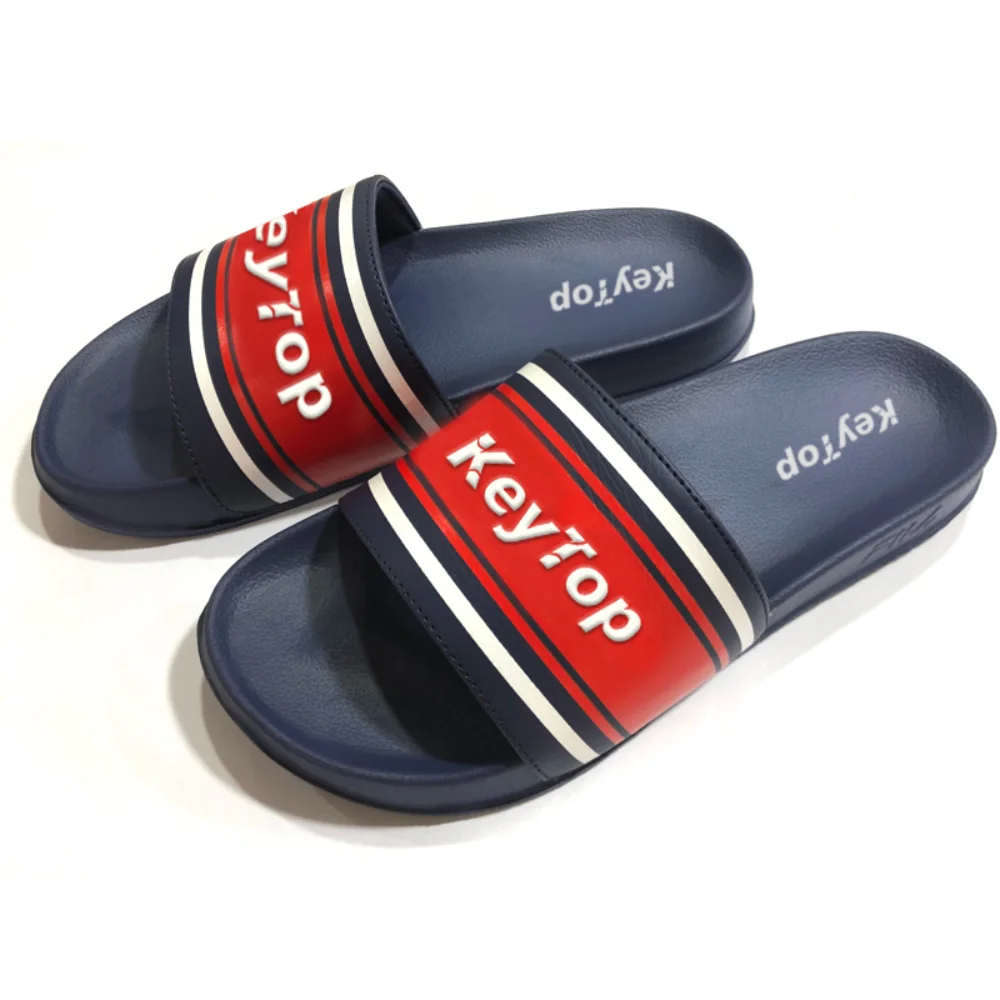
Which Slide Supplier Can Return the Evidence for Your Order?
Complete supplier evaluation guide for slipper slide OEM sourcing. Covers factory capabilities, material expertise, QC systems, and red flags for B2B buyers. For reference, KEYTOP’s own slipper and slide program runs at 1,500 pairs per style, color and size, with standard production at 35–45 days after specifications, sample approval and production slot are confirmed.
Records to Request Before Shortlisting
- Risk Reduction: Identify the proposed slide construction, responsible production party and unresolved capability questions
- Cost Efficiency: Compare material, tooling and packing scope under the same quantity allocation and quotation revision
- Quality Assurance: Match the actual sample and relevant inspection evidence to the agreed slide requirements before approval
Why Supplier Selection Matters in Slipper Slide Manufacturing
Slipper slides appear simple, but OEM quality varies dramatically between factories. The difference between a low-priced and a higher-priced slide is not just branding, it is material density, mold precision, bonding quality, and durability testing. For B2B buyers sourcing slides at volume, supplier evaluation determines whether you receive consistent product or a container of defects.
Evaluate the actual proposed production site and its evidence for the selected slide construction. Strengths vary by factory, so judge each supplier on its own evidence.
Material Capability Assessment
Material has a large effect on slide quality. Evaluate factory expertise in these areas:
| Material | Quality Indicators | Questions to Ask | Red Flags |
|---|---|---|---|
| EVA foam | Density and shore A hardness within the values agreed with the buyer | What density do you run? Can you provide shore hardness samples? | Cannot specify density; only says “soft” or “hard” |
| Rubber outsole | Wet slip resistance and abrasion results within the values agreed with the buyer | Do you test slip resistance? What compound? | No defined compound specification or traceable applicable test evidence |
| PVC/TPR straps | Flex resistance agreed with the buyer; restricted phthalates checked for EU programs | REACH compliant? Can you provide test reports? | Cannot confirm chemical compliance |
| Cork/leather (premium) | Genuine material certificates; bonding strength | Source of cork? Bonding method? | Synthetic sold as natural; no material certs |
Production Capacity and Mold Capabilities
Slipper slide production is heavily dependent on mold quality and injection/extraction capacity:
- Mold inventory: How many existing molds? Can they modify existing molds or only create new ones?
- Injection lines: How many EVA injection machines, and what is the daily output per machine?
- Assembly lines: For multi-component slides (strap + footbed + outsole), how many assembly stations, and what is their daily output?
- MOQ reality: Ask whether MOQ is counted per style, per color or per size. At KEYTOP, the MOQ for sandals, slippers and slides is 1,500 pairs per style, per color and per size, and styles, colors and sizes cannot be mixed to reach the minimum.
- Lead time: At KEYTOP, standard production takes 35-45 days after specifications, sample approval, material assumptions, packaging and production slot are confirmed; new mold work adds time.
Quality Control Systems for Slide Production
Slide-specific QC checkpoints that separate professional factories from workshops:
- Density consistency: Batches checked for EVA density variation against the tolerance agreed with the buyer
- Dimensional accuracy: Length, width, and strap position measured per size (against the agreed tolerance)
- Bonding strength: Strap-to-footbed pull test (against the value agreed with the buyer)
- Slip resistance: Wet and dry coefficient testing on outsole samples
- Visual inspection: Air bubbles, flash edges, color consistency against the approved reference under lighting conditions agreed for the order
- Packing accuracy: Size marking, pair matching, carton count verification
Factory Visit Checklist for Slide OEM Evaluation
Decision Summary: Slide Factory Visit
| Area | What to Check | Pass Criteria | Red Flag |
|---|---|---|---|
| Mold room | Mold organization, maintenance records, slide-specific molds | Labeled molds, regular polishing schedule | Rusty molds, no organization |
| Injection floor | Machine count, temperature control, material storage | Clean machines, sealed material bags | Open material bags, dirty machines |
| Assembly area | Worker skill, bonding station setup, curing time | Consistent application, proper curing racks | Rushed bonding, no curing time |
| QC station | Testing equipment, defect boards, records | Traceable relevant inspection and test records, with the internal or external capability identified | No traceable relevant inspection or test evidence |
| Finished goods | Packing accuracy, carton marking, storage | Correct sizes, clean storage, FIFO | Mixed sizes, floor storage |
Pricing Structure and Negotiation for Slide OEM
Understanding slide cost structure helps buyers evaluate quotations:
Compare the quoted material, tooling, construction, branding and packing costs under the same order quantity and specification. Do not rank price tiers from the material or construction label alone.
Confirm volume and repeat-order pricing in writing. Always request itemized cost breakdown, not just total unit price.
Ready to Source Your Next Slide Order?
Contact KEYTOP for OEM slipper slide manufacturing.
- MOQ 1,500 pairs per style, per color and per size for slippers and slides
- Standard production 35-45 days after specifications, sample approval, material assumptions, packaging and production slot are confirmed
- Submit the selected slide construction and tooling needs for an order-specific feasibility review
- REACH/SVHC-related documents can be confirmed for selected EU-market products and materials