
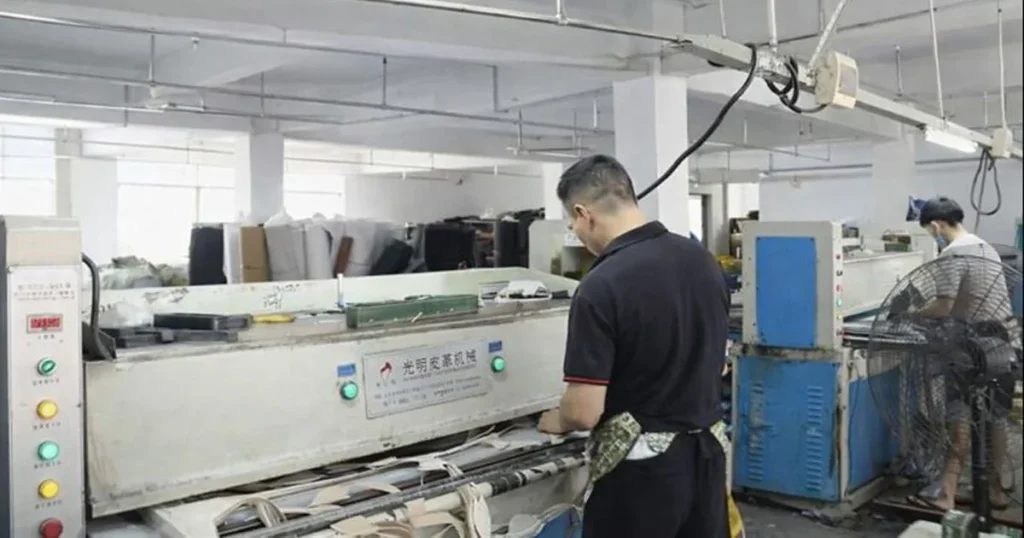
The sourcing record for a slipper slide outsole comparison is incomplete until it covers material, samples, finishes, and production handoff.
EVA (ethylene-vinyl acetate), rubber, and blended outsoles behave differently in shrinkage and in wear. Choosing between them changes the tolerance you can hold.
Direct answer: For OEM (original equipment manufacturer) slippers and slides, shortlist an outsole only after its compound fits the intended surface and wear conditions, its sample passes the agreed grip and durability checks, and the factory confirms repeatable material control, tooling, cost, and lead time.
Define the Buyer Decision for Slipper Slides Outsole Material Comparison For Oem Buyers
| Proposed route | Scope to compare | Unverified trade-off | Evidence to request | Next decision |
|---|---|---|---|---|
| Current EVA construction | Actual compound, geometry and intended use | Weight, hardness, abrasion or slip outcomes remain specimen-specific | Applicable test reports for identified material and assembled product | Keep uncovered use conditions open |
| Alternative rubber construction | Actual compound, tread and assembly route | No inherent cost, weight or grip ranking | Comparable quote and relevant method/condition results | Review changed material/tooling and sample scope |
| EVA with bonded rubber component | Actual mating layers and attachment process | Added work and bond behavior depend on the construction | Identified bonded sample and applicable adhesion evidence | Resolve the affected assembly criteria before acceptance |
| Proposed PVC construction | Actual compound, geometry and storage/use environment | No automatic low-risk fallback or cold-performance guarantee | Applicable flex/temperature/property evidence | Compare against the same intended-use requirements |
For the current EVA construction, identify the actual compound, tread and intended environment. Ask the competent testing party to select an applicable slip or material method and record its conditions, units, specimen identity and result; a compound name alone does not establish wet grip.
Identify the proposed compound and construction before comparing quotes. Record which property is being claimed, the applicable method and sample identity, and the buyer’s acceptance criterion. A generic material name does not establish slip performance or production readiness.
Confirm Product and Order Scope
At the point where outsole material is selected, you must have a confirmed product specification sheet and order scope before production begins. Record the agreed requirements and compare the actual sample and production evidence with that scope.
- Specs: Define outsole material type (e.g., EVA, TPR, rubber) and hardness (Shore A) for slipper slides. Include thickness and tread pattern.
- Cost or MOQ: Request the actual component and process quotation under the same allocation; material names alone do not determine cost or durability.
- Production Risk: Have the technical owner confirm the actual molding, curing and assembly dependencies for the selected compounds and construction.
- Factory Execution: Verify the factory’s experience with your chosen material. Request past production samples to assess quality consistency.
- RFQ/Sample Handoff: Submit a detailed RFQ with material specs and request initial samples for approval. Use our OEM and ODM (original design manufacturer) footwear manufacturing process to streamline handoff.
Record the agreed outsole requirements, compare the identified sample and actual quote with those requirements, and keep unverified performance or cost assumptions open for review.
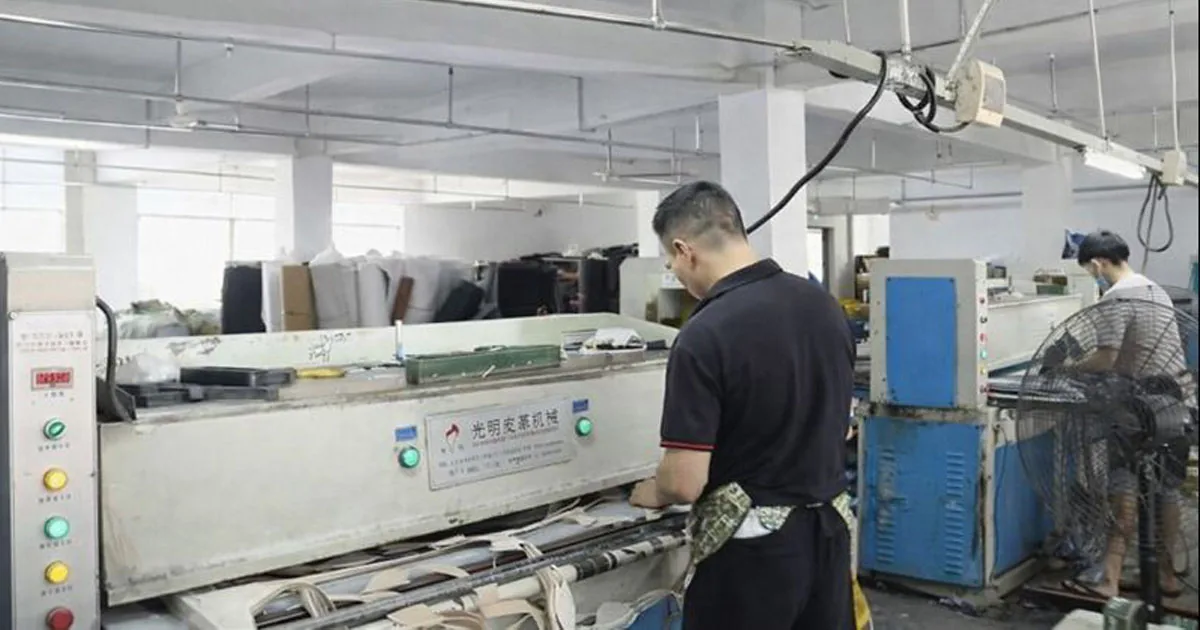
Check Outsole Compounds and Applicable Evidence
| Property | Current compound record | Alternative compound record | Comparison rule | Buyer action |
|---|---|---|---|---|
| Hardness | Not entered | Not entered | Use applicable scale, method, preparation and conditioning for each specimen | Record the actual reading and agreed criterion |
| Material and packed cost | Not entered | Not entered | Use identified construction/mass and the same quantity and quote scope | Compare actual component, assembly, tooling, packing and freight inputs |
| Abrasion | Not entered | Not entered | Review applicable method, specimen and conditions before comparing results; do not infer service life directly | Retain actual units, reported result and buyer acceptance criteria |
Hardness readings are comparable only when the scale, specimen preparation and conditioning are identified. Ask the technical reviewer whether the proposed method applies to the compound and geometry; hardness alone does not establish comfort, abrasion life or slip performance.
Carry the selected construction, actual quote inclusions and unresolved evidence into the private-label program record. Recheck changed tooling, compounds or bonded components before approving a revised sample.
Supplier proof and sample evidence to request
Ask the supplier for a material specification sheet listing outsole density, hardness, and slip-resistance values. Request a sample pair of each material for your own wear test. For rubber, also request the abrasion-loss report. Document the test conditions so you can compare results across suppliers before approving production.
Acceptance criteria and red flags to record
Define acceptable hardness range, abrasion loss limit, and cold flex temperature. Red flags: missing test data, inconsistent results across samples, or refusal to share test methods. Record these in your approval checklist to avoid production delays.
Compare Outsole Quotes by Actual Construction
Start with evidence for slipper slides outsole:
- Proposed outsole material change: Record the selected compounds, construction and applicable property data. Ask the technical owner which tooling or process inputs change; request the resulting sample and quotation revision without inferring a grip, weight or lead-time outcome from EVA/PVC labels.
- Lead time extension due to material availability: Delays downstream packing and shipping; may incur airfreight cost Production planner and procurement manager Confirm the new material arrival date in writing with the supplier Update the order milestone schedule and notify the buyer of the revised ship window
- Outsole thickness tolerance outside original quote range: Affects fit, comfort, and final weight; may fail buyer's incoming QC (quality control) Senior engineer and quality manager Measure three random samples from the trial run with a calibrated thickness gauge If out of tolerance, stop production and request a corrective action plan from the supplier
- Cost driver change from single-density to dual-density outsole: Map changed compounds, molding or tooling operations and approval work; request the actual quotation and schedule impact before budget review Finance controller and sourcing director Compare the new quoted unit price against the approved cost breakdown If over budget, request a revised quote or escalate for cost re-approval before proceeding
Resolve Outsole Sample Gaps Before Approval
Before approving a slipper slides outsole material for production, the OEM buyer must verify that the supplier’s sample matches the agreed specification. This checkpoint records which cost, quality and timeline assumptions have been agreed before committing to a bulk order.
Questions to send back to the supplier
- What is the exact outsole material compound (e.g., EVA, TPR, rubber) and its hardness durometer as per the confirmed product specification sheet?
- Does the sample pass the slip-resistance test (e.g., applicable market compliance evidence or equivalent) at the required threshold?
- What is the minimum order quantity for this outsole material, and how does it compare to the quoted unit cost?
- What is the lead time for producing confirmation samples, and what is the factory’s capacity for this material type?
- Can the supplier provide a third-party test report for material composition and durability?
When to revise, escalate, or reject
If the supplier cannot answer these questions with documented evidence, the buyer should request a revised sample or escalate to a sourcing manager. Reject the outsole material if the slip-resistance test fails or if the MOQ exceeds the buyer’s budget without a cost-benefit justification. Use the table below to evaluate supplier responses.
| Checkpoint | Pass Criteria | Fail Action |
|---|---|---|
| Material compound matches spec | Supplier provides material data sheet with compound name and hardness | Request revised sample with corrected compound |
| Slip-resistance test passed | Test report shows coefficient of friction above buyer’s minimum | Reject material; request alternative outsole |
| MOQ within budget | MOQ is at or below buyer’s confirmed requirement | Revise the quantity or scope; KEYTOP slippers/slides require 1,500 pairs per style, color and size without mixing |
| Lead time acceptable | Lead time is within buyer’s production schedule | Escalate to expedite or find alternative supplier |
After passing all checks, the buyer should issue a formal approval for the confirmation sample and proceed to the next stage: bulk production order. This review process reduces the risk of costly revisions later.
Move from Review to RFQ or Sample
Your supplier’s confirmed outsole material specification sheet—including hardness range and abrasion resistance test results—provides the verifiable evidence needed to move from review to quote request or sample request. Confirm both parties’ approval of the identified material specification and retain the actual property results before the relevant production decision.
Inputs to include in the next message
- Outsole material type (EVA, rubber, or PU (polyurethane)) and any secondary material requirements.
- Hardness requirement as a range (e.g., soft to medium) confirmed by the product specification sheet.
- Abrasion test results from a certified lab or the supplier’s in-house testing.
- Color and texture references—either a Pantone code or a physical sample.
- Minimum order quantity (MOQ) and lead time for sample production.
Use this checklist to verify that the supplier’s sample request form includes all necessary inputs. The table below compares how three common outsole materials stack up against quote request criteria.
| Proposed construction | Specification to identify | Quote inputs | Open risk | Next evidence |
|---|---|---|---|---|
| EVA route | Actual compound, density, geometry and intended use | Component, tooling, quantity and packing scope in the actual quote | Hardness, abrasion and traction remain unverified without applicable results | Identified material and assembled sample; agreed methods and criteria |
| Rubber route | Actual compound, tread and attachment route | Compare the same quote scope; no intrinsic moderate-cost or MOQ ranking | Compound and assembly changes may require a new sample and evidence | Applicable abrasion, traction and adhesion results where required |
| Proposed PU route | Confirm actual compound, construction and supplier capability | Request the actual component/process quote; do not assume higher cost | Color and curing outcomes require evidence for this construction | Agreed sample, color reference and relevant property results |
After comparing materials, the buyer should formalize ownership at quote request stage. The product specification sheet must be signed off by the sourcing manager and the supplier’s quality assurance representative. This sign-off authorizes the sample request or quote request. Without this gate, production risk increases due to misaligned material expectations.
Ownership and sign-off for the next gate
Only proceed to quote request or sample request after the outsole material specification has been reviewed and approved by both the buyer’s technical team and the supplier’s production manager. The sign-off document should reference the specific material type, hardness range, and any test results. This gate records the approved inputs and open exceptions; it cannot guarantee later execution or eliminate rework.
Source scope: ISO 2859-1 concerns lot sampling, not material performance. ISO 4649 rubber abrasion scope defines an applicable material test and does not directly establish service performance. Select actual specimen-compatible methods with the testing party, including a separate slip-evidence route where relevant.
Traction and assembly evidence: SATRA TM144 friction scope makes the footwear–test-floor combination and conditions part of the assessment. Record the actual surface and contaminants; a rubber or EVA name is not a slip result. For a bonded sole or added component, ask the laboratory whether SATRA TM411 sole-bond scope applies to that construction; narrow-strap sandal exclusions and specimen preparation must be checked separately. These references establish method scope, not KEYTOP test results.
In conclusion
The sourcing choice between EVA, PVC, rubber, and PU for slipper slide outsoles ultimately depends on your end-use requirements, volume commitment, and quality tolerance. Compare each option against your product specification sheet, verifying density, abrasion resistance, and slip resistance with documented factory test data rather than marketing claims. Shortlist suppliers who can provide a clear material specification and production assumptions, then validate the spec through a pre-production sample before approving the bulk order. Document the approved outsole material parameters in your quote request to lock in cost assumptions and avoid mid-production substitutions that introduce quality risk.
To request a quote, visit slippers slides products and confirm the final specification, quote assumptions, sample approval, QC evidence, approval risk, and supplier follow-up before bulk order.
Slipper Slides Outsole Material Comparison For Oem Buyers FAQ
What should buyers confirm first?
It depends on your end-use requirements. First, confirm the outsole material specification—EVA, rubber, PVC, or PU—and document the required hardness, abrasion resistance, and slip resistance in your quote request. Then, verify the cost and MOQ impact for each material choice with the supplier, as these factors directly affect your unit price and minimum order quantity. Finally, assess supplier risk by asking for documented experience producing your chosen outsole material and requesting a reference sample for QC verification before committing to bulk production.
Which proof should be retained for approval and reorders?
Retain the approved product specification sheet that includes the outsole material composition, hardness range, and any test results for abrasion or slip resistance. Also keep the signed sample approval document and the QC report from the initial production sample. For reorders, you will need these records to compare later batches with the agreed baseline and investigate changes; retained records do not guarantee identical performance.
Which warning signs should stop the order?
Stop the order if the supplier cannot provide a documented material specification or a physical sample for QC verification before production. Also halt if the quoted cost or minimum order changes without a clear explanation tied to the outsole material choice, or if the supplier has no verifiable experience producing your selected material. Finally, do not proceed if the sample fails your hardness, abrasion, or slip resistance checks, as this indicates a high risk of quality issues in bulk production.
Next step: Send Specs for Review.