
Many companies quoting OEM slippers do not own a slipper line, and the quotation looks identical either way until the first sample arrives late and slightly wrong.
This checklist gives the slipper-specific proof that separates a factory from a trader, the minimums that actually apply per style and color, and what a sample round costs before a deposit moves.
Direct answer: Sort OEM slipper suppliers by asking who owns the last and the mold, which constructions run in-house, and how the minimum is counted. At KEYTOP the minimum on sandals, slippers and slides is 1,500 pairs for one style, one color and one size, and styles, colors and sizes cannot be mixed to reach it. A supplier who quotes one flat minimum for a mixed order has not run the calculation.
How to tell a slipper factory from a slipper trader
Keytop Footwear, founded in Fujian in 2006, makes slippers and sandals, and the questions below are the ones a maker can answer from the line. A slipper factory and a slipper trading company send the same quotation. The difference shows in what each can answer about the last, the outsole mold and the footbed assembly without going away to ask, and in whether a specification question gets a quality control answer or a reassurance. Four questions separate them, and none needs a factory visit to start.
| What to confirm | What a maker can state | Risk if you skip it | Verification check | Buyer follow-up |
|---|---|---|---|---|
| Last ownership | Who owns the last and where it is stored | Tooling that cannot move with you | Ask for a photo of the last with its reference | Fix ownership in writing |
| Outsole tooling | Whether the mold is theirs or hired | A style that disappears with the supplier | Ask which molds exist for the quoted style | Name the mold in the order |
| Footbed assembly | Whether lasting and assembly run on site | A subcontracted step nobody audits | Ask for the in-process inspection record from that line | Require a subcontractor list |
| Labeling knowledge | Which destination labeling rules apply | A shipment held for a label declaration | Ask how they handled a recent market change | Confirm labeling on the order |
The last row is a fair test of trading knowledge. Slipper labeling rules do change: a testing body notice recorded that Utah updated its regulatory requirements for labeling slippers in 2024. A supplier who tracks that kind of change is working with destination markets rather than shipping whatever the buyer asks for.
Which slipper sourcing red flags stop an approval
Some findings are fixable and some end the conversation. These four end it, and each is checkable before a sample charge is paid.
| Criterion | What to verify | Signal that should stop approval | Proof to request | Buyer follow-up |
|---|---|---|---|---|
| Minimum order rule | How the minimum is counted | One flat number quoted for a mixed order | Written rule per style, color and size | Confirm before paying for samples |
| Tooling ownership | Who holds the last and the mold | No clear answer, or an answer that changes | Photograph of the tooling with its reference | Put ownership in the contract |
| Inspection basis | Which sampling plan a pass was measured under | A pass with no plan and no defect list | Inspection report naming the plan | Fix the plan in the purchase order |
| Construction ownership | Which steps run at this address | Core assembly subcontracted with no list | Named subcontractors with locations | Audit them or drop the supplier |
The minimum order rule catches many buyers. At KEYTOP the minimum on sandals, slippers and slides is 1,500 pairs for one style, one color and one size, and styles, colors and sizes cannot be mixed to reach it. A four-color launch is therefore four minimums, not one, and a supplier quoting a single number against a mixed brief has either not read it or is planning to reprice later. On the inspection side, ask which plan a pass was measured under: ISO 2859-1 sampling inspection by attributes is the usual basis, and a report without one is an opinion. Program structure is described on the OEM and ODM footwear manufacturing.
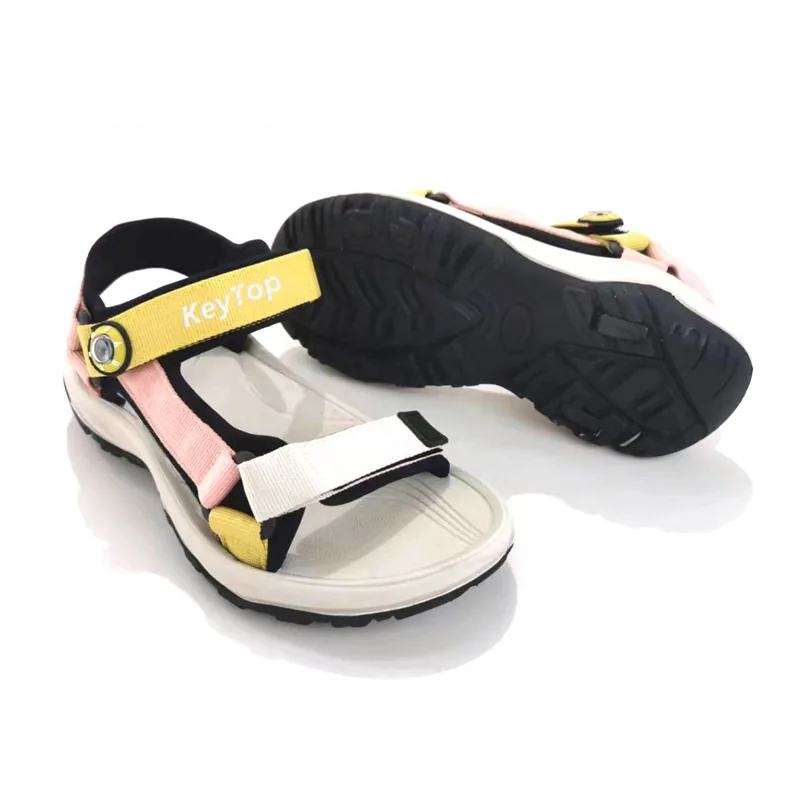
Which slipper constructions a factory runs in-house
Slipper is one word covering several different builds, and a factory rarely runs all of them well. Ask which construction the quoted price assumes before comparing two numbers.
| Construction | Best fit when | What it costs you | Verification check | Buyer follow-up |
|---|---|---|---|---|
| Injected or molded sole | High volume in one color and size run | Cancellation, reuse and transfer costs depend on the agreed tooling rights and payment terms | Ask to see the mold for the quoted style | Fix mold ownership in the order |
| Stitched or cemented sole | Mixed runs and frequent style changes | Bond-line defects if the method is left open | Inspect the bond line on the sample | Name the bonding method on the drawing |
| Open-back slide | Simple assembly and fast changeover | Fit complaints and returns rest on the strap alone | Wear-test the sample rather than measure it | Require a worn sample photo |
| Closed-back indoor slipper | Comfort-led ranges and gift programs | Filling and lining add material questions | Confirm filling and lining declarations | State both on the specification |
Price differences between two quotations usually trace to the construction assumed rather than the material specified, so compare quotes only after both name the same build. The risk of skipping that step is a cheaper number that turns out to be a different shoe. Application fit across ranges is described in the footwear sourcing solutions.
Which slipper specifications must be fixed before a quote
A slipper quotation rests on fewer specification lines than a shoe, which is exactly why the missing ones are expensive.
Footbed and outsole compounds
Name the footbed material and the outsole compound rather than describing them. Comfort language does not survive a factory handover, and two suppliers quoting soft footbed will not quote the same thing. Ask for the compound named on the specification and check it on the sample rather than accepting it in the quotation, because this is the line that decides both wear life and unit cost.
Upper material and sizing basis
Fix the upper material, its backing, and the sizing basis the factory will grade against. Slipper sizing is often quoted in a whole-size run where the market expects half sizes, and that gap appears as a return rate rather than as a quality complaint. State the size table you will accept, and verify it on the sample before approving anything else. How a plant runs its checkpoints is described on the KEYTOP factory.
What a slipper sample round costs before a deposit
Sampling is where a slipper program spends money before it commits to any. Read the cost in two parts.
Mold and last charges
A new outsole mold or a new last is tooling spend, and its payment, credit and cancellation conditions must be confirmed in the actual tooling quotation. Ask three things before agreeing to it:
- Whether an existing last or mold can carry the style, then confirm any adaptation, use or maintenance charges rather than assuming the tooling line is zero.
- What the charge covers, and whether it is credited against a production order at a stated quantity.
- Who owns the tooling afterwards and where it is stored, because that decides whether a second source is possible.
Sample rounds and their timing
Budget for more than one round. A first sample answers construction, a second answers fit and finish, and a third usually exists because something was described rather than specified. At KEYTOP a sample runs 7 to 15 days after sample requirements and usable specs are confirmed, and the clock starts at confirmed rather than at first inquiry, so an open compound or size table stalls the round before it starts. Ask for the quality control checks applied to the sample as well, since a sample built without the in-line check is not representative of what the production run will do.
In conclusion
Sorting OEM slipper suppliers comes down to three answers a maker gives immediately and a trader does not: who owns the last and the mold, which construction steps run at this address, and how the minimum is counted when the order is mixed.
Take them in that order. Tooling ownership decides whether the program can move; construction ownership decides who you are actually talking to; and the counting rule decides whether the price you were quoted survives the real order, since a multi-color launch is several minimums rather than one. Ask for the inspection report with its sampling plan rather than a pass mark, and budget for more than one sample round, because the third round usually exists because something was described instead of specified.
When the shortlist is settled, take the specification to the slippers slides products and request the quotation there. That route fits because the constructions and fitment options the specification has to reference are set out on that page, which a general inquiry cannot resolve. Sending style names alone risks a quotation built on the supplier assumed construction rather than yours.
OEM slipper supplier FAQ
Who owns the last and the mold when oem slipper suppliers quote a new style?
Settle last and mold ownership in writing before the tooling charge is paid on an OEM slipper style. Silence favors the supplier, and an outsole mold the buyer funded but cannot move removes the second-source option for that style.
Which slipper footbed and outsole details must be fixed before suppliers can quote?
The footbed material, the outsole compound, the upper material and its backing, and the size table. Comfort descriptions do not survive a handover; named compounds do.
What sample checks catch an OEM slipper that fails in wear rather than in inspection?
Wear the sample. Bond-line separation, strap anchor movement and footbed compression show up in use and pass a dimensional check. Ask for a worn-sample photograph after a set period rather than a bench measurement alone.
Which proof should buyers request before shortlisting oem slipper suppliers?
A photograph of the last and mold with their references, a named subcontractor list, an inspection report showing its sampling plan, and the written minimum rule per style, color and size.
RFQ handoff: Send Specs for Review.