
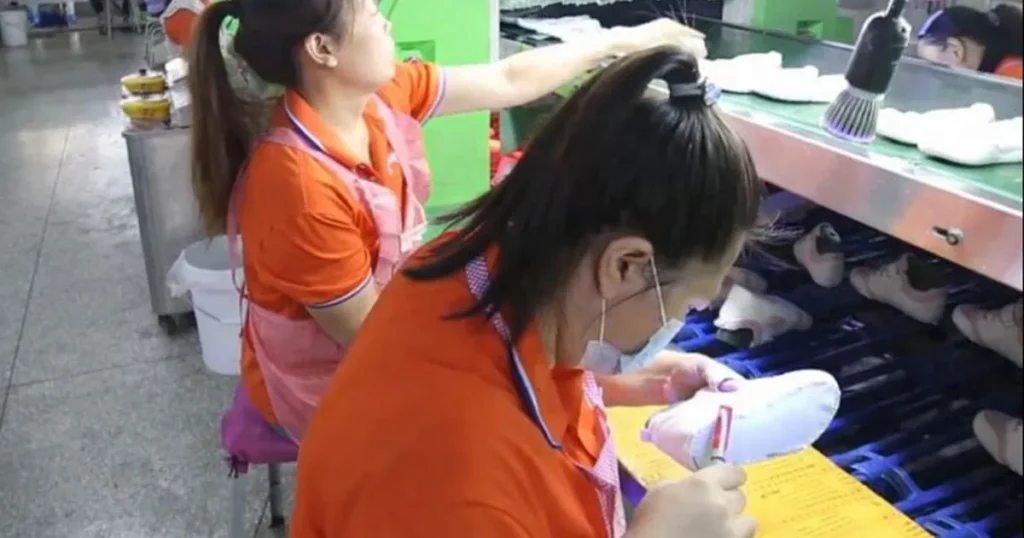
A private-label reorder can drift when the size run, label artwork or carry-over material assumptions were not recorded with the approved reference.
This guide covers the inputs a brand owns rather than the factory: size run and grading basis, label and origin marking, and the retained sample reference that makes a reorder match the first delivery.
Direct answer: Fix four things before a private label shoe order goes to production: the size run and its grading basis, the label content and country-of-origin marking, the packaging specification, and a retained sample held under a reference the brand also holds. The reorder quotes that reference rather than describing the shoe again.
Which inputs a private label shoe program needs from the brand
A private label shoe program fails on inputs the brand owns rather than on factory capability. Keytop Footwear, founded in Fujian in 2006, inspects at three points, incoming materials, in-line and final before shipment; what stalls a program is the brand-side sheet those checks are made against. Work through them in order, because each one blocks the next.
Design and logo assets
- Send the logo as vector artwork with a stated color reference, not as an image pulled from a website.
- State every surface the logo appears on and the application method for each, since a print, a deboss and a molded mark are three different specifications.
- Confirm you hold the rights to every asset supplied, because a factory cannot verify that and the risk of a rejected shipment sits with the brand.
- Record a version reference for the artwork and quote it on every order, so a reorder cannot silently pick up an older file.
Size run and authorised-asset details
Fix the size table you will sell against and the grading rule the factory will build to, and state them as a specification rather than a preference. Checks on identified graded-size samples can reveal size-specific differences that a base-size review alone may not cover. Record the reviewed sizes, measurements and unresolved deviations against the agreed grading requirements. Where the program carries licensed or authorised marks, list them separately with the applicable permission evidence. Review that evidence before manufacturing and confirm any destination-specific documentation or import review needed for the order; an import check does not replace the review of permission to use the marks.
| Input | Who owns it | Risk if it is missing | Verification check | Buyer follow-up |
|---|---|---|---|---|
| Vector logo and color reference | Brand | Reprints and a color dispute at inspection | Compare the proof to the reference | Approve the proof, not a photo |
| Size table and grading rule | Brand | A size run that fails in the market | Measure a graded pair | Approve the graded pair |
| Rights and authorisations | Brand | Shipment held at import | Written permission on file | Attach it to the order |
| Packing specification | Brand | Warehouse rejection on receipt | Check the packed sample | Approve the packed unit |
Before sending the RFQ, compare each shortlisted factory’s stated private label scope against this input list; treat each supplier’s published scope as questions to verify at sampling rather than accepted answers.
Everything below assumes one thing is written down: what the delivered lot will be judged against. That is normally the ISO 2859-1 sampling inspection standard, and a brief that leaves it out leaves the supplier to decide what counts as acceptable.
Private label is the right choice when the brand already controls its channels and needs its own marks on a stable product, and a poor fit for a test run where size run and colorway are still moving. When to choose private label over stock-and-rebrand turns on three inputs: how many SKUs the range needs, how fast it must reach market, and whether tooling can be amortised. Weigh those trade-offs first.
How size runs and grading are fixed before production
Size is a specification, not a preference, and it is the private label input most often left to the factory by default. Fix the table and the grading rule before a sample is graded.
| Where it is sold | Fits when | What goes wrong otherwise | Spec or proof needed | Buyer follow-up |
|---|---|---|---|---|
| Single-market retail | One size table matches the whole order | Half sizes expected but whole sizes supplied | Size table stated on the specification | Approve a graded pair, not the base |
| Two markets in one order | Both tables named and split by carton | Cartons mixed and the wrong run shipped | Carton marks stating the size table | Split the order by table |
| Online with free returns | Grading verified before launch | A return rate read as a quality problem | Measured graded pair with tolerances | Fix tolerances in the order |
| Kids or wide-fit ranges | Grading rule stated for the specific last | Fit complaints concentrated in end sizes | Measurements at both run ends | Require end-size samples |
Read an inspection result against the sampling plan it was measured under rather than accepting a pass mark. Ask for measurements at both ends of the run rather than the base size alone. A base sample can measure correctly while the smallest and largest pairs drift, and that shows up as a return rate rather than as an inspection defect, which makes it a cost carried after the season rather than a price agreed before it. Which constructions are already tooled is visible in the casual shoes products.
Fix the acceptance basis in the same document as the specification. Naming the ISO 2859-1 sampling inspection standard costs one line and turns a later dispute into a measurement.
Which labels and origin marks a private label order carries
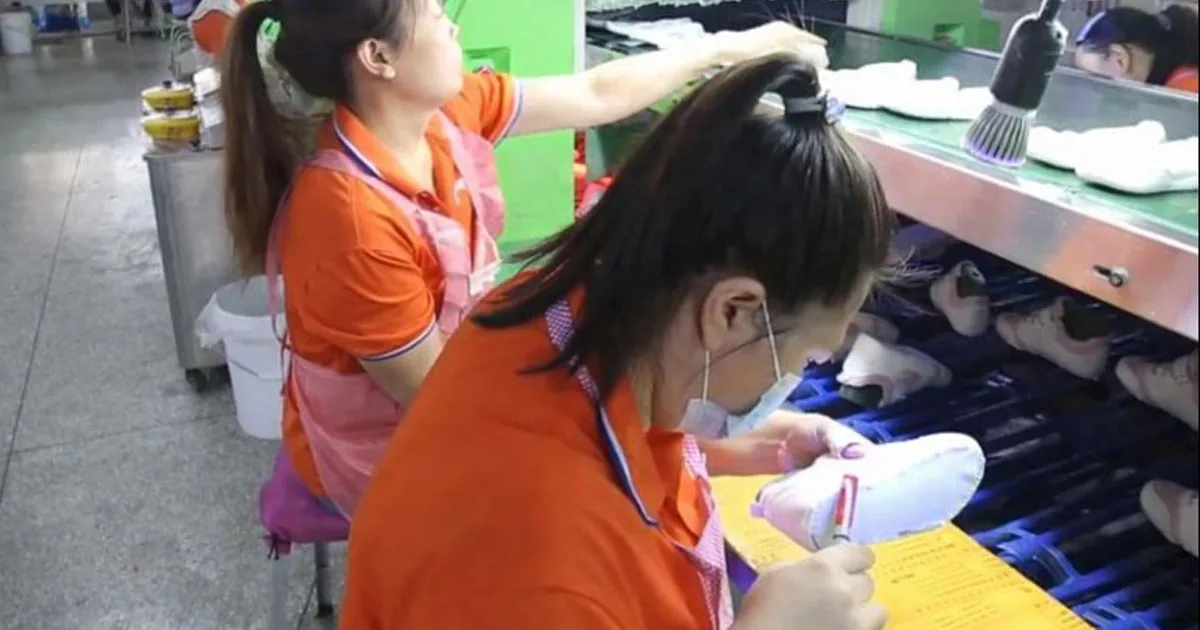
Labeling is where a private label order meets destination regulation, and it is checked by people who never see the factory. Treat it as a specification with its own approval.
| Requirement | Spec to confirm | What goes wrong | Proof or check | Buyer follow-up |
|---|---|---|---|---|
| Country-of-origin marking | Wording, placement and permanence | Goods held or relabelled at import | Photograph of the marked sample | Approve marking before bulk |
| Material or fibre declaration | Content statement per component | A declaration that does not match the build | Material certificates per component | Attach them to the order |
| Care and size labeling | Language and format per destination | Retail rejection at receipt | Label proof against destination rules | Sign the proof, not a description |
| Brand and licence marks | Permission evidence held on file | A shipment stopped on rights grounds | Written authorisation | Keep it with the order file |
Labeling drives cost through run splitting more than through printing. At KEYTOP the minimum on casual sneakers, casual shoes, boots and outdoor footwear is 1,000 pairs for one style, one color and one size, and styles, colors and sizes cannot be mixed to reach it; different market labels need an agreed packing and allocation plan; they do not by themselves create a separate footwear MOQ. Confirm any actual printing, packing or production split in the quotation. Families are listed across the footwear products.
How a retained sample keeps a private label reorder consistent
A reorder that describes the shoe again gets a different shoe. A cited reference gives both teams a baseline to compare; review declared changes and current production evidence before accepting the reorder. That reference is a retained sample, and it needs four things to work.
| What to require | Proof to request | Who provides it | Risk if it is absent | Buyer follow-up |
|---|---|---|---|---|
| A retained physical sample | Photograph of the pair with its reference tag | Factory sample room | A dispute with nothing to measure against | Quote the reference on every reorder |
| Artwork and drawing versions | Version references recorded against the sample | Brand, countersigned by the factory | An older file reused on a reorder | Print the version on the order |
| Approved lab dip | The dipped swatch stored with the sample | Factory material team | Color drift read as a quality defect | State the tolerance with it |
| Inspection record for the approved lot | Report showing the sampling plan used | Factory quality control | A reorder measured against an impression | Require the same plan next run |
Ask who at the factory is responsible for the retained sample and where it is stored. A supplier capability question hides here: a plant with a working sample room can produce the retained pair on request, and a plant without one will offer a photograph instead. The OEM and ODM footwear manufacturing describes where that sits in the process.
What changes when a private label program reaches a second season
The second order is where a private label program is really tested, because the first one was quoted with full attention and the second is assumed to be a repeat.
Carry-over styles and stock
Decide which styles carry over before the season closes, and confirm whether the factory still holds the last, the mold and the approved material. Materials get discontinued between seasons, and a carry-over style quoted without checking that risks a substitution nobody flagged. Ask for written confirmation that the retained sample and its material are both still available.
Supplier capacity for a repeat run
Capacity is seasonal, and a repeat run competes with new programs for the same slot. Ask when the production window opens for the quantity you intend to place, and whether the quality control checks applied to the first run still apply. A supplier that ran your first order well can still deliver a weaker second one simply because it was scheduled into a busier window with less inspection cover.
For a private label program, use footwear sourcing solutions to align the product baseline, sample evidence, packing record, and quote owner before order release.
In conclusion
A private label shoe program is decided by four brand-owned inputs: vector artwork with a color reference, a size table with its grading rule, rights and labeling evidence, and a packing specification. The factory owns construction and process, and a supplier capability question only appears when one of those four is missing.
Fix them before the first sample rather than after the first complaint. Approve a graded pair and measure both ends of the run; approve marking from a photographed sample rather than a description; and set up a retained sample with its artwork version, lab dip and inspection record so the reorder quotes a reference instead of describing the shoe again. The cost of skipping that setup lands in the second season, when a substituted material or a busier production slot produces a shoe that is defensibly different from the first.
When those inputs are ready, take them to the private label footwear programs and request the quotation there. That route fits because the program structure, approval gates and reorder handling a specification has to reference are described on it, which a product inquiry cannot resolve. Sending a reference image alone risks a quotation built on the factory assumed size table rather than yours.
Private label shoe production FAQ
Which size run and grading basis must be fixed before private label shoe production starts?
The size table you will sell against and the grading rule for the specific last. Approve a graded pair and require measurements at both ends of the run, because the base size can be correct while the end sizes drift.
What label and country-of-origin marking does a private label shoe order need?
Origin wording with its placement and permanence, a material or fibre declaration per component, and care and size labeling in the destination language and format. Approve a photographed sample rather than a description.
How does a retained sample keep a private label shoe reorder consistent?
It replaces description with a reference. Quote the retained sample reference on the reorder, with the artwork version, the approved lab dip and the inspection record from the approved lot stored against it.
Which private label shoe production inputs does the brand own rather than the factory?
Logo artwork and color reference, size table and grading rule, rights and authorisations, labeling content, and the packing specification. The factory owns construction and process; everything a customer reads on the shoe is the brand responsibility, and the risk of a rejected shipment follows that split.
RFQ handoff: Send Specs for Review.