

Private-Label Brands
You own a brand and need shoes that carry it, launch after launch.
- Your logo, labels and packaging on the product
- Authorized artwork only, fixed at sample approval
- Reorders produced from the approved spec on file
How you buy · Jinjiang, China
The same shoe carries different risks for a brand launch, a retail assortment and an ecommerce catalog. Pick your route and the page ahead speaks your language.
Pick your route
Each route gets its own RFQ checklist and its own failure modes. Importers and sourcing teams can brief Keytop directly from the route that matches their channel.
You own a brand and need shoes that carry it, launch after launch.
You buy against assortment slots, size curves and a fixed calendar.
You sell SKUs where fit drift, bad barcodes and weak unboxing show up in reviews.
Answer whichever line sounds like you. The route follows.
Your name goes on the shoe. Go to Private Label
Assortments, size curves and packing rulebooks. Go to Retail Programs
SKUs, barcodes, unboxing and reorders. Go to Ecommerce Programs
Importers and sourcing teams brief straight from here: product family, quantity, destination and evidence needs.
Start from the product side: Customization (OEM / ODM)
Common for growing buyers. Say so in the brief; all routes run through the same factory and order process, so nothing is duplicated.
Same order process, every route
Whichever route you take, these four rules are the frame the quotation is built inside.
1,000 pairs per style, color and size (1,500 for sandals, slippers and slides). Sizes follow an agreed run; extra styles or colors are separate order lines.
Sample and courier costs are covered by the buyer, and the sample fee is refunded once the bulk order is placed.
T/T with at least 30% deposit, balance before shipment. Sample orders are paid in full before dispatch.
From Xiamen or Shenzhen on FOB or CIF terms, mainly to Europe, North America, the Middle East and Australia/New Zealand.
Repeat orders: approved specs, artwork and packing rules stay on file on every route, so reorders start from the accepted version.
See How Customization RunsInside the factory
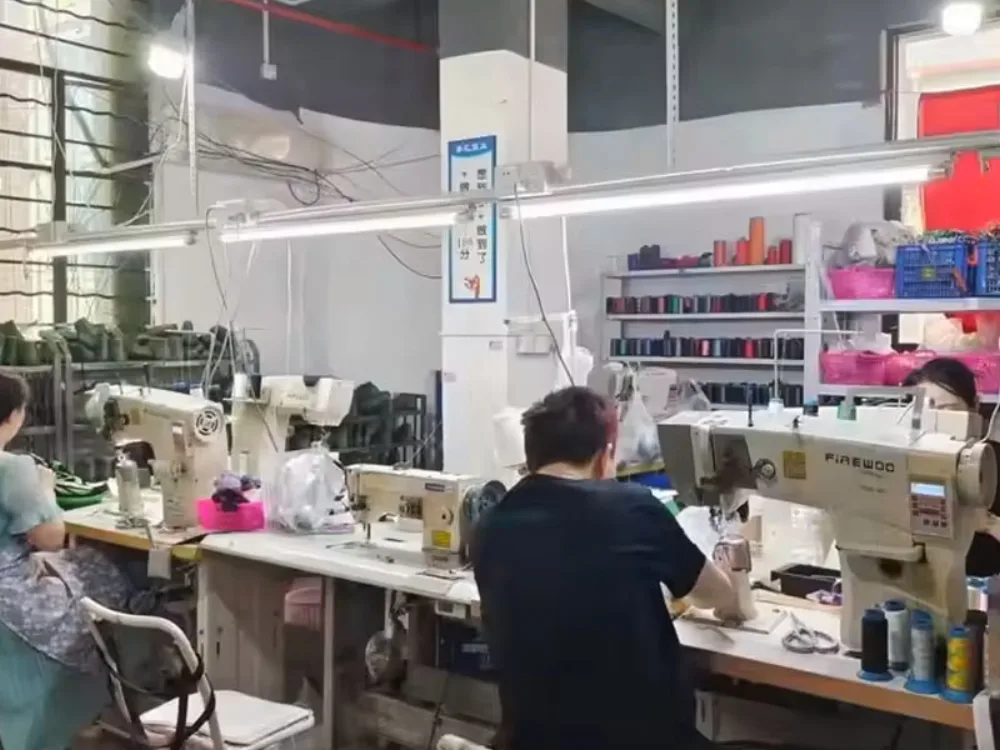
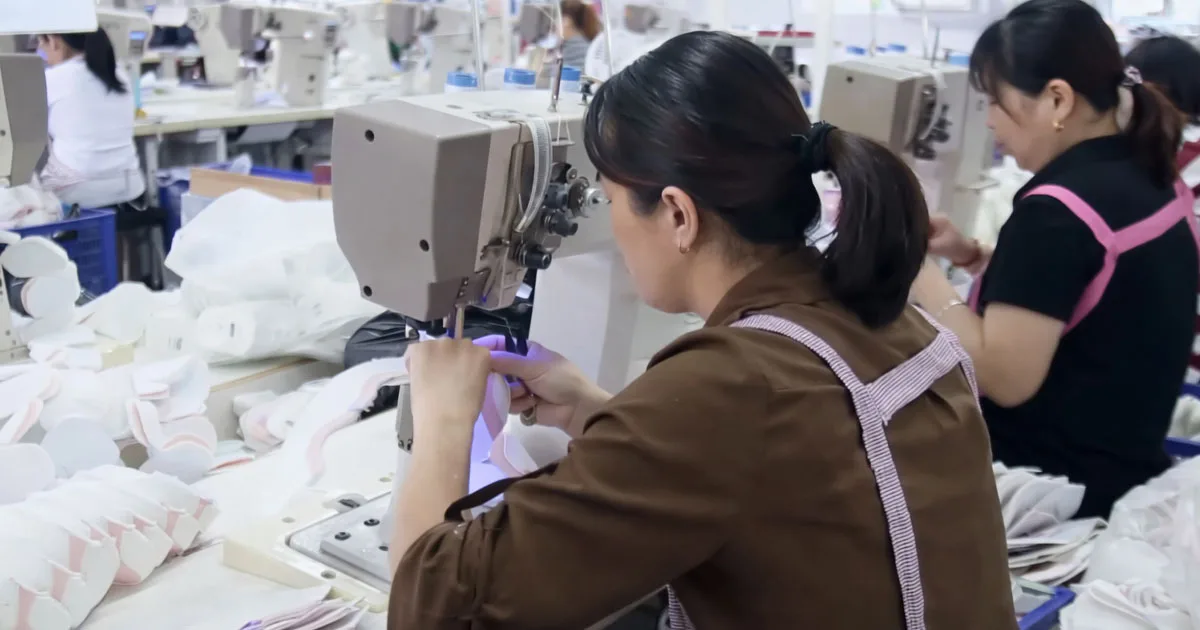
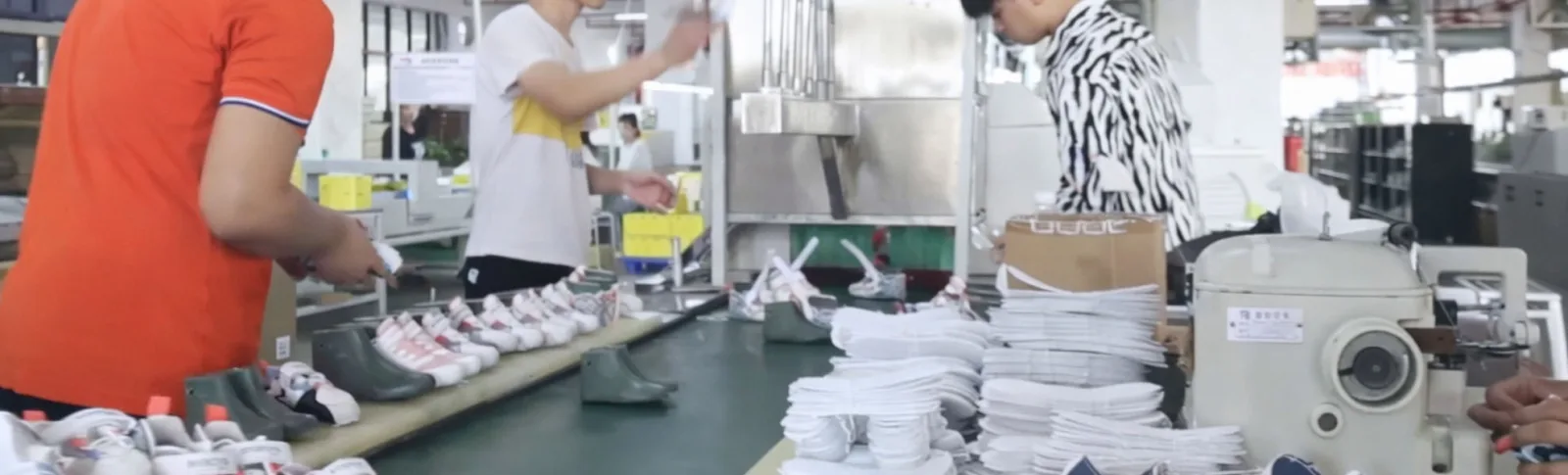
First-party photographs from the Jinjiang facility: the sample room where programs start, and the stitching and assembly lines that scale them.
For buyers deciding which program page to read next.
Choose by how you sell: own brand goes to Private Label, store buying goes to Retail Programs, online selling goes to Ecommerce Programs. Importers and sourcing teams can brief directly.
No. Every route runs on the same order terms: 1,000 pairs per style, color and size, T/T with at least 30% deposit, paid samples refunded at bulk, dispatch from Xiamen or Shenzhen.
Start from the product: pick a footwear family, then send quantity, destination and evidence needs. No brand assets are required for an unbranded program.
Yes. State the channels in the brief; labeling and packing are quoted per channel while the product spec stays shared.
No. Client programs are not used as marketing material. Judge the factory on samples, factory evidence and the way the first brief is handled.
Send the brief anyway with a note on how you sell. If the program fits the 1,000-pair manufacturing model, it gets a straight answer either way.
“We are a brand / a retailer / an ecommerce seller / a sourcing team, we need X pairs of Y for market Z.” That one line starts the right conversation.