
Boots: custom program planning needs a written specification before the buyer can plan custom artwork, samples, finishes, and production handoff; otherwise suppliers may quote different product and approval assumptions.
This guide maps boots: custom program planning specifications and evidence to comparable sample requests and RFQ (request for quotation) fields.
Direct answer: For boots: custom program planning, align artwork files, dimensions, material and finish targets, a signed-off sample, packing instructions, and the bulk-production handoff in one controlled specification.
Define the Buyer Requirement
The buyer needs to decide which supplier or factory signals are strong enough for a custom boot supplier shortlist: what to confirm, what supplier proof to request, and which RFQ, sample, or approval step comes next.
| Requirement | Factory control | Evidence to verify | Order risk | RFQ follow-up |
|---|---|---|---|---|
| Finish or surface effect | Factory holds a sealed reference panel and applies finish per agreed gloss level, texture, or coating. | Compare production finish against the sealed reference panel under buyer-approved viewing conditions; measure gloss units with a glossmeter if specified. | Off-spec finish leads to visual rejection, returns, or brand inconsistency across production lots. | Request the sealed finish reference panel and gloss range in the RFQ before sample approval. |
| Artwork or logo file | Factory engraves, embosses, or prints artwork from the approved vector file only; no raster or unapproved color conversion. | Verify artwork placement, dimensions, and color against the approved tech pack; request a strike-off or print test on the actual substrate. | Misplaced or color-shifted artwork causes rework, delays, or full lot rejection at final inspection. | Submit the final vector artwork with the RFQ and request a strike-off or print test on the actual substrate. |
| Sample approval | Factory produces a pre-production sample matching all specs; sample is measured, photographed, and logged before bulk release. | Measure sample against the spec sheet: dimensions, weight, color, finish, and construction; fit-test on a last if applicable. | Unapproved or rushed sample approval leads to bulk production that fails to meet the agreed specification. | Approve the sample in writing and confirm the production schedule; request a duplicate sample for your records. |
Confirming the buyer requirement for a custom boot program means the specification package must be complete before any factory commitment. Without a sealed finish reference, vector artwork file, and an approved pre-production sample, the approval scope remains unresolved; record each party’s agreed responsibilities rather than presuming that all risk transfers to the buyer. The factory cannot control what was never defined, and verbal approvals create ambiguity that leads to rework or rejection. Every requirement must be documented in the written quote request so both parties operate from the same baseline.
Approval of the buyer requirement is the gate that unlocks sample production and bulk scheduling. If the finish, artwork, or sample criteria are left open, the factory will proceed with its default interpretation, and the parties must resolve the scope and cost responsibility in their agreed terms. The buyer follow-up is to confirm every commercial number—MOQ, unit price, payment terms, and lead time—in the written quote request before any sample work begins. This protects the buyer from scope creep and records the agreed delivery scope and exceptions without guaranteeing later execution.
For a private-label boot program, record the agreed ISO 2859-1 sampling reference alongside the approved upper, outsole, size-run, and packing specification. The supplier record and signed sample must agree before bulk release.
Compare Reference and Custom Boot Routes
| Option | Best fit | Trade-off | Risk to avoid | Verification | Follow-up |
|---|---|---|---|---|---|
| Current specification | Boot style, upper and outsole materials, size run, and packaging already documented | No flexibility for new materials or construction methods; may limit cost reduction | Spec may be outdated or based on prior program assumptions not verified with this factory | Cross-check against latest sample approval sheet and production-ready BOM (bill of materials) | Request updated factory spec sheet and compare to approved sample record |
| Alternative specification | Different upper leather, outsole compound, or lining material to hit target price or weight | Requires new sample run and retesting; needs a revised sample and production schedule for the actual changed material and approval work | Material substitution could alter fit, durability, or appearance without proper validation | Request material data sheet and wear-test results from factory before sample approval | Submit alternative material request with target cost and performance criteria |
| Custom option | Unique boot design, colorway, or feature set not in factory's existing catalog | Higher development cost and longer sample cycle; KEYTOP’s boot MOQ of 1,000 pairs per style, color and size applies, with no mixing | Custom tooling and pattern-making costs may not be recoverable if program is canceled | Confirm factory has experience with OEM (original equipment manufacturer) and ODM (original design manufacturer) footwear manufacturing for similar boot styles | Request custom development timeline and tooling cost estimate before spec freeze |
| Safer fallback | Factory's existing boot model with minor color or branding changes only | Limited differentiation in market; may not meet unique buyer requirements | Stock model may have known fit or durability issues not disclosed in catalog | Request production history and defect rate data for the specific model | Order reference sample and inspect against your quality checklist before bulk commitment |
Check that the boot sample, component list and proposed production revision describe the same program. Record any changed last, material, artwork or tooling reference and the buyer’s decision on its sample and quotation impact before releasing that revision.
For boots: custom program planning checklist, use the compare the available routes evidence check to compare the supplier record with the proposed boot development scope before accepting the requirement.
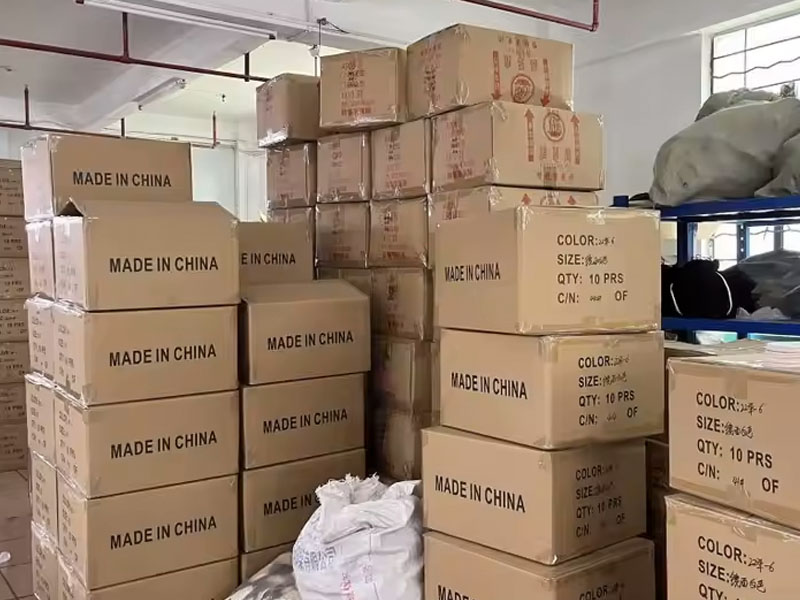
Request Evidence for the Proposed Boot Program
Before committing to a factory, verify the evidence that confirms their ability to execute your custom boot program. Start with the physical sample: request a sealed production sample that matches your spec sheet, including material thickness, stitch density, and sole adhesion. Measure the sample against your approved dimensions and weight tolerances. Next, review the factory’s production risk assessment—ask for a documented process for defect tracking and rework protocols. For cost and MOQ clarity, obtain a signed quote request that itemizes material, labor, and tooling charges, with no hidden fees. Finally, hand off the sample and quote request to your quality team for a formal sign-off before mass production begins.
| Proof Type | What to Verify | Decision Trigger |
|---|---|---|
| Production Sample | Spec compliance, fit, finish | Sample passes dimensional check |
| Cost Breakdown | Material, labor, tooling line items | No hidden fees; matches quote |
| Risk Assessment | Defect tracking, rework plan | Documented process in place |
| RFQ & Sample Handoff | Signed RFQ, sample transfer record | Formal sign-off from quality team |
Use this checklist to confirm each proof point before moving to the next planning stage. For more on private label boot programs, see our private label footwear programs.
Record Boot Development and Reorder Approvals
At the supplier proof checkpoint, the output must be a verified factory capability dossier that confirms the supplier’s ability to meet your boot program’s specs, cost, and MOQ requirements. Before moving to sample approval, ensure the dossier includes documented evidence of production risk mitigation—such as material sourcing backups and quality control protocols—and a clear quote request/sample handoff timeline.
Supplier evidence to request
Review the factory’s track record with similar boot styles, focusing on execution consistency. Cross-check their technical specs against your design requirements, noting any deviations that could affect cost or production risk. This step filters out suppliers that cannot deliver on your custom program’s core parameters.
Sample approval evidence
Once samples are received, evaluate them against the agreed specs, cost, and MOQ. Document any discrepancies and require the factory to address them before approval. Record the sample’s observed matches and discrepancies against the agreed specification, then retain unresolved production assumptions for review.
Reorder control records
Establish reorder triggers based on sales velocity and inventory thresholds. Confirm the factory’s capacity to handle repeat orders without compromising quality or lead time. Record the reorder-readiness decision and agreed quantities, while keeping unresolved capacity, quality and timing risks open for review.
For more on our sourcing approach, visit KEYTOP factory.
Prepare Comparable RFQ Inputs
- Does the supplier have documented experience producing boots with the same construction method and material stack? A factory that has run a similar boot program can anticipate lasting, stitching, and lasting-board issues before bulk production. The supplier provides a spec sheet from a past boot order showing the same upper material, sole attachment, and lining system. Without comparable program history, the supplier may misjudge lasting time, reject rates, or material shrinkage, causing delivery delays. Request a past boot program spec sheet and compare it to your boots: custom program planning checklist before sample approval.
- What is the supplier’s standard process for verifying that your boot specifications match their production capabilities? A mismatch between your quote request inputs and the factory’s equipment or skill set leads to rework, cost overruns, and missed lead times. The supplier returns a signed confirmation that each spec point—last, sole, heel height, and stitch density—is within their standard tolerance. Unverified specs can result in samples that fail fit or appearance, requiring multiple rounds and pushing back the production slot. Attach a spec-confirmation form to your quote request and ask the supplier to sign and return it before you approve any sample development.
- Does the supplier require a minimum order quantity that aligns with your first-season volume for this boot program? minimum order mismatches can stall custom boot programs after sample approval; confirming early avoids wasted sample investment. The supplier states a clear minimum order per style and colorway, and it matches your planned first-order quantity. If the minimum order is higher than your budget, you may be forced to over-order or cancel the program after sample costs are sunk. Document the minimum order in your boots: custom program planning checklist and verify it against your committed purchase order volume.
- How does the supplier handle material sourcing and approval for a new boot style? Material lead time and minimums can delay sample delivery; knowing the supplier’s sourcing process helps you plan the timeline. The supplier provides a material sourcing timeline with confirmed lead times for leather, lining, sole, and hardware. If the supplier sources materials after sample approval, you may face a delay that pushes your retail launch window. Ask the supplier to share their material sourcing checklist and confirm that all components are available before you approve the sample.
In conclusion
The final approval for your custom boot program comes down to verifying that every checklist item—from spec package to factory capability proof—has been documented and cross-checked against your cost, minimum order, and lead time requirements. Compare the shortlisted suppliers’ track records with similar boot styles, validate the sample against the agreed spec sheet, and document reorder triggers before committing to production. This structured handoff from quote request to sample approval provides an evidence-based readiness decision while retaining unresolved supplier and production risks.
To request a quote for boots custom program, use boots to confirm the final specification, quote assumptions, sample approval, QC evidence, approval risk, and supplier follow-up before bulk order.
Frequently Asked Questions
How should a b2b buyer plan custom order?
Start by documenting the full specification package: boot style, upper and outsole material, colorway, size run, and packaging. Then confirm the minimum order: KEYTOP’s boot MOQ is 1,000 pairs per style, color and size, and styles, colors and sizes cannot be mixed to reach it. Check the lead time for samples (7–15 days after sample requirements and usable specifications are confirmed) and standard production (35–45 days after specifications, sample approval, material assumptions, packaging and production slot are confirmed). Shortlist only factories that can match your spec sheet and timeline.
Which supplier proof should buyers request for boots?
Request evidence of the factory’s track record with similar boot styles, including photos of past production runs and any QC reports. Verify the supplier’s ISO 9001 status, amfori BSCI social audit, GRS documentation for eligible recycled-material programs, and applicable market compliance evidence. Before committing, compare their sample quality against your agreed specs, cost, and minimum order. Document any deviations and approve only after the sample passes your inspection.
What should buyers lock before approving the custom boot program?
Lock the final specification sheet, including material assumptions, packaging details, and production schedule, before approving the program. Confirm the minimum order per style, colorway, and size run, and ensure the lead time aligns with your inventory plan—samples take 7–15 days after sample requirements and usable specifications are confirmed, standard production 35–45 days after specifications, sample approval, material assumptions, packaging and production slot are confirmed. Verify the factory’s capacity to deliver on time and establish reorder triggers based on sales velocity. Approve only after sample QC passes and all cost terms are documented.
Next step: Send Specs for Review.