










Boot water ingress often begins at the gusset opening or seam path, so appearance alone cannot approve the construction.
This approval sequence records gusset geometry, tape coverage, flex condition, leakage evidence, and the signed reference sample used for bulk release.
Direct answer: For boot gusset water ingress, buyers should verify samples, materials, print, tolerances, certifications, and bulk-production risk.
Define the Boot Opening and Water-Exposure Scenario
- Supplier seam-sealing process record for the boot opening: A missing or undocumented seal method at the gusset-to-boot junction creates a direct water path into the boot. Request the factory's written seam-sealing SOP and compare it to the approved sample's construction notes. Uncontrolled seal application leads to inconsistent water resistance across production lots. Shortlist only suppliers who submit a signed process sheet with sealant type, cure time, and applicator method.
- Water-exposure test result from the submitted sample: A passing lab test on the first sample proves the design and materials can block water at the opening. Check the test report for immersion depth, duration, and pass/fail criteria; confirm it matches your specified standard. Without a documented test, you approve a sample that may fail under actual rain or puddle exposure. Approve the sample only after receiving a dated test report with a clear pass result.
- Gusset height measurement against the spec sheet: A gusset that is too short exposes the boot opening to splash ingress; too tall may cause discomfort or folding gaps. Measure the gusset height on the physical sample using a calibrated ruler; record the value in millimeters. A height deviation of more than the buyer-confirmed requirement from spec can create a hidden leak path at the top edge. Document the measured height on the sample approval form and flag any variance to the supplier for correction.
- Supplier's in-line QC check for boot opening seal integrity: A factory that inspects seal continuity during production catches defects before bulk packing, reducing your rejection rate. Ask for the QC checklist that operators use at the sealing station; look for a visual or pressure test step. Without in-line checks, a batch of boots with incomplete seals can ship and fail at your warehouse. Require the supplier to include a seal-integrity pass stamp on each boot's QC card before shipment.
- Supplier cannot demonstrate a consistent gusset height measurement across three sample pairs. Inconsistent gusset height creates variable boot opening tension, leading to unpredictable water ingress paths that cannot be corrected in bulk production. Shortlist only suppliers who provide a measurement record showing gusset height within the buyer-approved tolerance for each sample pair. Signed measurement report with caliper readings for gusset height, seam overlap, and stitch density per boot. Compare the measurement record against the approved specification sheet before issuing the RFQ for bulk.
- Factory has no documented water-exposure test protocol for the boot opening area. Without a defined test method, water ingress claims are unverifiable, and the buyer cannot enforce a pass/fail threshold during sample approval. Require the supplier to submit their water-exposure test procedure, including immersion depth, duration, and flex cycle parameters. Written test protocol referencing a recognized standard (e.g., SATRA STM 184H or applicable market compliance evidence) or an equivalent documented method. Approve the test protocol as a mandatory deliverable in the sample approval checklist before any physical sample is shipped.
- Supplier offers only a single sample pair for water-ingress evaluation, with no repeat or replicate testing. A single pair cannot account for normal production variation; a pass on one boot may hide a systemic seam-sealing defect that will appear in bulk. Insist on a minimum of three sample pairs, each tested individually, with results recorded per boot. Test results table showing pass/fail status for each of the three sample pairs, including water ingress location and depth. Flag any supplier who refuses replicate testing as high risk and escalate to a sourcing manager for re-evaluation.
- Gusset seam sealing method is not specified or is left as 'standard process' without detail. Unspecified seam sealing leaves the buyer exposed to inconsistent application, such as insufficient tape overlap or missed sealant at the gusset-to-boot junction. Request a written description of the seam sealing method, including tape type, overlap width, and application temperature or pressure. Seam sealing specification sheet and a video or photo of the sealing process at the supplier's factory. Verify the sealing method matches the approved sample's construction before approving the bulk production run.
Specify Gusset Height Tongue and Closure Construction
For solutions, use a release rule: approve only when the supplier evidence matches the written requirement.
- Gusset height must meet the specified minimum to block water ingress at the tongue-upper junction. Supplier measurement record showing gusset height in millimeters with tolerance range. Supplier quality department with sample shipment. Insufficient height allows water entry during submersion or heavy rain, causing returns. Compare recorded height against your spec sheet; reject if outside tolerance.
- Tongue and closure construction must use a sealed gusset design with no exposed stitching at the fold line. Close-up photo or video of the tongue interior showing seam sealing and gusset attachment. Supplier during sample approval stage. Unsealed stitching creates a direct water path, compromising waterproof claims. Verify the sealing method matches your approved construction standard before bulk.
- Supplier has documented capability to produce consistent gusset height across production runs. Past production records or capability study for similar boot styles with gusset heights. Supplier engineering or production manager. Inconsistent gusset height leads to variable water resistance and quality disputes. Shortlist only suppliers who provide historical measurement data for this feature.
- The baseline MOQ is 1,000 pairs per category; do not present it as negotiable. Request written confirmation of how the 1,000-pair baseline is allocated by style, colorway, size run, material, packaging, and production schedule. Supplier sales or production planning team. An unconfirmed allocation can create quotation gaps or delayed production slots. Reconcile the written allocation with the quotation before issuing the purchase order.
- Sample approval must include a water-ingress test report for the gusset area. Test report showing no water ingress after specified submersion or spray test. Supplier quality lab or third-party tester. Approving samples without ingress evidence risks bulk production failure. Hold sample sign-off until the test report is reviewed and accepted.
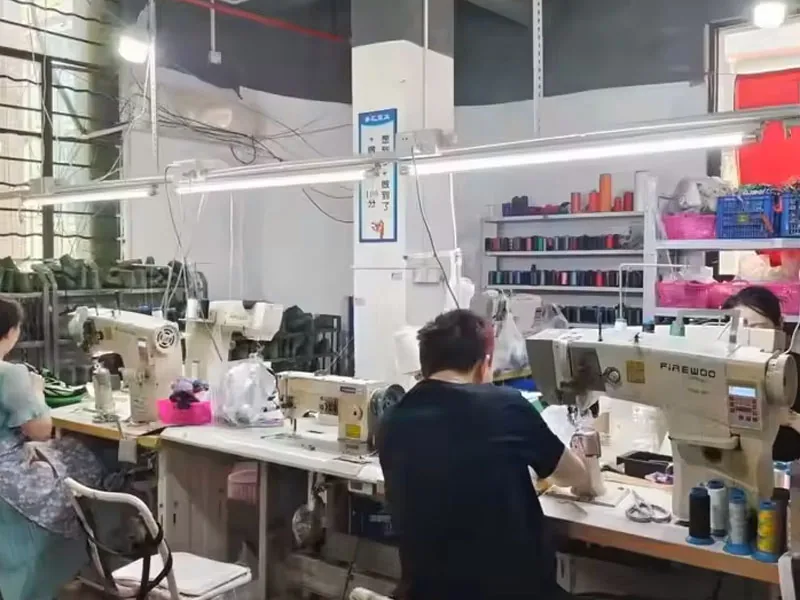
Inspect Seams Junctions and Likely Ingress Paths
- Does the supplier have documented seam-sealing capability for boot gusset junctions? Seam junctions are the primary water-ingress path; without documented sealing capability, ingress protection is unverifiable. Supplier provides a seam-sealing process sheet with tape type, application temperature, and pressure settings. Approving a sample without sealed-junction proof may lead to bulk failure and returns. Request the seam-sealing process sheet before sample approval.
- What verification method is used to test water ingress at gusset seams? A standard test method ensures repeatable ingress measurement across samples and bulk runs. Supplier uses a hydrostatic head test at the buyer-approved test threshold for 5 minutes on sealed junctions. Without a defined test, ingress claims are subjective and unenforceable. Confirm the test method and pressure threshold in the RFQ.
- What is the approval risk if the boot gusset sample shows ingress at seam junctions? Ingress at junctions indicates a process gap that may recur in bulk production. Supplier identifies the root cause (e.g., tape misalignment) and reworks the sample with corrected parameters. Approving a marginal sample locks in a defect that affects all footwear products in the order. Require a corrective action report before re-approval.
- What buyer follow-up is needed after sample approval for gusset seam integrity? Sample approval is not a bulk guarantee; follow-up ensures production consistency. Buyer receives a sealed-sample reference and a production seam-sealing checklist. Without follow-up, the factory may change process or materials, causing ingress failures. Freeze the approved sample and require the production checklist as a bulk gate.
Compare Sample Evidence With the Intended Claim
When a boot gusset sample arrives with a claim of water resistance, the buyer must first identify the specific failure mode: is the ingress occurring at the gusset seam, the opening edge, or the gusset-to-upper junction? Without a documented seam-sealing process from the supplier, ambiguity persists. The control that prevents this is a release rule: approve only when the supplier evidence—such as a recorded measurement of gusset height and seam seal width—matches the written requirement in the RFQ.
To verify, ask the supplier: “What is the confirmed seam-sealing method (e.g., tape type or bonded construction) and the approved tolerance for gusset height?” Compare the sample’s recorded measurements against this quote request-confirmed requirement. If the supplier cannot provide a measurement record that falls within the approved tolerance, the sample fails the evidence check. This step directly addresses production risk: a mismatched claim can lead to costly rework or field failures.
| Verification Question | Supplier Evidence Required | Decision |
|---|---|---|
| Does the gusset height match the RFQ spec? | Measurement record within approved tolerance | Approve if yes |
| Is the seam-sealing method documented? | Process description (tape type or bonded) | Approve if yes |
| Is the water-ingress test result provided? | Test report from sample batch | Approve if passes |
Why a static splash check is not enough
A visually dry result after one static spray or dip should not release a waterproof claim. SATRA’s water-ingress guidance describes assessing the complete footwear design with its STM 184H approach; movement can expose junction and flex-zone paths that a static check does not reproduce. Use a static check only as a pre-screen, then require the supplier to name the agreed dynamic method, exposure duration, sample count, pass/fail rule, and ingress location record. This is a claim-control rule, not evidence that any untested sample has passed.
As constructions evolve toward lighter membranes, thinner seam tapes, or new bonded junctions, buyers should expect process-window evidence to matter more, not less. A material substitution can preserve appearance while changing sealing temperature, overlap, or flex behavior. Freeze the approved material and process revision together, and trigger a new sample test whenever either changes.
After comparing evidence, the buyer must decide: approve the sample for production, reject it, or request a revised sample. This handoff from quote request to sample approval ensures factory execution aligns with the intended claim. For further guidance, see our OEM and ODM footwear manufacturing.
Lock the Approved Opening Construction for Production
The sealed boot-gusset sample must carry a measurement record showing whether its opening height stays within the buyer-approved tolerance. This evidence confirms that the approved construction—stitch density, gusset fold depth, and seam tape overlap—must be locked before production tooling is cut. Any change to the opening geometry can alter water-ingress pressure thresholds and void the sample approval.
Before releasing the quote request for bulk, verify that the KEYTOP factory has documented the approved opening construction in its work instruction. Production risk increases when operators rely on memory rather than a locked spec. Correction is easier before tooling is released; a later construction change can add rework, approval time, and avoidable cost. Hand off the approved sample, measurement report, and a single-page construction summary with the quote request to ensure the factory executes the same opening every time.
Production approval gate: Keep the pre-production boot sample with its inline inspection record. Release bulk production only when the sample approval record and QC checklist show the gusset height, seam tape coverage, and flex-test result match the signed specification.
Conclusion: Release the buyer follow-up Only After the Evidence Matches the Requirement
The final approval for a boot gusset water ingress sample is earned only when every recorded measurement, seam seal test, and material check aligns with the agreed specification. Before you release the quote request for bulk production, compare the supplier’s documented evidence—gusset height, sealing method, ingress test results—against your requirement sheet. If any parameter falls short, do not advance; instead, request a corrected sample or a documented process adjustment. This checkpoint protects your program from costly rework and ensures the factory has proven its ability to deliver consistent waterproof performance at scale.
Once the evidence matches, freeze the approved sample along with its measurement records and water-ingress test report. Confirm the supplier’s lead time for bulk production, verify that the MOQ and cost assumptions from the quote request stage still hold, and document the handoff to your production team. A clean sample approval with verified specs, sealed records, and aligned commercial terms gives you the confidence to proceed—and keeps the boot gusset water ingress risk under control from sample to shipment.
Editorial method and limitations
We assembled this gusset approval method from the cited sources, approved factory records, and a buyer-side boot sample workflow; we did not field-test the bulk lot. On the physical sample, measure gusset height and overlap, inspect tape coverage under consistent light, photograph stitch or fold gaps, and compare leakage observations before and after the agreed flex sequence. Archive the pre-production boot, inspection record, images, and signed specification. A passing reference sample limits risk but does not replace lot-level production inspection.
Observable evidence in our editorial check
In our editorial review, we look for a record another buyer can repeat. Under consistent light, note a lifted tape edge, an open stitch hole, a dark wet line on the lining, bubbles at the gusset seam, or dampness that can be felt at the first ingress point. Compare the same locations before and after the agreed flex-and-exposure sequence.
Copyable boot-gusset approval record
We created this blank record for this article so a buyer can preserve the same gusset evidence across sample review and retest without presenting unperformed field results. Complete it during the agreed exposure sequence and attach the marked images.
Sample ID and construction: ____; Gusset height and overlap: ____; Tape coverage and stitch path: ____; Exposure setup and elapsed time: ____; Flex condition and checkpoints: ____; Dry baseline observation: ____; First visible or tactile ingress: ____; Before-and-after filenames: ____; Decision, correction owner, and retest date: ____.
Editorial gusset scenarios
For this editorial review, we completed the blank gusset record with two hypothetical cases to confirm that the tool connects a baseline observation to a later checkpoint and makes the correction owner explicit. The examples test the decision record only; they are not field-test results.
| Illustrative case | Before exposure | After the agreed checkpoint | Record outcome |
|---|---|---|---|
| Sealed reference | Tape edge flat; stitch path dry | No new wet line or lifted edge recorded | Preserve the stated test boundary and buyer decision |
| Gusset-path issue | Fold and tape coverage photographed | New damp line appears beside the marked fold | Assign correction, revise sealing detail, and retest |
Completed gusset-record QA log
Publication QA artifact
Boot Gusset and Water-Ingress Sample Approval Checklist FAQ
Which inputs should buyers send with the RFQ?
Send the boot gusset specification sheet covering gusset height, seam sealing method (e.g., tape type or bonded construction), and the target water-ingress test standard. Include the approved material stack-up and the expected lead time for sample delivery, which is typically 7 to 15 days after specs are confirmed. Confirm the MOQ for the specific style and colorway, and request the supplier’s measurement records from their sealed boot gusset sample to compare against your requirements. Approving the wrong structure or supplier proof can create quality, cost, or delivery problems.
Which physical sample and supplier records should buyers verify?
Verify the physical sample’s gusset height, seam sealing integrity, and material type against your spec sheet. Check the supplier’s measurement records from the sealed boot gusset sample to confirm the approved water-ingress test result. Document any deviations and request a re-sample if the sample fails to meet your standard. Before approving, compare the sample cost and MOQ against your budget and volume needs.
What should buyers freeze before production or reorders?
Freeze the approved sample, its measurement records, and the documented water-ingress test result. Confirm the final spec sheet, material assumptions, packaging details, and production schedule with the supplier. Verify that the factory has documented the approved sample and QC checklist before releasing the quote request for bulk. This ensures the bulk order matches the approved sample and avoids costly rework.
quote request handoff: Send Specs for Review.
Source check: D2099 Standard Test Method for Dynamic Water Resistance of Shoe…; Quality Checklist Forms.