










A waterproof claim is not useful until the buyer defines the exposure boundary and checks the full upper, seams, lining, and lasted construction under that condition.
This sample checklist connects the intended environment to test evidence, leak-location records, construction freeze, and production inspection.
Direct answer: For outdoor footwear waterproof membrane seam, buyers should verify samples, materials, print, tolerances, certifications, and bulk-production risk.
Define the Intended Water Exposure and Claim Boundary
- Confirm the waterproof claim matches the intended exposure depth and duration: A claim for light rain fails if the shoe is marketed for puddle immersion; the wrong boundary causes returns and chargebacks. Compare the supplier's stated IPX or mm water column rating against your spec sheet for the target use case. Shoes leak at the first real puddle; buyers reject the entire container at inbound inspection. Shortlist only suppliers that provide a written claim boundary table with test method references.
- Verify the seam sealing method matches the membrane type and exposure level: A mismatched sealant or application temperature creates hidden leak paths that appear only after flex or cold conditioning. Request a cross-reference document from the factory listing the sealant part number, application temperature, and pressure settings for each membrane. Seams delaminate during wear; the waterproof claim is void and the buyer bears the replacement cost. Approve the seam sealant and application parameters in writing before sample production begins.
- Check that the test report uses the same exposure method as your claim boundary: A static bench test does not prove performance under dynamic flex or cold conditions; the wrong test method invalidates the evidence. Ask the supplier to submit a test report that matches your specified standard (e.g., ISO 20344, SATRA TM77) and includes the flex cycle count and water pressure. The report passes a garden-hose test but fails the first field trial; the buyer has no enforceable claim against the factory. Document the accepted test method and pass/fail criteria in the RFQ and sample approval form.
- Confirm the supplier has run the same exposure test on the actual production upper construction: A membrane-only test ignores the upper material, lining, and lasting board interaction; leaks often occur at the lasting line or eyelet reinforcement. Review a test video or witness a sample that includes the full upper with lasted construction, not just a flat membrane swatch. The approved sample passes but bulk production leaks at the lasting line; the buyer must rework or scrap the entire order. Require a sealed reference sample that matches the production upper construction and exposure test result.
- Supplier does not provide a seam sample matched to the stated waterproof claim before approval. Without a matching sample, the bulk production may fail at the first puddle or pressure point, leading to returns and chargebacks. Keep a supplier on the shortlist only after it submits a seam sample tested to your exact exposure level, not a generic pass. A sealed reference sample with a written test report showing the water column height or duration it passed. Compare the sample against your claim boundary and freeze the approved construction before any production run.
- The supplier uses a different waterproofing method than what was quoted. Switching methods mid-process can change the cost, durability, and lead time without your approval. Require the supplier to document the exact waterproofing method in the RFQ response and sample approval. A signed specification sheet listing the membrane type, tape application process, and seam construction. Verify the method matches the quoted price and delivery schedule before approving the sample.
- No documented quality control check for seam leaks during production. Without a QC checkpoint, leaks can go undetected until the final inspection, causing costly rework or rejection. Demand a written QC plan that includes a seam leak test at a defined production stage. A copy of the QC checklist showing the test method, frequency, and acceptable failure rate. Approve the QC plan as a condition of the production order and schedule a mid-run inspection.
Use an evidence ladder, not a waterproof checkbox.
Our release rule is deliberately stricter than a common catalogue shortcut: a static splash demonstration is screening evidence, not approval evidence. Build the file in three layers—written claim boundary, construction and process evidence, then the buyer-approved exposure record for the complete shoe. A flat membrane result cannot close a finished-footwear decision because the gusset, needle holes, tape ends, eyelet area, and lasting margin create separate leak paths. This keeps the complete shoe—not a material swatch—at the center of approval while leaving the actual method and acceptance threshold to the buyer’s market and claim.
| Evidence layer | Buyer question | Release boundary |
|---|---|---|
| Claim | What exposure, duration, flex state, and failure definition are promised? | No test can be interpreted until these fields are written. |
| Construction | Does the sample use the named membrane, tape, adhesive, seam geometry, and application settings? | A material-only report does not release the complete shoe. |
| Finished sample | Does the marked sample record preserve baseline, checkpoint, first change, and evidence files? | Only the buyer-approved decision record can close the sample gate. |
Map Membrane Seam and Gusset Construction
For outdoor footwear waterproof, use a release rule: approve only when the supplier evidence matches the written requirement.
- Gusset construction uses a compatible membrane layup and seam sealing method for the intended water column rating. Provide a gusset assembly drawing showing membrane overlap, sealant type, and stitch line placement. Footwear manufacturer's engineering or sample room team. Incompatible gusset layup causes delamination or wicking at the tongue area. Verify gusset drawing against the approved membrane seam sample checklist before bulk cutting.
- Supplier capability includes in-house seam sealing equipment and trained operators for OEM and ODM footwear manufacturing. Share a factory capability statement listing seam sealing machine models, operator count, and annual output volume. Footwear manufacturer's quality or production manager. Outsourced seam sealing adds lead time variability and quality control gaps. Schedule a virtual or on-site audit of the seam sealing line before production slot confirmation.
- Approval risk is mitigated by a documented first-article inspection for membrane seam and gusset construction. Submit a first-article inspection report with pass/fail criteria for seam width, tape alignment, and water resistance. Footwear manufacturer's quality control department. Missing first-article approval can result in full production rework or rejection. Hold bulk production start until first-article inspection report is reviewed and signed off.
Map every leak path to one inspectable record.
Do not accept one generic waterproof certificate as proof for every construction point. On the sample drawing, label the tongue-gusset fold, seam-tape start and stop, eyelet reinforcement, collar termination, and lasting margin. For each label, name the material or process variable, the photo or measurement that will prove it, and the person who can release a correction. This turns a broad capability claim into a review another buyer can repeat.
| Marked zone | Evidence to preserve | Hold condition |
|---|---|---|
| Tongue gusset | Overlap, fold position, stitch path, and tape coverage | Drawing and physical sample do not match. |
| Tape ends and junctions | End position, edge lift observation, and before-and-after image | Unrecorded termination or visible lift. |
| Lasting margin | Membrane continuity and first observed ingress location | The finished construction is not represented by the submitted evidence. |
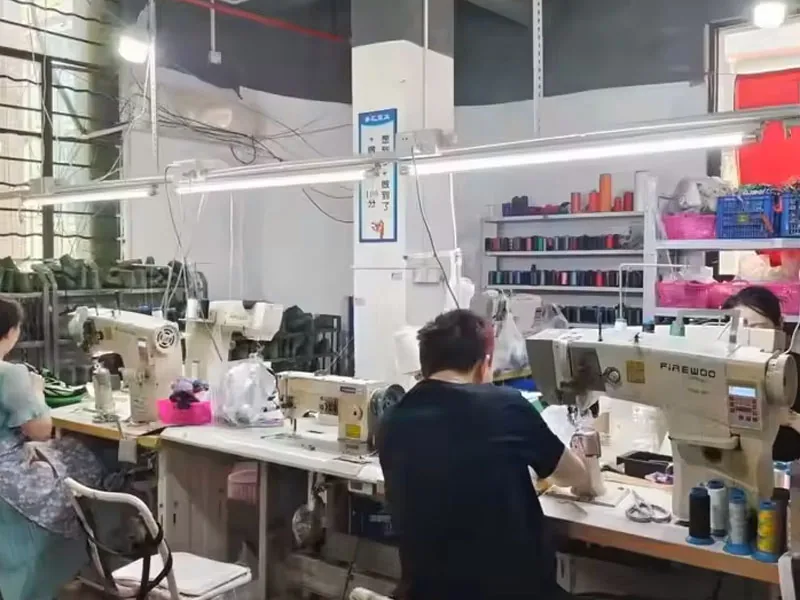
Request Traceable Test and Sample Evidence
- Does the supplier have documented seam tape application experience for outdoor footwear waterproof membranes? Without proven tape application process control, the membrane seam may fail at needle holes or tape overlap points during bulk production. The supplier provides a process sheet showing tape width, temperature, pressure settings, and a signed sample approval record from a previous outdoor footwear program. Approving a supplier without seam tape process documentation can lead to hidden water ingress in the finished shoe, causing returns and claim disputes. Request the seam tape application process sheet and a signed sample approval record from a comparable outdoor footwear program.
- How does the supplier verify membrane seam strength before bulk production? Seam strength directly affects the waterproof claim; weak seams tear during wear and allow water entry, especially in flex zones. The supplier uses a calibrated tensile tester per ISO 17697 or GB/T 3903.43 and shares a test report with the sample. Skipping seam strength verification means the bulk run may pass visual inspection but fail in field use, leading to chargebacks. Ask for the seam strength test method and a sample test report before approving the first bulk production run.
- Does the supplier maintain a sealed reference sample from the approved membrane and tape combination? A sealed reference sample prevents the factory from substituting a lower-cost tape or membrane during bulk production without your knowledge. The supplier holds a signed and dated reference sample with the exact membrane, tape, and application parameters used in the approval. Without a sealed reference, the factory may switch materials after sample approval, and you will have no benchmark to compare bulk output against. Inspect the sealed reference sample during the pre-production meeting and confirm it matches the approved sample record.
- What is the supplier's process for documenting membrane seam tape lot numbers and application dates? Traceable lot numbers allow you to isolate a defective batch if seam failures appear later in the field or during warehouse inspection. The supplier records tape lot numbers, application machine ID, operator name, and date for every production lot in a traceable log. Without lot traceability, a single bad tape roll can contaminate multiple production runs, and you cannot pinpoint the root cause. Require the supplier to include tape lot numbers and application dates in the bulk production inspection report.
- Does the supplier perform a water ingress test on a finished sample from each production lot before shipment? A finished-sample water test catches assembly defects like missed tape overlaps or needle hole leaks that component tests miss. The supplier conducts a hydrostatic head or air-leak test on a sample from every production lot and provides a pass/fail record. Relying only on component tests means bulk shoes may leave the factory with hidden leaks, causing customer returns and brand damage. Add a finished-sample water ingress test to the inspection checklist and review the test records before each shipment.
Map each technical claim to the evidence that can prove it.
Keep source purpose explicit. ISO 17697:2016 concerns seam-strength methods for footwear uppers, linings, and insocks; it should support a seam-strength request, not a broad finished-shoe waterproof claim. A supplier’s own quality overview may help explain its process, but it does not set the acceptance value for an unrelated buyer program. Record the buyer’s chosen method, laboratory or factory source, sample ID, construction revision, result, and decision together so a citation cannot be detached from the claim it was meant to support.
Inspect Leak Paths Without Overstating Performance
When a seam sample passes an initial bench test, the real risk is hidden leak paths—micro-gaps at needle holes, tape lift at flex points, or inconsistent adhesive coverage. These failures often appear only after 500 flex cycles or under hydrostatic pressure above the claim limit. To prevent overstating performance, require the supplier to submit a seam tape peel test (applicable market compliance evidence or equivalent) alongside the KEYTOP factory sample. Confirm the RFQ specifies the exact test method and acceptance criteria, such as minimum peel force or no delamination after 10 wash cycles. Then, during sample handoff, ask: “What is the documented failure mode for this seam construction?” If the answer is vague, flag it as a production risk. Below is a practical checklist for inspecting leak paths without overstating performance:
| Checkpoint | Buyer Verification Question | Factory Execution Requirement |
|---|---|---|
| Seam tape adhesion | What is the minimum peel force per the RFQ? | Provide test report from same production lot |
| Flex endurance | How many flex cycles before leakage appears? | Run 500 flex cycles per ISO 5402 |
| Hydrostatic head | What pressure does the seam withstand? | Test per ISO 811 at the buyer-approved test threshold/min ramp |
| Wash durability | Does the seam survive 10 wash cycles? | Submit washed sample for retest |
After the checklist, record the supplier’s responses and attach them to the sample approval. If any checkpoint fails, reject the sample and request corrective action before bulk production. This method keeps the claim realistic and avoids costly field returns.
Separate diagnostic checks from release evidence.
A splash, hose, or short static check can help locate an obvious path, but it should not be renamed as proof of the commercial waterproof claim. The release file must state the buyer-approved method, exposure boundary, conditioning or flex state, sample construction, acceptance rule, and first observed change. This distinction matters because the same sample can look dry in a short diagnostic check and still fall outside the intended claim. Preserve both records if both are used: label the first as screening and the second as approval evidence.
Freeze the Approved Waterproof Construction for Bulk
At this process checkpoint, the buyer must confirm that the supplier’s bulk production will replicate the approved sample’s waterproof construction exactly. Before authorizing the next stage, verify that the quote request specifies the membrane type (e.g., PTFE, PU, or ePTFE) and the seam tape application method (e.g., hot-melt or pressure-sensitive). Ask the supplier: “Can you provide a signed statement that the membrane, seam tape, and adhesive used in bulk are identical to the approved sample?” This prevents cost-driven substitutions that compromise waterproof integrity.
Production risk arises when factories switch to lower-cost tape or reduce tape width to save material. To mitigate this, require a pre-production sample from the first bulk roll. The table below outlines key checkpoints for freezing construction.
| Checkpoint | Buyer Verification Question | Factory Evidence Required |
|---|---|---|
| Membrane type | Does the bulk membrane match the approved sample’s material and thickness? | Material specification sheet with lot number |
| Seam tape application | Is the tape width and temperature setting consistent with the sample? | Production parameter log signed by QC |
| Adhesive compatibility | Does the adhesive bond strength meet the RFQ requirement? | Peel test result from bulk roll |
After freezing, the quote request handoff must include a sealed reference sample and a written construction checklist. This ensures the factory’s production team cannot deviate without buyer approval. No bulk order should proceed until these documents are exchanged and signed.
Freeze the decision logic as well as the bill of materials.
Bulk control is not complete when part numbers alone are frozen. Also lock the claim boundary, sample revision, tape application window, marked inspection zones, evidence filenames, and authority for approving a deviation. If a membrane lot, tape lot, adhesive, machine setting, upper pattern, or claimed exposure changes, the buyer should identify which evidence has become stale and request a bridge sample or retest for that affected scope. This targeted change-control rule avoids two opposite errors: releasing a changed construction on legacy evidence or restarting unrelated checks with no reason.
- Material or tape lot: refresh identity, compatibility, and application records before release.
- Pattern or seam geometry: review the changed leak-path zone on a revised sample.
- Claim boundary: reapprove the method, exposure, acceptance rule, and evidence-to-copy mapping.
Conclusion: Release the buyer follow-up Only After the Evidence Matches the Requirement
Before you release the sample to the next stage, compare every recorded measurement against the waterproof claim you defined at the start. Verify that the membrane type, seam tape width, application temperature, and pressure settings match the approved reference. If the hydrostatic head test result, tape peel strength, or flex-cycle outcome falls short of the requirement, do not advance the sample. Document each pass or fail on the checklist and keep the evidence with the sample ID for traceability.
Use the same evidence to confirm the production parameters: confirm the supplier’s bulk MOQ per style and colorway, lock the lead time for the first production run, and include the sealed reference sample and written tape application specs in the quote request handoff. Check that the factory has experience with the same membrane and tape combination on a similar upper construction. Only when the sample evidence, supplier risk check, and commercial terms all align should you approve the sample and move to the next procurement step.
Editorial method and limitations
We developed this waterproofing checklist from the cited standards and buyer evidence, Keytop Shoes’ approved capability records, and a sample-release workflow; we did not perform the article’s exposure test on a production batch. During evaluation, document water depth or pressure, duration, flex condition, and the first visible ingress location; photograph the lining and seam path before and after each agreed checkpoint. Store the tested sample with its report and approval sheet. The result applies only to the tested construction and stated exposure boundary and cannot guarantee every bulk pair.
Observable evidence for the approval record
Our editorial check looks for observations a second reviewer can repeat. Under consistent light, inspect for a darkened lining, a sharp wet boundary along the lasting edge, bubbles at a seam, lifted tape, or dampness that can be felt at the first ingress point. The approval record should state the sample ID, exposure level, start and stop time, flex condition, first visible or tactile sign, photo filenames, decision, and retest owner. That record is a buyer tool for comparing samples; it is not presented as a test result from our team.
Repeatable exposure record
During our editorial review of this method, we use a blank approval record to check whether a second buyer could repeat the exposure sequence; we do not claim that this is our own laboratory result. Record the sample ID, water level or pressure, start time, stop time, elapsed exposure, flex condition, and inspection checkpoints. Before exposure, photograph the dry lining and marked seam path. At each checkpoint, note visible darkening, lifted tape, bubbles, odor change, or dampness felt by touch, then repeat the same observations on the agreed sample units. After exposure, compare the marked locations with the dry baseline and attach filenames, decision, correction owner, and retest date.
Editorial exposure scenarios
In this editorial pass, we filled the blank exposure record with two hypothetical scenarios to check that it distinguishes a dry reference from a visible ingress path and always captures a checkpoint, comparison, owner, and retest action. These are tool-use examples, not claimed laboratory results.
| Illustrative scenario | Dry baseline | Checkpoint observation | Decision path |
|---|---|---|---|
| No visible change | Lining dry; seam path photographed | No dark line, lifted tape, bubbles, or tactile dampness | Record the boundary and continue the buyer-defined sequence |
| Possible ingress | Lining dry at the marked lasting edge | New dark boundary and damp feel at the same marked point | Stop, document, correct the construction, and retest |
What the editorial scenario check exposed
When we first ran the two hypothetical exposure records through the checklist, the entries could say “wet” without preserving the elapsed checkpoint or the first marked ingress location. We revised the record to require start and stop time, dry-baseline files, first visible or tactile change, decision owner, and retest date. That was a problem in the documentation tool, not evidence of a footwear failure, and the revised fields make the next review more repeatable.
Completed exposure-checklist QA log
Publication QA artifact
Forward-looking release scenarios.
Waterproof programs become harder to govern when material availability, sustainability requirements, or product-page claims change after sample approval. The practical response is not to treat every change as equivalent. Use the frozen evidence map to determine which proof is still current and which part must be reopened.
- Same construction, traceable reorder: the reference sample remains relevant, but new lot and process records are required before release.
- Material, adhesive, tape, or geometry change: compatibility and changed-zone evidence are stale; hold that scope for a bridge sample and buyer-defined verification.
- More severe marketing claim: the prior pass remains bounded to the old claim; define and approve the new method and threshold before changing product copy.
That scenario rule is the central judgment of this checklist: evidence is reusable only inside the construction and claim boundary it actually tested. A clean audit trail makes later changes faster because the buyer can reopen the affected link instead of guessing whether the whole approval still applies.
Outdoor Footwear Waterproof Membrane Sample Checklist FAQ
Which inputs should buyers send with the RFQ?
Send the quote request with the intended waterproof claim (e.g., light rain, puddle, submersion), the membrane type (e.g., PTFE, PU, or proprietary film), and the seam tape specification including width, adhesive type, and application temperature. Include the target cost per pair for the membrane and tape assembly, and confirm the MOQ for each membrane-tape combination, as the baseline MOQ is 1,000 pairs per category but may vary by material. Document the required test method (e.g., hydrostatic head, flex, or dynamic moisture penetration) and the acceptable failure threshold, then request a sample plan that covers both the membrane and the taped seam. Ask the supplier to confirm factory capability and who owns follow-up.
Which physical sample and supplier records should buyers verify?
Verify a physical sample that includes the full upper construction with the membrane and seam tape applied, not a flat swatch. Check that the tape overlaps the seam by the specified width, that there are no visible bubbles, wrinkles, or lifting at the tape edges, and that the needle holes from stitching are fully covered. Request the supplier’s seam tape application log for the sample run, including machine temperature, pressure, and dwell time, and compare it to the specification. Confirm the sample’s hydrostatic head test result against the claim, and ask for a flex test report (e.g., 30,000 flexes at room temperature) to verify durability. Shortlist only suppliers that provide traceable records from the tape manufacturer and can show a QC sign-off for each sample. Confirm MOQ and order quantity by color, width, artwork, and packing route. Approving the wrong structure or supplier proof can create quality, cost, or delivery problems.
What should buyers freeze before production or reorders?
Freeze the membrane and seam tape part numbers, the approved tape application parameters (temperature, pressure, dwell time), and the QC inspection checklist for seam integrity before bulk production. Document the acceptable failure rate per 100 pairs for seam leakage during the water test, and confirm that the factory will hold the first 50 pairs from production for a full seam inspection before shipment. For reorders, verify that the same tape lot and membrane roll are used, or require a new sample approval if the supplier changes the tape supplier or membrane batch. Without this freeze, the factory may substitute a lower-cost tape that fails at a lower flex cycle or hydrostatic head, increasing your return rate.
quote request handoff: Send Specs for Review.
Source check: ISO 9001 quality management standard; MaineDOT Qualified Products Acceptance Criteria.