










Boot material choices run forward into last selection, lining, sole bonding method, and lead time. Fixing materials first and then pricing gives a different result from pricing first and fitting materials to the number.
Leather grade, thickness, and finish determine cutting yield, and yield determines unit cost. The same hide cut for a tall shaft and for an ankle boot can differ in yield by a double digit percentage, which no price list shows.
Below are the construction options worth comparing, the sample evidence to request against each, and how cost, MOQ, and lead time trade against one another once the material is fixed.
For importers and private-label footwear brands, keep boot materials OEM sourcing quote-ready: specs to send, proof to request, sample checks to approve, and reorder notes to retain.
Quick Decision: Match the Product to the Order
Turn this part of the brief into a written control that purchasing, quality, and the supplier can all follow. For OEM boot program, record the decision, the approval risk, the quality check, and the buyer follow-up in the same approval trail.
| Order route | Best fit | approval risk | Quality check | buyer follow-up |
|---|---|---|---|---|
| work-oriented boot build | Orders where work-oriented boot build matches the sales and sales channel | If work-oriented boot build is not matched to the product and sales channel, the buyer may approve unusable packing or an incomplete response. | Test work-oriented boot build with the intended product, handling sequence, and pack-out before recording the route decision. | shortlist and brief the supplier |
| outdoor weather boot build | Orders where outdoor weather boot build matches the sales and sales channel | If outdoor weather boot build is not matched to the product and sales channel, the buyer may approve unusable packing or an incomplete response. | Test outdoor weather boot build with the intended product, handling sequence, and pack-out before recording the route decision. | revise the pack-out before pricing |
| fashion retail boot build | Orders where fashion retail boot build matches the sales and sales channel | If fashion retail boot build is not matched to the product and sales channel, the buyer may approve unusable packing or an incomplete response. | Test fashion retail boot build with the intended product, handling sequence, and pack-out before recording the route decision. | hold until proof is supplied |
| seasonal replenishment build | Orders where seasonal replenishment build matches the sales and sales channel | If seasonal replenishment build is not matched to the product and sales channel, the buyer may approve unusable packing or an incomplete response. | Test seasonal replenishment build with the intended product, handling sequence, and pack-out before recording the route decision. | lock the approved route for reorder |
For each route, state the upper material, lining, outsole construction, color or finish reference, size range, and packing requirement that the supplier should evaluate.
Use the Quick Decision: Match the Product to the Order table as a decision aid for this H2 only. Select the rows that change the choice, record the proof needed for approval, and leave unrelated commercial topics to their assigned sections.
Application and Specification Fit
A physical sample from the supplier is the first verifiable proof that boot materials OEM sourcing fits your order. Without it, the quote, MOQ, and lead time are estimates. Request a material swatch or component sample that matches the intended upper, lining, outsole, and insulation. Compare the sample against your target use case—work boot, hiking boot, or fashion boot—because each application demands different thickness, abrasion resistance, and flexibility. The risk of approving a spec sheet without a physical check is receiving bulk material that fails in the field.
| Check Point | Risk to Avoid | Verification Method | Buyer Follow-Up |
|---|---|---|---|
| Material type and grade | Wrong durability for boot use | Compare sample against spec sheet for thickness, finish, and backing | Request supplier’s material data sheet and retain sample |
| Width and roll tolerance | Inconsistent yield in bulk cutting | Measure sample width and ask for roll-to-roll variance range | Include tolerance in RFQ and confirm with supplier |
| Color and finish consistency | Rejected shipment due to shade variation | Approve sample against Pantone or physical standard | Document approved color reference in sample approval record |
In the sample room, verify that the material’s hand feel, stretch, and backing match the intended boot construction. A lining that feels correct on a swatch may not perform during lasting or wear. Document the approved sample ID, material code, and any accepted deviation. Then move the confirmed spec into the RFQ so the supplier quotes the same material, width, color, and finish for bulk. Review retail footwear sourcing before locking the material choice for the final product and order.
RFQ checkpoint
Check the product route for sizes, structures, materials, finishes, and RFQ details before sampling boot materials OEM sourcing.
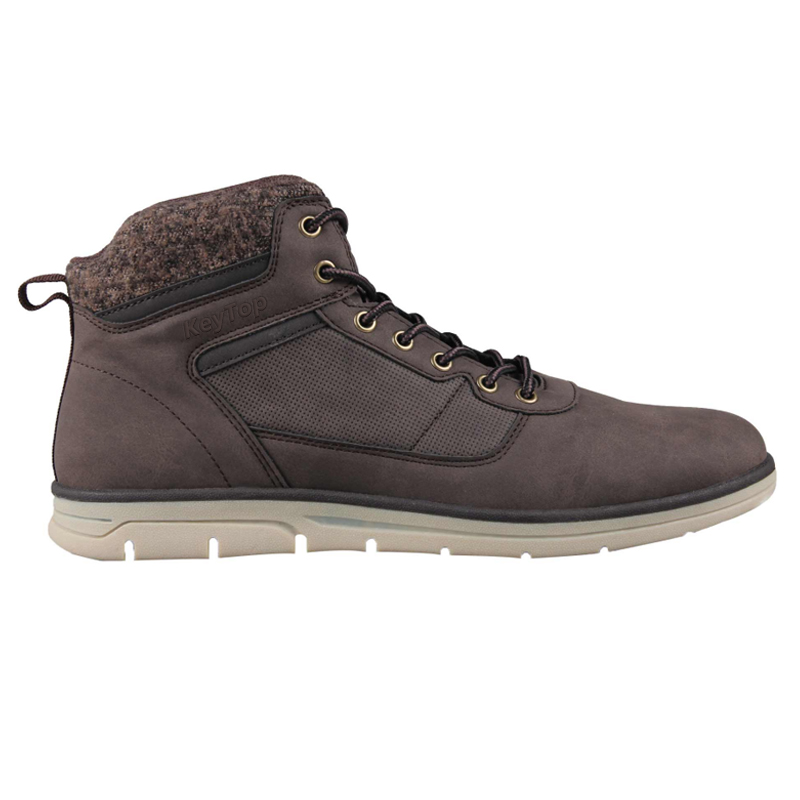
Compare the Available Construction Options
This decision should be made from the order handoff, not from a catalog photo. For OEM boot program, record the decision, the approval risk, the quality check, and the buyer follow-up in the same approval trail.
| Option | Best for | Quality check | approval risk | Verification | Decision |
|---|---|---|---|---|---|
| work-oriented boot build | Use when the order calls for work-oriented boot build | Inspect the sample and approval record for the attributes that make work-oriented boot build suitable | Selecting work-oriented boot build without application evidence can create a performance, presentation, or receiving failure. | Inspect the work-oriented boot build reference against its intended use and retain the result with the controlled record. | retain for shortlist |
| outdoor weather boot build | Use when the order calls for outdoor weather boot build | Inspect the sample and approval record for the attributes that make outdoor weather boot build suitable | Selecting outdoor weather boot build without application evidence can create a performance, presentation, or receiving failure. | Inspect the outdoor weather boot build reference against its intended use and retain the result with the controlled record. | compare against the use case |
| fashion retail boot build | Use when the order calls for fashion retail boot build | Inspect the sample and approval record for the attributes that make fashion retail boot build suitable | Selecting fashion retail boot build without application evidence can create a performance, presentation, or receiving failure. | Inspect the fashion retail boot build reference against its intended use and retain the result with the controlled record. | request a revised sample |
| seasonal replenishment build | Use when the order calls for seasonal replenishment build | Inspect the sample and approval record for the attributes that make seasonal replenishment build suitable | Selecting seasonal replenishment build without application evidence can create a performance, presentation, or receiving failure. | Inspect the seasonal replenishment build reference against its intended use and retain the result with the controlled record. | record for reorder |
Ask the factory production and QC contacts to explain how the selected construction is sampled, inspected, and retained as the reference for the bulk run.
Use the Compare the Available Construction Options table as a decision aid for this H2 only. Select the rows that change the choice, record the proof needed for approval, and leave unrelated commercial topics to their assigned sections.
Before comparing suppliers, review footwear products for the related product or solution route.
Sample Evidence to Request
Treat a boot material supplier as shortlist-ready only when it returns three evidence layers: proof of material origin, a signed sample approval with measurements, and a documented reorder process. Without these, the quote is unverifiable.
Supplier evidence to request
Request written proof for each material component—mill certificates or supplier declarations. Risk: unverified sources cause material failure in production. Compare declarations against approved sample components. Shortlist only after written evidence is provided.
Sample approval evidence
A signed sample approval must include measurements, material codes, and accepted deviations. Risk: bulk production may use a different material without this record. In the sample room, verify physical specs with a calibrated gauge. Document sample ID and revision, then freeze the spec in the RFQ. That signed record becomes the binding reference for bulk.
Reorder control records
Ask for the supplier’s change-log from the last order—how deviations were tracked and approved. Risk: an unrecorded change causes color or fit mismatch. Compare change records with the approved baseline. Release reorder only when the trail is complete.
For a full process overview, see OEM and ODM footwear manufacturing to align these checks with production handoff.
Cost, MOQ, and Lead-Time Trade-Offs
Cost changes when the MOQ structure is unclear or the lead-time assumption has no written baseline. Without a documented trade-off between material type, process complexity, and quantity, you cannot compare quotes or sample costs. The first decision is verifying the MOQ by material and process.
MOQ structure by material and process
Require the supplier to break down MOQ by material component (upper, lining, outsole) and process step (cutting, stitching, lasting). Risk: a single per-style MOQ may hide higher minimums for custom colors or finishes. Verification: compare the breakdown against the approved sample spec and confirm batch allocation before quoting.
Sampling and bulk lead-time assumptions
The sample lead time of 7–15 days starts only after usable specs are confirmed. Bulk production of 35–45 days depends on sample approval, material availability, and production slot. Risk: accepting a single calendar number without these conditions causes delivery mismatch. Verification: require the supplier to state what resets the timing.
Rush-order and reorder constraints
A rush order often bypasses the normal sample-approval gate. Risk: reordering without a change comparison can reintroduce old deviations. Verification: require a signed reorder checklist that compares the new request against the last approved baseline. In the sample room, verify the MOQ breakdown by physical rolls and lead-time conditions. Release only after the deviation log is complete.
Use these checks to document cost drivers and schedule assumptions before the next quote or sample request. For related factory capability details, review KEYTOP factory. For further reading on minimum order quantities, see MOQ: Minimum Order Quantities in China Manufacturer.
Build the RFQ and Supplier Shortlist
- Can the supplier provide documented proof of material origin and production capacity for boot materials? Verifies stable sourcing and production capability before shortlisting. Supplier returns mill certificates, capacity records, and a signed sample approval with measurements.
- What verification method does the supplier use to ensure material quality matches the approved sample? Ensures consistent quality from sample to bulk production. Supplier provides a QC checklist with pass-fail criteria for each material component.
- How does the supplier handle approval risk for custom boot materials before bulk production? Avoids costly rework from approving specifications without a physical sample. Supplier requires a signed sample approval with measurements before bulk release.
- What reorder process ensures consistency between the original order and repeat batches? Guarantees repeat orders match the approved baseline without unrecorded deviations. Supplier maintains a change log and signed reorder checklist comparing to the last approved baseline.
Resolve these questions before approval: what QC approach does the supplier use to catch defects in stock or custom boot materials? Prevents bulk rejection from hidden defects or missing quality specs. Supplier provides written QC checklist and pass-fail criteria for each material option.
In conclusion
The sourcing choice for boot materials OEM sourcing is determined by how thoroughly you compare supplier evidence against your approved spec.
Verify the material origin, signed sample approval with measurements, and documented reorder process before shortlisting.
Document the MOQ breakdown by component and process to anchor cost and lead time assumptions.
Quality risk is controlled by requiring a physical sample and documenting the approval gate in the RFQ.
Only shortlist a supplier when all three evidence layers are provided and the spec is frozen in the RFQ.
To shortlist a supplier, visit boots products and confirm the final specification, quote assumptions, sample approval, QC evidence, approval risk, and supplier follow-up before bulk order.
Frequently Asked Questions
What inputs should buyers confirm for boot materials sourcing?
Buyers should confirm the material type, thickness, width, color, and finish for each boot component, along with the MOQ breakdown by component and process. Risk: a single per-style MOQ may hide higher minimums for custom options. Verify by comparing the breakdown against the approved sample spec, then confirm batch allocation in the RFQ.
What sample evidence is needed for boot materials sourcing?
A physical sample matching the intended upper, lining, outsole, and insulation is the verifiable evidence. Document the approved sample ID, material code, and accepted deviations. The risk of approving a spec sheet without a physical check is receiving bulk material that fails in the field. Compare the sample against your target use case before moving to bulk.
What should be included in a boot materials sourcing RFQ?
The RFQ should include the material specification, MOQ by component, lead time conditions, quality control checklist with pass-fail criteria, and the approval gate that defines whether a sample is required before bulk production. Include the verification method and the owner responsible for each approval step to avoid production mismatches.
How Can I Find A Boot Manufacturer?
To find a boot manufacturer, request three evidence layers: proof of material origin, a signed sample approval with measurements, and a documented reorder process. Shortlist only when written evidence is provided for each. Without these, the quote is unverifiable and production risk increases.