










The sourcing record for boot sizing tolerance for bulk orders is incomplete until it supports this Verify samples, materials, print, tolerances, certifications, and bulk-production risk.
On a boot the shaft circumference drifts more than the length does, and it is the measurement buyers most often forget to specify.
Direct answer: For boot sizing tolerance for bulk orders, buyers should verify samples, materials, print, tolerances, certifications, and bulk-production risk.
Define the Buyer Decision for Boot Sizing Tolerance Checklist for Bulk Orders
- Compare boot last grade against bulk order spec sheet: the buyer-confirmed requirement variance in heel-to-toe length can shift fit across a size run, causing returns on 1000-pair orders Measure the production last against the approved sample last using a calibrated steel ruler at the heel center and toe tip Size drift across the run leads to inconsistent fit complaints and chargebacks from retail buyers Document the last measurement on the inspection report and flag any deviation above the buyer-confirmed requirement for review
- Check width tolerance at the forefoot and instep: Width drift changes the perceived fit for half the size run, especially in unisex boot styles Use a contour gauge at the ball line and instep point on three pairs per production carton Narrow or wide pairs in the same order cause split shipments and restocking fees Shortlist any carton where more than one pair exceeds the buyer-approved ribbon width variance for re-last evaluation
- Verify heel height consistency across all size increments: Heel height variation alters the boot's pitch and can cause gait discomfort in bulk orders Place each boot on a flat surface and measure from the heel seat to the ground using a height gauge Inconsistent heel heights create a poor unboxing experience and increase return rates by up to a supplier-confirmed variance Reject any size increment where heel height differs by more than the buyer-confirmed requirement from the spec sheet
- Confirm size grading increments match the approved size run chart: the buyer-confirmed requirement grading step instead of the specified the buyer-confirmed limit shifts the entire size curve, affecting half sizes Measure the length difference between consecutive sizes on three sample pairs per size break Incorrect grading causes the largest and smallest sizes to fall outside the buyer's fit range Request a corrected grading chart from production before bulk cutting begins
- Document the MOQ allocation per size and width combination: A 1000-pair order split unevenly across sizes can leave the buyer with dead stock in slow sizes Compare the production cutting ticket against the buyer's size ratio confirmed in the quotation Overproduction of narrow sizes ties up working capital and reduces reorder flexibility Confirm the size ratio allocation in writing before the production slot is locked
Confirm Product and Order Scope
For boot sizing tolerance, use a release rule: approve only when the supplier evidence matches the written requirement.
- Sizing tolerance matches the approved sample and grade rule. Provide the signed size-grade specification sheet and the first-article inspection report for the production run. Supplier quality or production manager Accepting out-of-tolerance boots leads to fit returns, chargebacks, and brand reputation damage. Compare the grade sheet against your purchase order size run before approving bulk production.
- Supplier has a documented process for measuring and recording boot length, width, and heel height. Submit the standard operating procedure for dimensional inspection and the last three batch measurement logs. Supplier QC department Without a repeatable measurement method, you cannot verify consistency across production lots. Request a live measurement demonstration during the pre-production meeting.
- Approval risk is reduced by a signed off-size set before bulk cutting. Provide the confirmation sample approval report and the signed off-size set measurement record. Supplier sample room and buyer quality representative Starting bulk production without signed off-size approval can result in full-order rejection. Document the approval gate in the production timeline and do not release the cutting order without it.
MOQ, cost structure, and lead time
Confirm that the order quantity fits within the supplier's standard production run for this boot construction. A partial run or split order may increase per-pair cost and extend lead time. Ask for a written quotation that breaks down tooling, material, and labor costs so you can evaluate the total cost of ownership.
Supplier reliability and quality checks
Assess whether the supplier has a documented quality management system for dimensional control. Request their AQL sampling plan and defect classification for boot sizing. A supplier that cannot show a repeatable inspection process introduces risk of inconsistent fit across the shipment. Use this checkpoint to shortlist only qualified partners for your bulk order solutions.
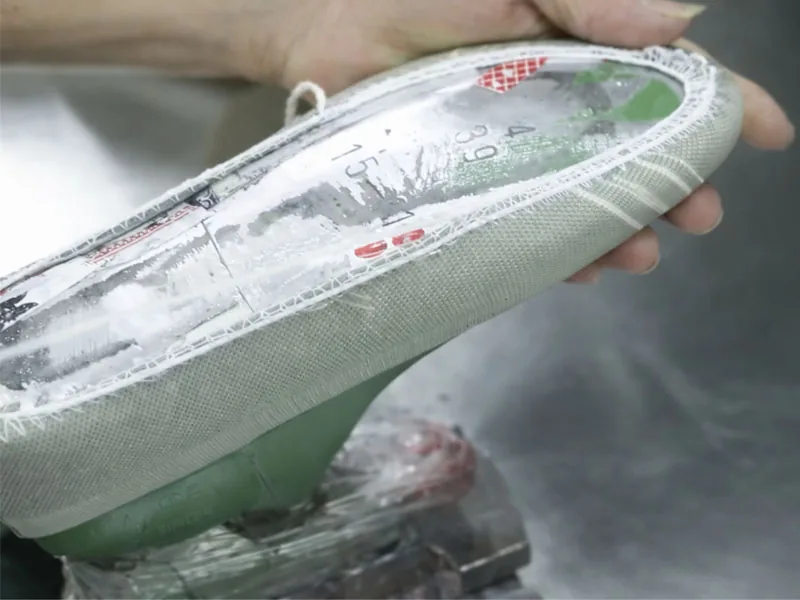
Build the Verification Checklist
- Supplier cannot provide a size-grading chart for the boot style. Without a documented grade rule, each size may drift from spec, causing fit failures across the size run. Request the supplier's size-grading chart and compare it to your approved sample measurements. Size-grading chart showing increments for length, width, and heel height. Shortlist only suppliers who submit a grade chart with the quotation.
- Supplier rejects inline measurement checks during bulk production. Unchecked production runs can produce out-of-tolerance footwear products that fail final inspection. Insist on a mid-production measurement check at the cutting and lasting stages. Mid-production inspection report with actual measurements against spec. Approve the production schedule only after the supplier agrees to inline checks.
- Supplier's sample passes fit but bulk material differs from sample material. Material substitution changes stretch and stiffness, altering final fit across all sizes. Verify that bulk material matches the sample material specification and source. Material specification sheet and supplier declaration of material consistency. Hold sample approval until material source and spec are confirmed in writing.
- Supplier has no documented procedure for measuring boot length and width. Inconsistent measurement methods lead to size drift and high reject rates in bulk. Ask the supplier to describe their measurement method and tolerance limits. Written measurement standard operating procedure with tolerance bands. Verify the procedure during the factory audit or video call.
Compare Quote and Production Assumptions
The main failure mode for boot sizing tolerance is approval before the supplier has resolved the listed evidence gaps.
- Does the supplier have documented boot sizing tolerance limits for each construction method? Without documented limits, quote assumptions on fit and material allowance are unverifiable, leading to size drift in bulk. Supplier provides a written tolerance table per construction type, citing last grade and material allowance ranges. Undocumented tolerances cause rejected pairs, rework costs, and delayed shipment during final inspection. Request the tolerance table as a quote attachment and compare against your approved sample measurements.
- What verification method does the factory use to check boot length and width during production? Verification method determines whether size compliance is checked inline or only at final inspection, affecting defect catch rate. Factory uses calibrated foot forms or optical scanners at cutting and lasting stages, with records per batch. Manual or end-of-line checks miss drift early, resulting in a full lot falling outside tolerance. Shortlist only suppliers that show inline verification steps in their quality plan for OEM and ODM footwear manufacturing.
- What buyer follow-up steps are required after first bulk production to confirm sizing consistency? Follow-up steps ensure the supplier's production process maintains tolerance across the full order, not just the first run. Supplier commits to sending a mid-production sample from each size run for buyer measurement check. Without follow-up, size drift accumulates across colorways or shifts, requiring last-minute rework. Schedule a mid-production sample approval gate in the production timeline before final packing.
- Which cost driver in the quote is most affected by tightening boot sizing tolerance? Tightening tolerance increases material waste, last adjustments, and inspection frequency, directly raising unit cost. Supplier itemizes tolerance-related cost drivers, such as extra cutting waste or additional QC stations, in the quote breakdown. Ignoring cost drivers leads to unexpected price increases or supplier cutting corners on tolerance checks. Compare the cost driver breakdown across shortlisted quotes to identify which supplier builds tolerance into standard pricing.
Run the Review Before Approval
Open at the relevant workflow checkpoint: Before final approval, the buyer must have the supplier’s completed boot sizing tolerance checklist with evidence for each requirement. The output that must exist before the next stage is a verified checklist that matches the written specification. KEYTOP factory editorial team writes B2B footwear sourcing guides from approved company facts.
Questions to send back to the supplier
- What is the size-grading chart for each boot style?
- How do you measure length and width tolerance?
- What is your process for verifying last dimensions?
- How do you handle size discrepancies in bulk production?
- Can you provide photos of the measurement tools?
When to revise, escalate, or reject
After reviewing the supplier’s answers, compare them against the agreed specifications. Use the table below for decision guidance.
| Scenario | Action |
|---|---|
| Spec mismatch | Request revised evidence or third-party measurement report. |
| Cost overrun | Re-evaluate cost impact; consider renegotiation or alternative supplier. |
| Production risk | Escalate to quality team; demand sample revision before bulk. |
| Sample handoff failure | Reject approval; require resubmission with corrected samples. |
Once the supplier meets all criteria, approve the checklist and proceed to production. The brand capability relevant to this topic is boots, and the Quality Inspection Checklist provides a framework for bulk order verification.
Move from Review to RFQ or Sample
The primary failure mode at this stage is approving the supplier before they have closed all evidence gaps from the checklist. The control is a formal handoff gate: only proceed when every checklist item has a documented supplier response.
Inputs to Include in the Next Message
- State the required size-grading chart and ask the supplier to confirm they can produce it for your boot style.
- Request a written statement of their tolerance range for length and width, with supporting measurement data from a recent production run.
- Include your own tolerance limits and ask the supplier to acknowledge they can meet them.
- Ask for a description of their in-line inspection process for sizing, including frequency and sampling method.
- Request a sample pair that represents the median size in your order, with a commitment to match production to that sample.
Ownership and Sign-Off for the Next Gate
The sourcing manager owns the checklist review. The quality engineer signs off on the supplier’s measurement data and inspection process. The product developer confirms the sample matches the intended fit. No one moves to RFQ or sample without all three approvals.
Source check: [PDF] REQUISITION GUIDE – Purchase of Goods or Services; 15 Bag Manufacturer Red Flags Buyers Must Check Before Bulk Ord…; Lead Time, Shipment Inspection, and Packaging Checklist for Bul….
In conclusion
The sourcing choice comes down to comparing each supplier’s documented sizing tolerance against your specification sheet, verifying that every size grade stays within the agreed range before you approve the bulk order. To reduce approval risk, check that the supplier has submitted a signed tolerance commitment for each size point, not just an average, and that their quality management system includes a documented procedure for catching drift during production. Without this concrete proof, you risk approving a batch that fails fit consistency across the size run.
Shortlist only those factories that can provide a measurement record from the approved sample alongside a written release rule for production lots. Document the tolerance limits in your RFQ and confirm them again at sample handoff, then verify during the first article inspection that the actual measurements match the committed range. This approach turns the checklist into a repeatable gate that protects your order from hidden sizing failures.
Boot Sizing Tolerance Checklist for Bulk Orders FAQ
What should buyers confirm first?
For boot sizing tolerance checklist for bulk orders, turn the answer into a written quote request note: intended use, ribbon width, material, finish, packing method, and approval owner. Ask the supplier what sample proof or QC record will confirm the same result in production. A vague answer can turn into quote mismatch, sample delay, packing damage, or repeat-order drift.
Which proof should be retained for approval and reorders?
Retain the signed specification sheet, the approved sample with measurement records, and the supplier’s quality inspection report for the bulk lot. For reorders, keep the original sample approval documentation and compare it against a new pre-production sample to ensure no tooling or material changes have caused size drift. Document the measurement method used (e.g., last measurement, footbed length) and the acceptable tolerance range. This proof protects you if the supplier later claims the size was within tolerance when it was not. Approving the wrong structure or supplier proof can create quality, cost, or delivery problems.
Which warning signs should stop the order?
Stop the order if the supplier cannot provide a documented quality management system for dimensional control, or if their sample fails your measurement check by more than the agreed tolerance. Also stop if the supplier refuses to adjust the tolerance range without a clear cost or lead time justification, or if they cannot show past production records for similar boots. A red flag is when the supplier asks you to approve the bulk order before you have seen and measured a sample. In that case, require a sample first and verify it against your spec before proceeding.
quote request handoff: Send Specs for Review.