










The sourcing record for sandal sizing tolerance for bulk orders is incomplete until it supports this Verify samples, materials, print, tolerances, certifications, and bulk-production risk.
Sandal fit is set by strap placement as much as by length. Both need a tolerance or the sample will not represent the run.
Direct answer: For sandal sizing tolerance for bulk orders, buyers should verify samples, materials, print, tolerances, certifications, and bulk-production risk.
Define the Buyer Decision for Sandal Sizing Tolerance
- Verify that the bulk order quantity matches the MOQ allocation per style, colorway, and size run. Short-picking or over-producing a size run disrupts the buyer's retail assortment plan and inventory balance. Cross-check the production packing list against the approved PO line items and size ratio table. A mismatched size run can delay shipment or force the buyer to accept unsellable inventory at full cost. Request a pre-shipment size-run confirmation from the factory QC manager before container loading.
- Inspect strap attachment points and sole bonding for consistent adhesion across all pairs. Weak bonding causes strap detachment during first wear, leading to safety complaints and brand damage. Perform a manual pull test on 3 pairs per production batch; check for audible separation or visible gap. A single failed bond in a retail shipment can trigger a full-style recall and buyer chargeback. Require the factory to submit a bonding test video for each production run before bulk shipment.
- Confirm that the material thickness and durometer match the approved spec for the sole and footbed. Softer or thinner material than spec changes the sandal's fit, comfort, and durability perception. Use a thickness gauge and Shore A durometer on 2 pairs per colorway; compare to the spec sheet. Out-of-spec material can cause premature wear or discomfort, resulting in returns and lost repeat orders. Hold the shipment until the factory provides a material compliance certificate for the batch lot.
Material and specification fit
The spec sheet is the single source of truth for the bulk run. Every dimension—length, width, heel height, strap placement, sole thickness—must match the approved sample within the tolerance band. A deviation that looks small on paper becomes a fit problem when multiplied across a thousand pairs. The buyer should require the factory to submit a pre-production measurement report before the bulk cut begins.
MOQ, cost structure, and lead time
Standard manufacturing orders start at 1,000 pairs per category. Style, color, size, and program allocation is confirmed in the quotation. Sample lead time is 7–15 days after spec confirmation; bulk production takes 35–45 days. Confirm the size-run ratio and packaging requirements in the PO to avoid rework charges.
Supplier reliability and quality checks
A reliable supplier runs in-process checks at the cutting, stitching, and assembly stations, not just a final inspection. The buyer should ask for the factory’s standard tolerance table and the AQL level applied to sandal orders. If the supplier cannot show a written QC procedure for sizing, that is a red flag. A pre-shipment inspection by a third party is a standard safeguard before the container leaves the factory.
Confirm Product and Order Scope
For sandal sizing tolerance, use a release rule: approve only when the supplier evidence matches the written requirement.
- Supplier has documented sandal sizing tolerance per style and size run. In-process measurement records from cutting, stitching, and assembly stages. Factory QC department Out-of-tolerance pairs cause fit returns and chargebacks from retail buyers. Request tolerance records for the last three bulk orders before sample approval.
- Supplier uses calibrated measurement tools for sandal length and width checks. Calibration certificates for foot gauges and measuring devices used on the production line. Factory quality manager Uncalibrated tools produce inconsistent sizing across the bulk run. Verify calibration dates are within the current year during the factory audit.
- Supplier has a documented process for segregating non-conforming sandals during production. Standard operating procedure for non-conforming material handling and quarantine area photos. Factory production supervisor Mixed lots increase the chance of out-of-tolerance pairs reaching final pack. Inspect the quarantine area and segregation records during the pre-production visit.
RFQ details to send
Include the exact tolerance range and measurement method in your RFQ so all bidders quote on the same standard. Ask for a capability study or first-article report as part of the quotation package. This step prevents surprises during production and gives you a baseline to evaluate supplier solutions for sizing control.
Production handoff details
Before the first bulk run, confirm the factory has calibrated gauges and trained operators for your sandal style. Request a pre-production sample measurement report and compare it to the approved spec. This handoff check catches tolerance drift early and avoids costly rework or shipment delays.
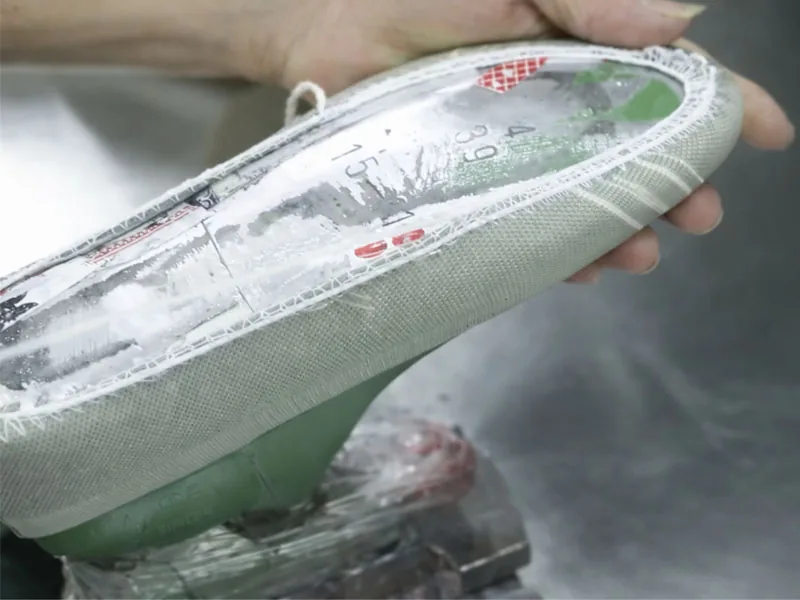
Build the Verification Checklist
- Supplier cannot show a calibrated size-check gauge for sandal length and width. Without a calibrated gauge, every pair may drift outside the tolerance band, causing a full shipment rejection at arrival inspection. Request a photo of the gauge with its last calibration sticker and the date of the next scheduled calibration. Calibration certificate or sticker photo for the foot-measuring device used on the line. Add a line in the RFQ requiring calibration records for all measurement tools used on footwear products.
- Supplier cannot provide a written tolerance range for sandal length and width in the quote. Without a stated tolerance, you have no basis to reject out-of-spec pairs, and the supplier may ship any size variation as acceptable. Ask for the exact tolerance in millimeters for both length and width, and the measurement method (e.g., last measurement vs. finished product). A signed spec sheet with tolerance values for each size in the order. Insert the tolerance range into the purchase order as a binding condition before production starts.
- Factory has no record of a failed size-check from previous sandal orders. Zero failures often means no measurement system exists, not perfect quality. You cannot verify the supplier's sizing consistency without failure data. Request the last three order's final inspection reports showing actual measured sizes vs. spec for sandals. Final inspection reports with pass/fail rates for sandal sizing from the last three bulk orders. Shortlist only suppliers who can share historical sizing inspection data for similar products.
Compare Quote and Production Assumptions
The main failure mode for OEM and ODM footwear manufacturing is approval before the supplier has resolved the listed evidence gaps.
- Does the supplier have documented experience producing sandals with consistent sizing across bulk runs? A supplier without sandal-specific production history may lack the last and mold calibration needed to hold tolerance across 1,000+ pairs. The supplier provides a list of past sandal programs and can share in-process measurement records from cutting, stitching, and assembly. Without proven sandal capability, you risk receiving mixed sizes that cause returns and chargebacks from retail partners. Request a capability statement that includes sandal-specific production references and ask for a sample run to verify size consistency.
- How does the factory verify sandal length and width during production, and what measurement method do they use? Sandal sizing tolerance depends on precise measurement at each assembly stage; vague methods hide drift that only appears at final inspection. The factory uses calibrated gauges at cutting, stitching, and assembly, and follows a written measurement standard such as IS 6721:2023. Without a documented verification method, you cannot enforce tolerance limits, and out-of-spec sandals may reach your warehouse. Ask for a copy of the factory's measurement procedure and confirm that gauges are calibrated before the first bulk run.
- What is the approval gate for releasing a sandal production lot that falls within the agreed tolerance range? A clear release rule prevents ambiguous handoffs between production and shipping, ensuring only compliant lots leave the factory. The supplier has a written approval rule: lots pass only when every size in the run meets the tolerance documented in the quote request. Without a release gate, you may approve a lot that contains borderline sizes, leading to customer dissatisfaction and increased return rates. Document the release rule in the production agreement and require the supplier to submit a signed lot-release report before shipment.
- What follow-up action do you take if a bulk lot fails the sizing tolerance check during production? A predefined corrective action plan prevents production delays and ensures the supplier reworks or replaces non-compliant pairs before shipment. The supplier has a written rework protocol: failed lots are segregated, measured again, and reworked or scrapped before the next production run. Without a follow-up plan, a failed lot may be shipped anyway, or production may stop while you negotiate a resolution, delaying your launch. Include a corrective action clause in the purchase order that specifies rework timelines and who bears the cost of re-inspection.
Run the Review Before Approval
Open the Define the Buyer Decision for Sandal Sizing Tolerance review with evidence that the supplier has submitted a signed quote request confirmation listing the agreed size-check gauge type and the maximum allowable deviation per size point. Without this document, do not move to the next stage.
Questions to send back to the supplier
- What is the exact gauge model and calibration date used for the pre-shipment size check?
- How many pairs per size run were measured, and what was the recorded deviation range?
- Can you provide a photo of the gauge reading alongside a sample from the production lot?
When to revise, escalate, or reject
If the supplier cannot produce a calibrated gauge record or the deviation exceeds the quote request-confirmed tolerance, revise the checklist to require a joint re-measurement session. Escalate when the supplier offers a verbal assurance without documentation. Reject if the deviation is outside the agreed limit and the supplier refuses to rework.
Before final approval, verify that the bulk order quantity matches the sample handoff protocol. Use the table below to confirm each checkpoint.
| Checkpoint | Requirement |
|---|---|
| Gauge calibration | Certificate dated within agreed validity window of production |
| Measurement method | Same as RFQ sample |
| Deviation record | Per-size-run log signed by QC |
| Rework approval | Written buyer sign-off before shipment |
For more on supplier quality expectations, see our guide on KEYTOP factory.
Move from Review to RFQ or Sample
for this order, the steps below turn move from Review to quote request or Sample into fit, construction, sample, QC, and quote request checks a footwear supplier can confirm.
Inputs to include in the next message
The primary failure mode at this stage is approving a bulk order before the supplier has submitted a verified sizing tolerance report. To prevent this, require the supplier to include in their quote request response a signed statement confirming that all sandal lengths and widths will be measured against a calibrated gauge at the point of final inspection.
- State the exact tolerance range (e.g., the buyer-approved tolerance for length, ±a supplier-confirmed variance for width) as a pass/fail criterion in the quote request.
- Ask the supplier to name the specific measuring tool (model and calibration date) they will use for bulk production.
- Request a sample inspection report from a recent comparable order that shows actual measured dimensions vs. the specified tolerance.
- Include a clause that any deviation beyond the stated tolerance will trigger a supplier-confirmed variance re-inspection at the supplier’s cost.
Ownership and sign-off for the next gate
Before moving to sample approval, assign one person from your quality team to own the tolerance verification. That person must confirm that the supplier’s quote request response includes all four inputs above. Use the table below to document the handoff.
| Gate | Owner | Deliverable |
|---|---|---|
| RFQ Review | Sourcing Manager | Supplier tolerance statement received |
| Sample Inspection | Quality Engineer | Measured dimensions vs. tolerance report |
| Bulk Order Release | QA Lead | Signed approval with gauge calibration proof |
Once the owner signs off, you can proceed to request a sample. Do not skip this step—without documented ownership, the tolerance requirement may be lost in production.
Source check: ISO 9001 quality management standard; 15 Bag Manufacturer Red Flags Buyers Must Check Before Bulk Ord…; How to choose a factory: custom socks factory qualification che….
In conclusion
The sourcing choice for the current product in bulk orders comes down to verifying that every pair in the shipment matches the approved specification sheet within the agreed tolerance range. Before moving to quote request or sample handoff, compare the supplier’s measurement gauge calibration record against your documented tolerance limits, and confirm that the MOQ and cost structure account for any size-run adjustments. Document the approval criteria in writing, including the exact measurement points and acceptable deviation for each sandal component, and shortlist only those suppliers who can provide a signed gauge record and a first-article inspection report.
To complete the checklist, verify that the supplier’s sample lead time and bulk production schedule align with your order timeline, and that the quality control proof includes a dimensional check for every size in the run. Check for red flags such as missing calibration records, sample deviations beyond the stated tolerance, or refusal to document the measurement method. Approve the supplier only after all checks pass, then proceed to request a sample and retain the signed specification sheet, gauge record, and inspection report for the bulk order file.
Sandal Sizing Tolerance FAQ
What should buyers confirm first?
for this sourcing program checklist for bulk orders, turn the answer into a written quote request note: intended use, ribbon width, material, finish, packing method, and approval owner. Ask the supplier what sample proof or QC record will confirm the same result in production. A vague answer can turn into quote mismatch, sample delay, packing damage, or repeat-order drift.
Which proof should be retained for approval and reorders?
Retain the signed specification sheet, the supplier’s measurement gauge calibration certificate, and the approved sample’s dimensional report. For reorders, keep the same tolerance record and request a new sample if the material or last changes; otherwise, verify the bulk order against the original approved sample before shipment. Approving the wrong structure or supplier proof can create quality, cost, or delivery problems.
Which warning signs should stop the order?
Stop the order if the supplier cannot provide a gauge record, if the sample deviates beyond the agreed tolerance, or if bulk units show inconsistent sizing across the same size run. Also halt if the cost or MOQ changes without a revised tolerance agreement, and always require a pre-shipment inspection to catch these risks before shipment.
quote request handoff: Send Specs for Review.