










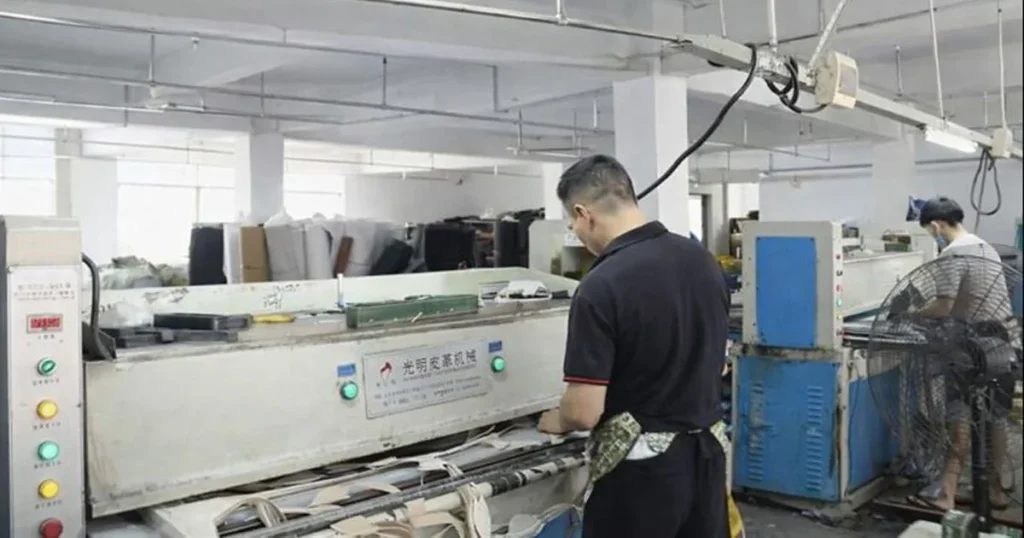
The sourcing record for sandal strap and footbed material comparison is incomplete until it supports this Choose the right product type, structure, material, or specification.
Strap and footbed materials are chosen against each other: one decides comfort, the other decides whether the strap holds.
Direct answer: For sandal strap and footbed material comparison, buyers should choose the right product type, structure, material, or specification.
Define the Buyer Decision for Sandal Strap Footbed Material Comparison
| Option | Best fit | Trade-off | Risk to avoid | Verification | Follow-up |
|---|---|---|---|---|---|
| Current specification | Established production line with tested tooling and known yield rates | Narrower material sourcing pool may limit cost negotiation leverage | Undocumented spec changes by supplier during bulk run without requalification | Request signed spec sheet with tolerance ranges for thickness, hardness, and adhesion | Confirm current spec matches last approved sample before issuing PO |
| Alternative specification | Cost-reduction target or weight reduction goal without changing construction method | New material may require tooling adjustment or longer sample cycle | Incompatible adhesive or molding temperature causing delamination in field use | Run peel test and heat-resistance check on 5 pre-production samples per colorway | Document alternative spec parameters in RFQ and request supplier's material data sheet |
| Custom option | Brand-specific color, texture, or durometer requirement not available in standard catalog | Minimum order quantity typically higher; lead time extends by 10-15 days for tooling | Custom compound may fail wear test if supplier lacks compounding experience | Request 3-meter sample strip of strap material and molded footbed coupon for hand-feel approval | Send Pantone reference and hardness target; confirm MOQ allocation per style before sampling |
| Safer fallback | Proven material combination already in commercial production at the factory | May not match brand aesthetic or weight target; limits differentiation | Supplier may substitute fallback material without notice if primary stock runs out | Check fallback material is listed on supplier's approved vendor list with last production date | Include fallback spec as approved alternate in the contract and label both on the sample tag |
Evaluate the decision criteria as one decision scope. Use this decision matrix as an approval sequence, not as a supplier claim. For current specification, a poor decision can mean undocumented spec changes by supplier during bulk run without requalification. Request signed spec sheet with tolerance ranges for thickness, hardness, and adhesion, then confirm current spec matches last approved sample before issuing po.
For sandal strap and, preserve the current specification decision under one revision number: keep the supplier response, marked sample, approved specification, quotation, and approval owner together. If the evidence conflicts with the approved record, hold the quote, sample, or production release until the deviation is explained in writing. Carry that signed the decision criteria record into the purchase order, production handoff, shipment release, and later reorder review so every team works from the same baseline.
Supplier proof to verify
Ask for the material supplier's test report for strap tensile strength and footbed compression set. Cross-check the report date against the production lot. A factory that cannot produce a dated lot-specific certificate may be blending materials without a controlled formula. This step protects against batch variation.
Use cases that fit
A current spec works for repeat orders where the buyer already has sales data on the existing construction. An alternative spec fits when the buyer targets a lower landed cost or lighter carry weight. A custom option suits a brand launching a signature collection. The safer fallback covers urgent replenishment where time does not allow requalification.
RFQ and sample checks
In the RFQ, state which spec tier applies and whether the fallback is pre-approved. For each sample round, request a material swatch card with hardness and thickness readings. Mark the sample tag with the spec tier name. This prevents the factory from shipping a different material than the one you approved.
Confirm Product and Order Scope
| Criteria | Baseline option | Confirmed option | Buyer meaning | Risk to avoid | Follow-up |
|---|---|---|---|---|---|
| Specification details | Single-material strap (e.g., TPU or nylon webbing) with molded EVA footbed | Multi-layer strap (e.g., leather-backed textile) with contoured PU footbed | Defines the material construction for both strap and footbed, which directly affects durability, comfort, and cost per pair. | Mismatched material specs can cause delamination, strap breakage at anchor points, or footbed compression failure within the first season. | Document the exact material type, thickness, and hardness for both strap and footbed in the RFQ spec sheet. |
| Cost driver | Lower material cost per pair; simpler tooling and assembly | Higher material cost per pair; additional labor for layering and contour molding | Single-material construction reduces upfront tooling and per-unit cost, while multi-layer builds increase both material and labor expense. | Choosing solely on unit cost may lead to higher rejection rates or shorter product life, increasing total cost of ownership. | Request a cost breakdown per component (strap, footbed, assembly) from the supplier to compare total landed cost. |
| Quality control | Visual inspection and pull test at strap anchor points; footbed density check | Layer adhesion test, flex test, and compression set test for footbed | Single-material straps require fewer QC checks, while multi-layer constructions need adhesion and flex tests to prevent separation. | Without adhesion testing, multi-layer straps may separate after repeated wear; footbed compression set failure can cause permanent flattening. | Confirm which QC tests the supplier runs for each construction type and request test reports for the first production batch. |
| Approval risk | Faster sample approval due to simpler construction; fewer variables | Longer sample approval cycle; multiple rounds needed to dial in layer bonding and footbed contour | Single-material designs typically require one to two sample rounds, while multi-layer builds often need three or more to meet feel and durability targets. | Extended sample cycles can delay production start and push delivery past the selling season window. | Build extra sample approval time into the project timeline when selecting multi-layer strap and footbed combinations. |
| Verification method | Supplier-confirmed pull strength at strap attachment; footbed hardness durometer reading | Buyer-confirmed layer adhesion via peel test; footbed compression set per applicable market compliance evidence | Single-material verification relies on basic pull and hardness checks; multi-layer requires standardized adhesion and compression tests. | Using only visual checks for multi-layer builds may miss hidden delamination or footbed collapse that appears after the first 100 wears. | Specify the test method and acceptable threshold in the RFQ, and request a test report from the supplier before bulk production. |
Evaluate Confirm Product and Order Scope as one decision scope. Use this comparison table as an approval sequence, not as a supplier claim. For specification details, a poor decision can mean mismatched material specs can cause delamination, strap breakage at anchor points, or footbed compression failure within the first season. Request written proof and compare it with the approved sample or specification, then document the exact material type, thickness, and hardness for both strap and footbed in the rfq spec sheet.
For sandal strap and, preserve the specification details decision under one revision number: keep the supplier response, marked sample, approved specification, quotation, and approval owner together. If the evidence conflicts with the approved record, hold the quote, sample, or production release until the deviation is explained in writing. Carry that signed Confirm Product and Order Scope record into the purchase order, production handoff, shipment release, and later reorder review so every team works from the same baseline.
Decision criteria to confirm
Before selecting a strap and footbed material combination, confirm the intended use case and expected wear cycle. For OEM and ODM footwear manufacturing, the choice between single-material and multi-layer constructions directly impacts production cost, sample approval time, and long-term product durability. Document the required performance criteria in the RFQ.
RFQ details to send
When sending the quote request, include the exact material type, thickness, hardness, and any adhesion or compression requirements for both strap and footbed. Request a cost breakdown per component and confirm which QC tests the supplier will run. This prevents cost surprises and ensures the supplier can meet the specified quality thresholds.
Production handoff details
After sample approval, verify that the production order includes the agreed material specifications and test methods. Confirm the supplier has the correct tooling and adhesive for multi-layer constructions. A pre-production meeting with the factory QC team helps align on inspection criteria and avoids last-minute deviations during bulk manufacturing.
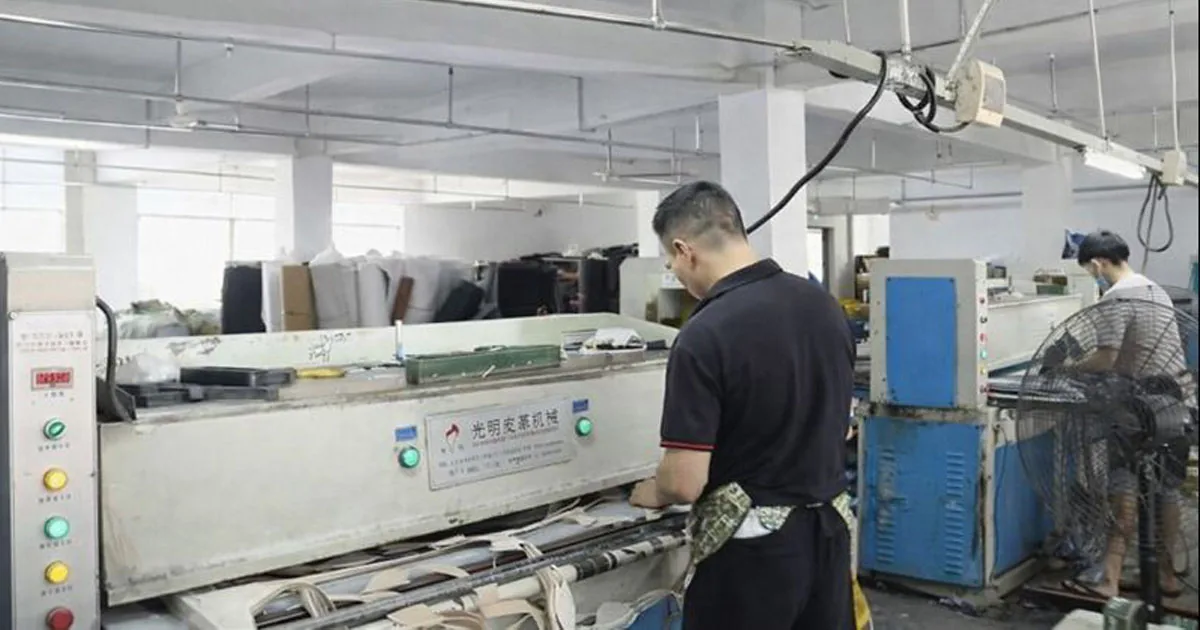
Build the Verification Checklist
At this workflow checkpoint, you must have a shortlist of material options (e.g., EVA, rubber, leather, or TPU for straps and footbeds). Before moving to the quote request/sample handoff stage, verify each candidate against five criteria using the ordered list below.
- Specs – Confirm durometer (shore A/C), abrasion resistance (DIN or Taber), and slip resistance (COF ≥ 0.6 wet). Request material data sheets and compare against your target market standards.
- Cost or MOQ – Request per-pair material cost breakdown (strap + private label footwear programs) and minimum order quantities per color/SKU. Note that custom molds add a one-time tooling fee.
- Production risk – Assess lead time for raw material procurement, curing/drying cycles, and reject rates. Ask the factory for defect history on similar constructions.
- Factory execution – Verify the supplier’s experience with your chosen material combination (e.g., EVA footbed + TPU strap). Request a process flow chart and quality checkpoints.
- quote request/sample handoff – Prepare a clear quote request document that includes material specs, test requirements, and delivery timeline. Send to at least three qualified factories and request A/B samples for side-by-side comparison.
Use this checklist as a gate: if any criterion is not met, revisit the material selection before proceeding to production.
Compare Quote and Production Assumptions
When strap and footbed specs are unclear, your quote may shift by a supplier-quoted adjustment or more after sample approval, delaying production and eroding margin. To avoid this, verify three checkpoints before committing to an order.
Supplier Proof Check
Ask your supplier to provide a material data sheet for each compound—EVA, rubber, or TPU—including hardness, density, and abrasion resistance. Confirm these match your quote request requirements. Without this, you risk receiving a lower-cost substitute that fails durability tests.
Sample Approval Check
During sample review, measure strap thickness and footbed contour against your spec. Use a simple go/no-go gauge to ensure consistency. Approve only when physical dimensions match the agreed drawing. This prevents mass production deviations.
Reorder Control Check
For reorders, request a new pre-production sample or a signed quality checklist from the factory. This verifies that material sources and tooling have not changed. A single undocumented substitution can compromise fit and comfort across an entire batch.
| Checkpoint | Buyer Verification Question | Production Risk Addressed |
|---|---|---|
| Supplier Proof | Can you provide a material data sheet for the strap and footbed compounds? | Material substitution without performance data |
| Sample Approval | Does the sample match the agreed thickness and contour within the approved tolerance? | Deviation in fit or comfort at scale |
| Reorder Control | Will you supply a pre-production sample or signed checklist before each reorder? | Undocumented changes in material or tooling |
Use these checks to lock in your quote assumptions and reduce rework costs. For more on our sourcing approach, visit KEYTOP factory.
Run the Review Before Approval
At this workflow checkpoint, you must have a shortlist of material options (e.g., EVA, rubber, leather, or TPU for straps and footbeds) with verified supplier test reports. The output that must exist before the next stage is a signed-off material specification sheet and a confirmed sample timeline. Use the following decision sequence to avoid costly revisions later.
Questions to send back to the supplier
- What is the exact Shore hardness range for the footbed foam, and how does it affect slip resistance?
- Can you provide a third-party abrasion test (e.g., Martindale cycles) for the strap material?
- What is the minimum order quantity per color per material, and are there cost breaks at higher volumes?
- What is the lead time for a pre-production sample with the specified material combination?
- How do you handle material defects during production—rework or replace at your cost?
When to revise, escalate, or reject
Use the table below as an approval sequence, not as a supplier scorecard. Each row represents a gate that must pass before proceeding.
| Checkpoint | Pass Criteria | Action if Fail |
|---|---|---|
| Specs & Cost | Material data sheet matches your RFQ requirements; unit price within budget | Revise: request alternative material or negotiate cost |
| Production Risk | Supplier confirms defect rate below a supplier-confirmed variance and provides quality control plan | Escalate: ask for third-party audit or process improvement timeline |
| Factory Execution | Sample passes visual, dimensional, and strength tests | Reject: require a new sample before any production order |
| RFQ/Sample Handoff | Signed specification sheet and sample approval form are on file | Escalate: hold order until documentation is complete |
If any gate fails, do not move forward. Revise the material choice, escalate to a senior supplier contact, or reject the quote entirely. This structured review prevents misalignment between your design intent and factory output.
Move from Review to RFQ or Sample
For sandal strap and, the steps below turn move from Review to quote request or Sample into fit, construction, sample, QC, and quote request checks a footwear supplier can confirm.
Inputs to include in the next message
Before sending an quote request or sample request, confirm that your material specifications are verifiable through a physical sample or documented test. For example, a recent buyer verified strap thickness by requesting a 3D-printed cross-section from the factory before committing to production. Include these inputs in your next message:
- Strap material type and confirmed thickness (e.g., via a sample cross-section)
- Footbed material type and confirmed hardness (e.g., via a durometer reading)
- Minimum order quantity range acceptable to your supply chain
- Target unit cost range based on confirmed material grades
- Required testing standards (e.g., abrasion resistance, flex fatigue)
Ownership and sign-off for the next gate
Assign one person to own the quote request or sample request and one to approve the final material specification before submission. This prevents miscommunication and ensures the factory receives a single, clear requirement. For example, a sourcing manager might own the quote request, while a product developer signs off on the material spec.
Use the following decision matrix to confirm your material choice before moving forward:
| Criteria | Verification Question | Buyer Action |
|---|---|---|
| Strap material performance | Does the factory provide a test report for tensile strength? | Request report or sample for in-house testing |
| Footbed durability | Has the footbed been tested for compression set? | Ask for test data or run a 24-hour compression test |
| Cost alignment | Does the quoted price fall within your target range? | Confirm with supplier and document in RFQ |
| Production risk | Is the material readily available without long lead time? | Verify stock or minimum order with factory |
After completing this matrix, you are ready to send the quote request or sample request with clear ownership and verified inputs.
Source check: ISO 2859-1 sampling inspection standard; Material Selection and Preparation for OEM Sandals Production; Sandals Supplier for OEM, Private Label & Bulk Orders.
In conclusion
The sourcing choice between strap and footbed materials ultimately comes down to verifying that your product’s intended use, price point, and production volume align with the supplier’s core capabilities. Before you shortlist a supplier, compare the documented material specifications—such as strap tensile strength, footbed density, and adhesion method—against your order’s cost and MOQ requirements. A mismatch in material type or construction process can introduce quality risks like delamination or strap breakage, so it is essential to check that the factory has proven experience with your selected combination. Once you validate the spec and approve a sample, you can confidently request a quote and move the project into production.
To request a quote for sandal strap and, use sandals products to confirm the final specification, quote assumptions, sample approval, QC evidence, approval risk, and supplier follow-up before bulk order.
Sandal Strap Footbed Material Comparison FAQ
What should buyers confirm first?
Buyers should first confirm the material specification for both the strap and footbed, including the exact compound, thickness, and any required surface texture or color. This directly impacts the cost and MOQ, as different materials require different molds and production runs, so verify these details with the supplier before requesting a quote. Ask how QC will check the sample, color, finish, packing, and bulk order.
Which proof should be retained for approval and reorders?
Retain the signed material specification sheet and the approved sample for every production run. For reorders, compare the new production sample against the original approved sample to ensure consistency in material, color, and finish, and document any deviations with the supplier. Ask for a sample, specification confirmation, or QC evidence before approval.
Which warning signs should stop the order?
Warning signs that should stop the order include a supplier unable to provide a material data sheet or a sample that does not match the agreed specification. Also, if the lead time for sample approval exceeds the standard range, or if the supplier cannot confirm the MOQ for your chosen material combination, halt the process and re-evaluate.
quote request handoff: Send Specs for Review.