
A boot sourcing program needs a written specification before the buyer can shortlist boot suppliers using proof, capability, quality, MOQ, and delivery criteria; otherwise suppliers may quote different product and approval assumptions.
The scorecard converts those requirements into proof-based questions for a defensible supplier shortlist.
Direct answer: For a boot supplier shortlist, compare matched samples, documented production capability, quality records, quantity rules, and delivery assumptions on the same basis.
Define the Buyer Requirement
A useful boot supplier scorecard starts with a signed requirement sheet, not a general factory introduction. Purchasing should define the intended market, construction, size range, branding and packing before comparing supplier claims; otherwise, the shortlist rewards confident answers rather than comparable capability.
| Requirement | Acceptance boundary | Commercial exposure | How to verify | Buyer follow-up |
|---|---|---|---|---|
| End use and sales channel | Name the lifestyle, outdoor or work-inspired use without implying unverified technical performance. | A vague use case can produce the wrong construction, labeling or test plan. | Ask the supplier to restate the intended use and any excluded claims in the quotation. | Reject or clarify any response that adds unsupported safety, medical or performance positioning. |
| Upper, lining and outsole | Record material family, color reference, finish, joining method and substitutions that require approval. | Uncontrolled substitutions can change appearance, comfort and quote comparability. | Match swatches and component references to the sample bill of materials. | Freeze approved references before costing the production order. |
| Size and fit | State the size run, target market, last or fit reference and grading expectation. | A sample in one size cannot prove the full size run will fit or grade correctly. | Request a size-set plan and identify which sizes must be physically checked. | Hold bulk release until the agreed fit evidence is signed. |
| Branding and packing | Identify authorized artwork, logo positions, labels, box details and carton marks. | Late artwork or pack changes create rework and shipment risk. | Review artwork files, placement proofs and one complete pack-out sample. | Attach the approved artwork and packing file to the purchase order. |
For inspection planning, procurement can reference the ISO 2859-1 sampling inspection standard, while still agreeing the actual inspection level and acceptance criteria with the supplier. The shortlist should advance only suppliers that return the same requirement sheet with evidence, exceptions and ownership clearly marked.
Compare Boot Supplier Proposals
Compare suppliers against the development route your order actually needs. A factory that is suitable for a carry-over style may not be the best choice for a new outsole, and the cheapest initial quotation may hide tooling, approval or scheduling work that appears later.
| Development route | Best fit | Main quote and timing drivers | Evidence and exposure | Buyer follow-up |
|---|---|---|---|---|
| Existing construction with brand updates | A program that can use a proven last, outsole and construction while changing color, logo or packing. | Material choice, color count, artwork and packing complexity. | Request a reference sample and a written list of what remains unchanged; undocumented substitutions make repeat orders hard to control. | Price only after the approved reference and change list match. |
| Private-label adaptation | A differentiated upper or component package built around an available platform. | Pattern work, component sourcing, artwork proofs and added sample rounds. | Ask for a development map showing which elements are existing, modified or new. | Compare quotations using the same modification list and approval sequence. |
| New development | A proprietary silhouette, last, outsole or construction that justifies a longer proof path. | Tooling, technical files, sample iterations, material trials and production-slot risk. | Require milestone ownership and evidence before committing to tooling or bulk materials. | Shortlist only factories that can explain the proof needed at each gate. |
KEYTOP’s standard production lead time is 35–45 days after specifications, sample approval, material assumptions, packaging and the production slot are confirmed. That range should be treated as a planning boundary rather than added to a quote before the development route is settled.
Use a public supplier page such as Stepmark’s boot manufacturing overview only as an initial capability signal: verify every construction, tooling and timing claim against the order-specific RFQ and evidence package.
Buyers evaluating broader category or channel programs can compare the relevant solutions before choosing the factory route. Carry the chosen route into the RFQ so every supplier prices the same work.
Check Factory and Matched Sample Evidence
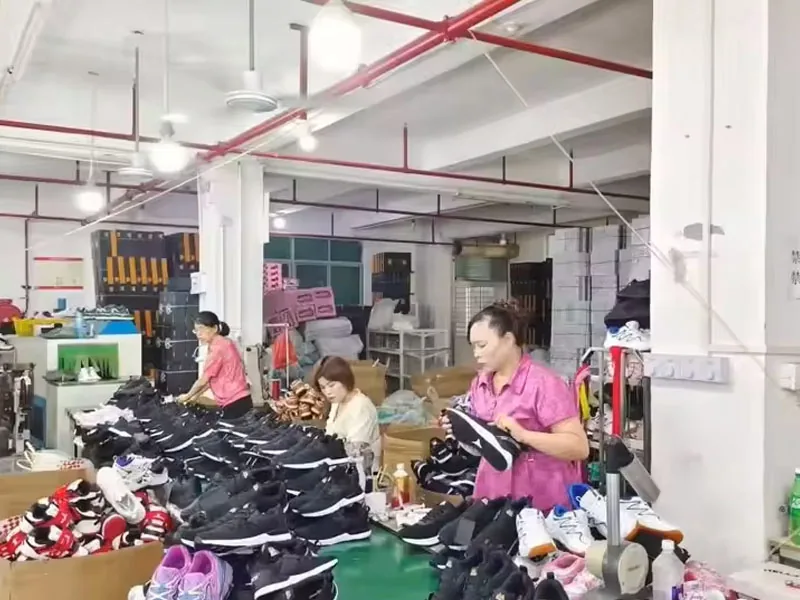
A supplier earns a place on the shortlist by connecting each capability answer to a document, sample or production control that purchasing can review. Score the evidence you receive, not the number of capabilities listed in a presentation; the clearest risk signal is an answer whose scope cannot be matched to the proposed order.
- Product scope: request boot references relevant to the proposed upper, lining, outsole and intended use. A similar silhouette without construction evidence should be held for clarification.
- Quality control: ask how incoming materials, in-line inspection and final inspection will be recorded, what proof the factory will return and who reviews an exception.
- Compliance scope: match each document to the factory site, product, material and target market. Treat a social audit differently from product evidence, and do not generalize recycled-material scope to ordinary styles.
- Capacity and continuity: compare the proposed production slot, component readiness and backup plan with the launch and replenishment calendar; hold the award if the supplier cannot show order-specific planning.
- MOQ fit: verify how the minimum order is allocated by style, colorway, size run, material and packing. If the allocation does not fit the sales plan, revise the program before requesting a final quote.
- Change control: require named approval owners for materials, color, fit, branding, packing and any production deviation, then retain the accepted record for the next order.
Treat each supplier claim as a prompt until the shortlisted factory returns order-specific proof.
KEYTOP was founded in 2006. That history helps frame experience, but a buyer should still request product-specific line planning, material readiness and inspection proof.
Use the wider footwear products only to confirm category fit. Advance a supplier when the evidence is current, in scope and usable as an approval record.
Record Boot Supplier Shortlist Reasons and Open Gaps
Turn the evidence review into stop, clarify and proceed signals so procurement does not average a serious gap into an otherwise attractive score. A missing document may be repairable; an answer that changes between the sales contact, sample room and production team is a stronger warning.
- Stop: the supplier accepts protected-brand copying, promises technical performance without product-specific proof, or refuses to identify material and construction assumptions. This is a red flag because the promised product cannot be tied to an approvable specification; if ignored, the buyer risks rejection, rework or an unusable shipment.
- Clarify: the quotation excludes tooling, tests, artwork, packing or sample rounds but does not state how those items will be charged or approved. The gap matters because two apparent unit prices may cover different work; if ignored, the project risks unplanned charges and schedule slippage.
- Clarify: the factory presents audit or compliance names without explaining the site, material, product or market scope that applies to the order. Treat this as a red flag until scope is proven, because an unrelated certificate does not reduce product risk.
- Proceed with conditions: the supplier states exceptions, provides traceable evidence and agrees who signs each sample and production gate.
- Proceed: the response stays consistent across the quote request, sample bill of materials, approved reference and production plan.
KEYTOP’s sample lead time is 7–15 days after the sample requirements and usable specifications are confirmed. A faster promise should therefore be separated into proof-review time, sample-making time and courier transit rather than compared as one unsupported headline.
The development and approval controls described in KEYTOP’s OEM (original equipment manufacturer) and ODM (original design manufacturer) footwear manufacturing route can help buyers turn each warning into a document request or approval condition. Record the disposition beside the signal so the final score remains auditable.
Prepare Comparable RFQ Inputs
Send every shortlisted factory the same questions and require answers in the same units. This reduces the risk of awarding an apparently low quotation that excludes tooling, material, sample, packing or production work another supplier included.
- Which parts use existing tooling, and which require new or modified tooling? The answer matters because an unstated tooling assumption can change cost and ownership after selection. Request a marked component list, then clarify the quotation before commitment.
- Which upper, lining and outsole materials are included? The risk is that two prices describe different products. Require named materials, approved substitutions and a revised quote when a material changes.
- How will fit and size grading be approved? A reference sample in one size can hide range-level fit exposure. Ask for the proposed fit reference, size-set plan and sign-off owner before bulk release.
- What quality records will be supplied? Missing records make responsibility difficult to trace. Identify incoming-material, in-line and final-inspection evidence and hold the award until the supplier confirms availability.
- Which artwork and packing items are included? Late exclusions can create rework and delay. List logo files, labels, box print, carton marks, inserts and proof rounds, then attach the approved revision to the order.
- What must be confirmed before the production slot is committed? Separate buyer-supplied inputs from factory-controlled readiness and request a dated response.
KEYTOP’s MOQ for boots is 1,000 pairs per style, per color and per size, and styles, colors and sizes cannot be mixed to reach it. Use that condition in the quote request instead of asking factories to price an unspecified total quantity.
For initial company context, review the KEYTOP factory profile. Base supplier selection on returned quote request evidence and the approved sample. Label unanswered questions as commercial conditions rather than blank cells.
In conclusion
A defensible boot supplier shortlist connects one locked requirement to scoped proof, comparable quote request answers and explicit approval conditions. Keep technical or commercial gaps visible, and do not let an attractive sample or price cancel a missing production control.
When the requirement sheet and scorecard are ready, review boots by factory capability, then request a comparable quote using the construction, size run, materials, artwork, packing, quantity and target schedule. Approve the route only after the supplier explains the cost drivers and closes the production risks recorded in the shortlist.
Frequently Asked Questions
How should a b2b buyer compare supplier options?
Use a weighted scorecard only after every factory answers the same requirement sheet. Keep non-negotiable items—authorized design, product scope, evidence quality and approval ownership—as pass-or-hold gates, then compare development route, quote assumptions, timing and service fit among the suppliers that remain.
Which supplier proof should buyers request for boots?
Request construction-relevant samples, a material and component list, fit and size-set controls, quality records, order-specific production planning and documents whose site, product, material and market scope can be checked. Where evidence is missing, record a request or condition instead of assuming the claim is true.
What should buyers lock before approving supplier shortlist scorecard?
Lock the requirement sheet, score weights, critical-fail rules, quotation inclusions, sample and size-set approvals, artwork and packing references, production conditions and the owner of each sign-off. The final shortlist should also record exceptions that must be closed before a purchase order is released.
Next step: Send Specs for Review.