
A retail footwear size curve can look balanced in total pairs while individual sizes still fall below the factory order minimum or rely on an outdated approval.
Use a SKU input sheet, a per-size MOQ calculation and a change record to decide what can be quoted before approving a replenishment order.
Direct answer: Keep style, colour and size separate. Calculate the buyer’s requested quantity from its own demand, stock and confirmed incoming orders, check each SKU against the applicable MOQ, and identify which product changes need approval before the factory quote.
Build the size-by-size reorder record
The reorder comparison turns on SKU identity, the selling period and the quantity still needed when the new goods can arrive. Keep one line for each style, colour and size. A single total can hide an unavailable size or count incoming goods twice, leaving the factory to quote a range that the buyer did not intend.
Start with the selected footwear products, the previous order reference and the buyer’s dated records. Sales, returns, usable stock and confirmed incoming orders should refer to the same SKU. The buyer owns the forecast and any buffer assumption; neither a generic size curve nor this guide supplies actual demand.
| Specification / input | Required scope | Order risk | Verification | Buyer follow-up |
|---|---|---|---|---|
| SKU identity | One style, colour, size and stated sizing system | Combining different items under one quantity | Match the product file, previous order and stock record | Resolve mismatched codes before quotation |
| Sales and returns | A dated selling period and the same unit basis | A return or transfer can distort the apparent demand | Reconcile transactions and mark excluded records | State the forecast basis and its uncertainty |
| Usable stock and incoming orders | Separate goods available now from confirmed future receipts | Counting a pending delivery twice can create a shortage | Match stock, open orders and expected receipt dates | Identify which incoming quantity is reliable |
| Requested receipt | Quantity by SKU and the buyer’s target receipt period | An attractive total can conceal a size-level gap | Review the buyer forecast against stock and incoming orders | Send the requested quantity and open assumptions |
| Approved baseline | The accepted shoe, size records and packing revision | The quotation may refer to a different shoe | Link each SKU to the approved drawing or sample record | List changes requiring a supplier response |
Product identification helps maintain that separation: GS1’s variation guidance distinguishes individual size and colour variants. An identifier does not establish physical fit, an order minimum or sample approval. Retain the sizing system and the applicable approval evidence alongside it.
Apply MOQ and minimum order quantity to each style, colour and size
A SKU can enter the KEYTOP quotation when its own quantity meets the applicable family minimum. KEYTOP’s casual sneakers, casual shoes, boots and outdoor footwear minimum is 1,000 pairs for one style, one color and one size, with no mixing of styles, colors or sizes. KEYTOP’s sandals, slippers and slides minimum is 1,500 pairs for one style, one color and one size, with no mixing of styles, colors or sizes.
The following is an illustrative calculation for casual shoes, with size codes A–D standing for four distinct buyer-defined sizes. It demonstrates the MOQ arithmetic; the buyer still needs its own demand and stock records before deciding whether the quantity is commercially sensible. Check the company and quotation identity with the KEYTOP factory and keep the written quantity basis with the order.
| Planning option | When it fits | Quantity and trade-off | Risk to avoid | How to verify |
|---|---|---|---|---|
| Four sizes, one style and colour | The buyer can support four separate minimum allocations | 4 × 1,000 = 4,000 pairs as the minimum total; actual requested quantities may be higher | A total of 4,000 does not resolve a below-minimum individual size | For casual shoes, check at least 1,000 pairs per style, color and size, with no mixing across the four SKU lines |
| Four sizes sharing 1,000 total pairs | A preliminary demand plan needing review | This does not meet the confirmed KEYTOP size-by-size basis | Treating the sizes as one minimum allocation | Revise the range or keep the affected order decision open |
| Two sizes, one style and colour | The buyer has explicitly approved a narrower range | 2 × 1,000 = 2,000 pairs as its minimum total | Removing sizes without checking the buyer’s requirement | Record the approved size range and two separate quantities |
| Four sizes in two colours | The buyer can support eight distinct SKU allocations | 8 × 1,000 = 8,000 pairs as the minimum total | Using one colour’s quantity to make up another’s shortfall | Check eight style/colour/size lines in the quote |
The minimum is a quotation constraint, not a forecast. Do not automatically raise every weak size to the floor and call the result an approved reorder. The buyer should document the revised range, quantity and exposure before requesting the quote. Keep any inspection sampling decision separate from this quantity calculation: ISO 2859-1:2026 addresses lot acceptance sampling, not the customer’s SKU minimum or demand.
RFQ checkpoint
Keep the selected shoe scope, quantity record and approval questions together for the next quotation step.
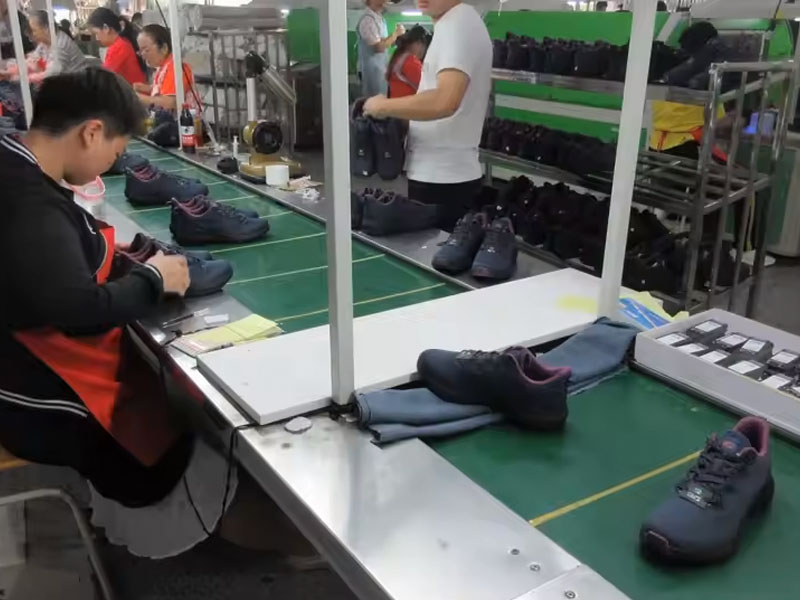
Separate a size-mix change from a shoe change
The previous approval record is the evidence baseline for the reorder. A changed quantity mix and a changed shoe require different questions. Identify which physical details stayed the same and which changed before asking for a sample revision; this avoids reopening unaffected work while leaving a changed fit or material unreviewed. An unrecorded last or packing change can lead to a fit dispute, rework or misidentified stock.
Retain the approved baseline for unchanged output
For unchanged output, retain the accepted sample identity, specification revision, size measurements, material references and packing instructions. Compare the requested sizes with the sizes actually covered by those records. A prior approval for one size is not evidence that every newly requested size has been checked. Record gaps instead of treating the previous purchase order as complete approval.
Record fit, material and packing changes
A new last, upper, sole, material, colour or packing arrangement needs an explicit change record. Name the affected SKU, the changed detail, the evidence requested and the person who will decide it. The supplier should identify any sample, tooling, fit or packaging work that the change requires and any resulting quote or schedule adjustment.
Sizing documents address different objects.ISO 19409’s last-measurement scope concerns the last; it does not make its dimensions equivalent to the wearer’s foot. Keep the agreed footwear measurement method and acceptance criteria with the sample. Bring changes requiring development review to the OEM and ODM footwear manufacturing with the previous reference and a marked change list.
Align sample approval with the replenishment schedule
Reorder risk rises when a sample range is treated as the complete replenishment schedule. State which approvals are already available, which have reopened and when the buyer needs the goods. A factory production range does not include an unconfirmed shipping date or establish when stock will reach a store.
Distinguish sample work from bulk production
KEYTOP’s recorded sample range is 7–15 days after sample requirements and usable specifications are confirmed. KEYTOP’s standard production range is 35–45 days after specifications, sample approval, material assumptions, packaging and the production slot are confirmed. These are different stages and the units are days. Record the actual scope and dates in the quotation rather than adding the ranges and presenting the sum as a committed arrival date.
Record dates and unresolved dependencies
Keep a dated list of the outstanding sample decision, material availability, packaging approval and production-slot confirmation. Name the supplier response and buyer approval needed for each item. If a change is rejected or an approval arrives later, obtain the revised schedule before using it in the stock plan. Freight and receiving time remain separate inputs unless the actual proposal confirms them.
Carry the buyer’s required receipt period and those open dependencies into the solutions. This lets both teams decide whether the proposed route fits the order without turning a general lead-time range into a delivery guarantee.
Send a quote-ready retail reorder sheet
The useful output is one retail reorder sheet linked to the quantity decision and the applicable approvals. The supplier needs to see the same shoe scope that the buyer’s stock plan uses. An unexplained size ratio or a forwarded sample photograph can leave the quotation based on different quantities, materials or approval assumptions. A missing SKU or unrecorded sample deviation can create order risk; keep its approval decision open until the request is clear.
- State the previous order and the current style, colour, size system and SKU quantities.
- Attach the dated demand, stock and confirmed incoming-order basis used by the buyer; mark assumptions still open.
- Identify unchanged approvals and list the exact shoe or packing changes requiring a response.
- Request separate confirmation of sample work, quote inclusions and dated production dependencies.
- Name the buyer who can approve a revised quantity or deviation, and retain the supplier’s written answer.
Review the retail footwear sourcing for the complete order route, then prepare the specific quote request from this record. If the revised quantity exceeds the buyer’s demand basis or a sample decision is unresolved, keep that item open. A filled sheet helps make the decision traceable; it does not approve the order on the buyer’s behalf.
Reorder conclusion
A documented reorder joins three decisions: the quantity required by each SKU, whether the proposed range meets the confirmed factory minimum, and whether the relevant shoe and packing approvals still apply. Keep those decisions together with their dates and unresolved assumptions. That is a usable basis for a factory quotation; a total-pair figure or a generic size curve alone leaves too much unspecified.
The next step is the supplier’s scoped response and the buyer’s recorded approval. Carry accepted items forward and retain open ones as questions for the quote or sample review. Use the same record when the specification or range changes again, so an earlier approval is not silently reused for different output.
Footwear reorder FAQ
Can sizes be combined to reach KEYTOP’s MOQ?
No. KEYTOP’s confirmed minimum order applies separately to each style, colour and size, with no mixing to reach the minimum. Check each SKU line against the applicable family basis and revise or hold an insufficient quantity before requesting approval.
How do we calculate the minimum for four casual-shoe sizes?
For one casual-shoe style and colour, four separately ordered sizes at the 1,000-pair minimum give an illustrative minimum total of 4,000 pairs. That total still needs four compliant SKU lines. It is arithmetic from the recorded minimum order, not a demand forecast or an actual quotation.
Does a size-mix change require a new sample?
A changed size mix does not by itself identify the sample work required. Compare the ordered sizes and physical specification with the accepted records, list any changed shoe or packing detail, and obtain the supplier’s assessment of the checks or sample revision needed.
What should the buyer send before a reorder quotation?
Send the previous order reference, style/colour/size-system records, requested quantity by SKU, buyer stock/forecast basis and any changed approval or packing scope. Keep unanswered quote items and the person who can approve a revision visible in the same handoff.
How should sample and production timing be recorded?
Record sample and bulk stages separately with their confirmed inputs and actual milestones. Use the company ranges within their stated conditions, then obtain the proposal-specific dates and any transport/receiving assumptions before relying on an arrival plan.
Send the selected shoe scope, quantity record and open approval questions: Send Specs for Review.