
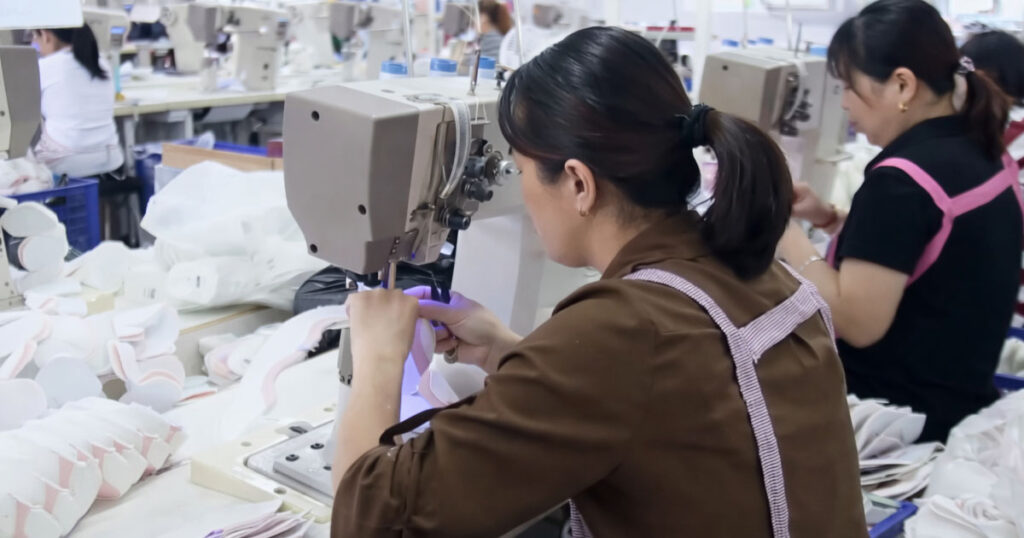
The sourcing record for shoe factory production capacity is incomplete until it shortlists suppliers using proof, capability, quality, MOQ, and delivery criteria.
Claimed capacity and available capacity are different numbers. The gap between them is current line loading, and it is verifiable.
Direct answer: For shoe factory production capacity, buyers should shortlist suppliers using proof, capability, quality, MOQ, and delivery criteria.
Define the Order and Delivery Window
For shoe factory production, use Define the Order and Delivery Window as one RFQ checkpoint. Each row should identify the requirement, approval evidence, and buyer action before production.
| Requirement | Factory control | Evidence to verify | Order risk | RFQ follow-up |
|---|---|---|---|---|
| Sample approval | Factory holds production until signed-off sample is returned. | Compare bulk first-article to approved reference sample under buyer-approved viewing conditions. | Shipment rejected if final goods deviate from approved sample without written waiver. | Request a signed sample approval form with date and inspector ID. |
| Lead time after approval | Factory commits to a confirmed production slot only after sample sign-off. | Cross-check the production schedule against the purchase order date and sample approval date. | Unapproved samples can push delivery past your retail launch window. | Ask the supplier to issue a binding production timeline with the sample approval. |
| Material / substrate | Factory sources materials per the approved tech pack and submits incoming lot test reports. | Request a material certificate of conformity and cross-reference the supplier's mill source. | Substituted materials can alter fit, durability, and regulatory compliance. | Request a material declaration sheet and a lab test report for each component. |
| Width or size tolerance | Factory uses a graded last and measures every size against the size-set specification. | Measure a sample from each size run using a calibrated foot gauge and compare to the spec sheet. | Out-of-tolerance sizing causes high return rates and lost customer trust. | Request the factory's last measurement report and a size-grade chart for the order. |
| Finish or color control | Factory checks color against the approved lab dip under standard lighting (buyer-approved viewing conditions). | Conduct a visual inspection of the finished upper against the approved color standard using a gray scale. | Color variance between production lots can create mismatched pairs and brand inconsistency. | Request a color standard card and a signed-off lab dip for each colorway. |
Read the rows as one approval sequence for this shoe factory production order. Start with sample approval; use the risk and buyer-action columns to decide whether its evidence is sufficient. Verify it with the inspection method and approval evidence recorded in the table.
Keep the supplier response, marked sample, and approval owner for shoe factory production under the same revision number. If any proof conflicts with the approved record, hold the quote, sample, or production release until the supplier explains the deviation in writing. Before closing the checkpoint, reconcile the latest drawing, sample, quotation, and approval comments, identify which record controls if they disagree, and document the resolution. Carry the signed Define the Order and Delivery Window table into the purchase order and production handoff so the same checks support quote comparison, sample approval, shipment release, and later reorders.
Material and specification fit
Before committing to a production run, verify that every material and component listed in your tech pack matches the factory's sourcing plan. A mismatch in substrate, thickness, or backing can change the shoe's weight, flex, and breathability. Request a material approval sheet that ties each part to a specific supplier and test report, ensuring the final product meets your design intent.
MOQ, cost structure, and lead time
Understanding the factory's minimum order quantity and how it scales with style, colorway, and size run is essential for budget planning. Confirm whether the quoted lead time starts from sample approval or order placement, and ask about cost breaks at higher volumes. A clear cost structure prevents surprise charges for split shipments, extra colorways, or last-minute size run changes.
Supplier reliability and quality checks
Evaluate the factory's track record by requesting references from buyers with similar product categories and order volumes. Ask about their in-process inspection points, final random sampling plan (e.g., the agreed sampling plan), and how they handle non-conforming goods. A reliable supplier will share their quality manual and corrective action process, giving you confidence in on-time, on-spec delivery.
Verify Line Allocation Evidence
| Allocation item | When it matters | Dependency to keep visible | Risk to avoid | Evidence to review | Follow-up |
|---|---|---|---|---|---|
| Named line and construction | Before a proposed slot is accepted | Other booked styles and required operations | An undated or unnamed line letter | Dated line assignment linked to the style and order window | Request confirmation from the planning owner |
| Available work time | When order volume is compared with the slot | Setup, working time and existing commitments | Rated output mistaken for free capacity | Current loading plan with stated quantity and time units | Reconcile the proposed work with the ship window |
| Bottleneck or outside operation | When one process controls completion | Its queue, handoff and responsible site | A finished-line total hiding a constrained step | Named operation, dated allocation and disclosed outside-process plan | Keep the affected milestone open until its owner responds |
| Material and tooling readiness | Before the line can begin the agreed build | Approved BOM, last/tool availability and incoming dates | Reserved time with unready inputs | Identified material and tool references with readiness dates | Re-date the affected allocation when an input changes |
Compare the proposed line allocation with the actual quantity and required dates. Record an unnamed line, unresolved bottleneck or unready material as an open scheduling condition; a specification match alone does not prove that the slot can run.
For the selected casual shoes products order, retain the approved specification and dated allocation under one review revision. Update the material, tooling or constrained-operation dependency when it changes, and have the responsible planner confirm the resulting work window before release.
Decision criteria to confirm
Before approving any line allocation, compare the factory's current production schedule against your spec's material lead time and sample approval date. A signed line letter without material readiness is a common cause of delays. Always request a material readiness report alongside the line allocation document to avoid approving a slot that cannot run.
RFQ details to send
When submitting an RFQ for line allocation evidence, include your spec sheet revision date, required material supplier list, and sample approval timeline. Factories use these inputs to reserve the correct line and order materials. Missing any of these details can result in a generic quote that does not reflect your actual production slot availability.
Production handoff details
At the production handoff, verify that the line allocation matches the spec approved during sampling. A common gap is a line assigned to a different material or colorway than the sealed sample. Require a handoff checklist that includes line number, material lot numbers, and the sample approval signature before bulk cutting begins.
Compare Claimed Capacity With Current Loading
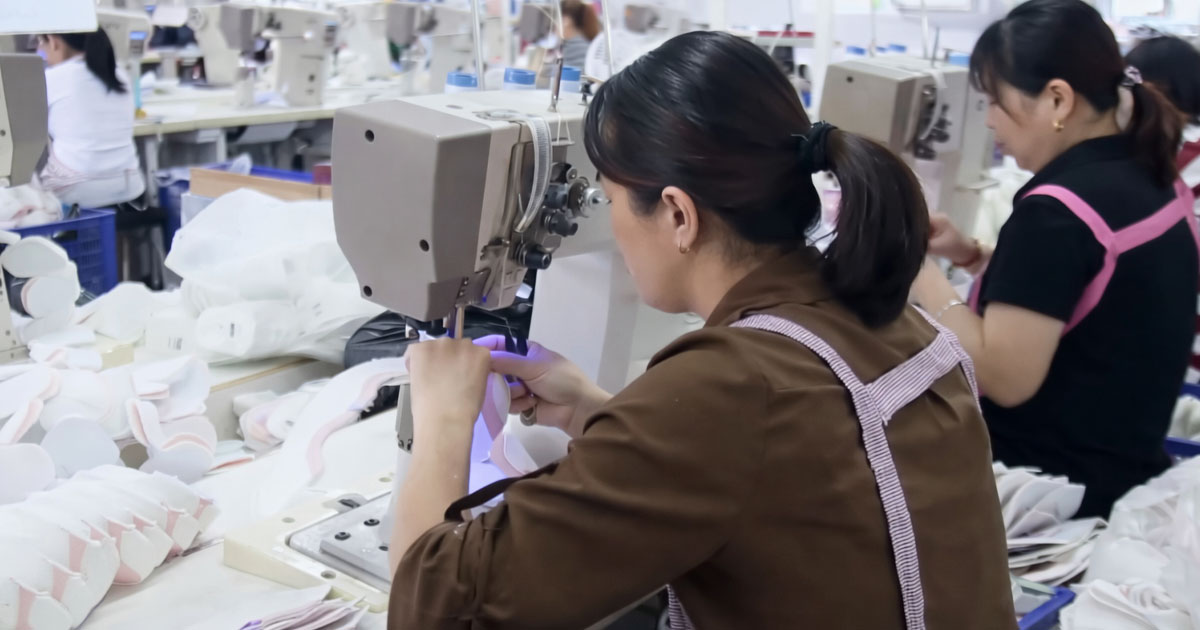
For footwear products, build the RFQ around the checks below. Match every listed buyer input to written supplier confirmation, approval evidence, and the risk that would hold the quote.
- Current production loading report by line and style: Verifies the factory has free capacity to run your order without delaying existing commitments. Request a weekly loading sheet showing pairs per line, scheduled styles, and utilization percentage. You may approve a lead time that the factory cannot meet, causing late delivery and air-freight costs. Compare the loading report against your order volume and requested ship window before shortlisting.
- Confirmed MOQ per style, colorway, and size run: Ensures your order quantity fits the factory's minimum production threshold without premium charges. For KEYTOP, the minimum order is 1,000 pairs per style, color and size for casual sneakers, casual shoes, boots and outdoor footwear, and 1,500 pairs per style, color and size for sandals, slippers and slides; styles, colors and sizes cannot be mixed to reach the minimum. You may receive a revised quote with higher per-pair cost or be forced to combine unrelated styles. Document the minimum order breakdown in the quote request and request written confirmation before sample approval.
- Cost driver breakdown: material, labor, overhead per pair: Reveals where the quote price comes from and where negotiation or value engineering is possible. Request a line-item cost sheet showing upper material, sole, assembly, and packaging costs. You accept a price that includes hidden margins or inefficient processes that competitors avoid. Compare cost drivers across shortlisted factories and flag any line item that exceeds market range.
Check Bottleneck and Outsourced Processes
Hold the shoe factory production review when evidence for the questions below is unresolved; record the discrepancy, supplier owner, and release condition before approval.
- What is the factory's maximum monthly output in pairs, and how many lines are dedicated to private label footwear programs? This question tests the stated total capacity and whether the proposed production window may be exposed to competing orders. Ask the factory to state its dedicated line count and monthly capacity in pairs, then compare those figures with a dated loading sheet. Shared lines can create delay risk when several buyers need the same process at the same time. Request a provisional line allocation for your proposed production window.
- Which production steps—cutting, stitching, lasting, or assembly—are outsourced, and to whom? Outsourced steps introduce lead-time variability and quality control gaps that you must manage. Factory names each outsourced process and the supplier, and provides their audit or quality score. Unvetted subcontractors can cause inconsistent fit or finish without your knowledge. Ask for the outsourced supplier's last three shipment on-time and defect records.
- What is the minimum order quantity per style and colorway, and does the proposed trial quantity meet the applicable family minimum? minimum order determines whether your initial order fits the factory's economic run size and your budget. Factory states a clear minimum order per style, color and size and explains how it is set. Locking into a high minimum order without proof of sell-through can tie up capital in slow-moving stock. Compare the minimum order against your forecast and ask for a phased release schedule.
- How do you inspect in-process work at the bottleneck station (e.g., lasting or sole attachment)? Bottleneck stations are where defects compound; inline inspection prevents rework at final QC. Factory describes a documented checkpoint with pass/fail criteria and a hold-and-fix procedure. Without bottleneck inspection, defects are found only at final packing, causing full-order delays. Request photos of the last three bottleneck inspection logs for a similar style.
Hold the shoe factory production review when evidence for Outsourced process transparency is unresolved; record the discrepancy, supplier owner, and release condition before approval.
- Outsourced process transparency: Verify which operations (e.g., sole molding, cutting, or lasting) are subcontracted and confirm the subcontractor's quality history. Factory lists all outsourced steps, shares subcontractor audit reports, and retains final inspection control. Supplier is vague about which steps are outsourced or refuses to name the subcontractor. Add a clause requiring pre-approval of any subcontractor change and include the subcontractor in your factory audit scope.
- Capacity proof for private label footwear programs: Request a 12-month production loading sheet that shows current orders, booked capacity, and available slots for private label footwear programs. Factory provides a live loading report with style-level detail and a clear reservation process for new buyers. Supplier offers only a generic capacity number without showing how existing orders consume that capacity. Cross-check the loading sheet against your required delivery window and ask for a provisional slot hold before sample approval.
- minimum order alignment with production line efficiency: Confirm the minimum order quantity per style, colorway, and size run, and ask how the factory sets that threshold. Factory explains minimum order based on material minimums and line changeover cost. Supplier states a flat minimum order without linking it to production constraints or material waste. Place a trial order at the stated minimum order.
- Quality control at bottleneck and outsourced steps: Ask for the QC checkpoints placed immediately after each bottleneck and outsourced operation, including pass/fail criteria. Factory has inline inspection at the output of each constrained workstation and a documented rework loop for outsourced parts. Supplier only conducts final inspection and cannot show how defects are caught before the next operation. Require a copy of the last three months' inline inspection records for the bottleneck stations and outsourced processes.
Set Buffer, Escalation, and Update Rules
Without clear rules for buffer stock, escalation triggers, and update frequency, a single approval delay can cascade into missed delivery windows, forcing air freight or order cancellation. This commercial risk is avoidable when the quote request includes a defined order and delivery window as a checkpoint.
Supplier evidence to request
During quote request, require the supplier to submit a current production loading report by line and style. Verify that the supplier can allocate dedicated lines to your order within the agreed window. Ask: “What is your maximum monthly output in pairs, and how do you prioritize new orders?” This replaces unsupported capacity claims with verifiable evidence.
Sample approval evidence
Set a firm deadline for sample approval, counted from sample receipt. If the supplier misses this, an automatic escalation to the production manager must occur. Document the approval criteria in the tech pack to avoid subjective rejections.
Reorder control records
For reorders, confirm that the same production line and materials are reserved. Require a written update at an agreed interval until shipment. If lead time exceeds the original quote by more than the agreed tolerance, trigger a buyer verification call.
| Checkpoint | Requirement | Escalation Rule |
|---|---|---|
| Supplier proof | Production loading report | Missing report → hold PO |
| Sample approval | Agreed turnaround | Delay → notify production manager |
| Reorder control | Weekly updates | Lead time deviation beyond agreed tolerance → buyer call |
These rules turn vague promises into enforceable milestones, protecting your schedule and margin.
Source check: ISO 2859-1 sampling inspection standard; Business Insurance – Magazine – 10 Questions Every Brand Should…; How to Verify a Shoe Factory in China Before Committing to a Lo….
In conclusion
The final approval of a shoe factory’s production capacity proof comes down to a systematic cross-check of documented evidence against your order requirements. Compare the supplier’s stated monthly capacity in pairs against their current production loading report, verify that your order is slotted into a signed production schedule with the dated buffer agreed for the actual material and approval dependencies, and confirm that material sourcing, sample approval, and line allocation are all locked before committing. This checklist turns vague promises into verifiable milestones, protecting your schedule and reducing the risk of late delivery or quality shortcuts. Once the spec, cost, minimum order, and lead time align with the factory’s documented proof, you are ready to shortlist the supplier and request a quote for your next footwear program.
To request a quote for shoe factory production, use KEYTOP factory to confirm the final specification, quote assumptions, sample approval, QC evidence, approval risk, and supplier follow-up before bulk order.
Frequently Asked Questions
What evidence proves a factory reserved actual line time for the purchase order?
A factory must provide a signed production schedule showing your order slotted on a specific line with confirmed start and end dates, not just a verbal promise. Request a current loading report that lists all active orders and their line assignments, then verify that your style’s materials, tooling, and last numbers are allocated to that slot. Ask how QC will check the sample, color, finish, packing, and bulk order.
How should buyers compare stated monthly capacity with current loading and bottlenecks?
Ask for the factory’s stated monthly capacity in pairs, then cross-check it against their current loading report and any documented bottlenecks, such as sole-pressing or lasting lines that run at less than full utilization. Compare the number of active orders and their total volume to the capacity figure, and request a bottleneck analysis for your specific shoe type to confirm the factory can absorb your order without delaying others. Confirm production lead time after specifications and sample approval are fixed. Ask how QC will check the sample, color, finish, packing, and bulk order.
What schedule buffer and escalation owner should be written into the order plan?
The order plan should include a schedule buffer of a buyer- and supplier-agreed interval between sample approval, material readiness and the confirmed bulk start, plus a named escalation owner—typically the production manager or account lead—who can authorize overtime or line swaps if delays occur. Confirm the buffer in the quote request and document the escalation owner’s contact and decision authority in the order confirmation. Ask the supplier to confirm factory capability and who owns follow-up.
quote request handoff: Send Specs for Review.