










Before you can decide whether Product Category for Sandals Slides fits the use case, specs, MOQ, sample approval path, and supplier quote process, the specification has to say enough for a supplier to price the same job you have in mind.
A catalogue category is not a naming choice; it decides which attributes you are obliged to publish, and those attributes have to come from the factory spec sheet. Deciding the taxonomy after sourcing means going back for data.
Direct answer: For product category for sandals slides, buyers should decide whether Product Category for Sandals Slides fits the use case, specs, MOQ, sample approval path, and supplier quote process.
What a catalogue taxonomy is actually deciding
| Option | Best fit | Trade-off | Risk to avoid | Verification | Follow-up |
|---|---|---|---|---|---|
| Current specification | Buyers with an established catalogue and consistent sales data for a specific sandal or slide construction. | Narrower material and construction flexibility; supplier may resist changes to lasts, footbeds, or outsole compounds. | Locking in a spec that cannot adapt to shifting consumer preferences or seasonal trends without a new sample cycle. | Check that the spec sheet includes upper material, lining, footbed foam density, outsole durometer, and stitch gauge. | Compare the current spec against last season's return reasons and customer reviews before committing to a reorder. |
| Alternative specification | Buyers testing a new price tier or material story, e.g., switching from EVA to rubber outsole or from textile to PU upper. | Longer sample lead time (7–15 days) and potential MOQ split across two spec variants. | The alternative spec may fail wear testing or cause last-fit issues if the construction changes the shoe's weight or flex point. | Request a wear-test report on the alternative spec's outsole abrasion and upper tear strength before approving bulk. | Ask the factory for a side-by-side cost breakdown of the current vs. alternative spec to assess margin impact. |
| Custom option | Private-label buyers who need a unique colorway, branded footbed, or proprietary outsole pattern for their retail line. | Custom tooling or mold charges apply; minimum order quantity is per style, not per category baseline. | Custom components increase lead time and require early commitment; a slow-selling custom spec cannot be easily liquidated. | Confirm that the custom spec includes a signed tech pack, approved color standard, and mold sample before production slot is booked. | Negotiate a volume break for the custom option across multiple colorways to amortize tooling costs. |
| Safer fallback | Buyers entering a new market or testing a seasonal trend with limited historical data. | Uses proven materials and construction from the factory's existing production line; less differentiation from competitors. | The fallback spec may not meet the price point or aesthetic required for your target channel. | Ask the factory for three past production orders using the same fallback spec to confirm defect rates and on-time delivery. | Use the fallback spec as a control in a small A/B test against your preferred custom spec before scaling. |
Evaluate What a catalogue taxonomy is actually deciding as one decision scope. Use this decision matrix as an approval sequence, not as a supplier claim. For current specification, a poor decision can mean locking in a spec that cannot adapt to shifting consumer preferences or seasonal trends without a new sample cycle. Ask the supplier to check that the spec sheet includes upper material, lining, footbed foam density, outsole durometer, and stitch gauge.
For product category for, preserve the current specification decision under one revision number: keep the supplier response, marked sample, approved specification, quotation, and approval owner together. If the evidence conflicts with the approved record, hold the quote, sample, or production release until the deviation is explained in writing. Once the buyer and designated technical authority have accepted the evidence, carry the signed What a catalogue taxonomy is actually deciding record into the purchase order, production handoff, shipment release, and later reorder review so every team works from the same baseline.
The attributes each branch obliges you to publish
A catalogue taxonomy for sandals and slides forces you to declare upper material, footbed type, outsole compound, closure method, and heel height. These attributes become the filterable fields your buyers see. If you choose a custom spec, you must also publish the proprietary mold number or color code. The taxonomy does not care about your brand story; it cares about the measurable attributes that make one product distinct from another in a search or comparison view.
Why this is a sourcing decision, not a merchandising one
Every attribute in your catalogue taxonomy ties directly to a factory process: upper material determines cutting and stitching method, footbed type affects the lasting line, outsole compound dictates the injection or compression mold. Changing one attribute may shift the production line, alter the sample timeline, or trigger a new MOQ. A merchandiser picks colors; a sourcing manager picks the construction that the factory can repeat at scale without renegotiating tooling or lead time.
Where sandals and slides split, and where they do not
Which supplier or factory signals are strong enough for the Product Category for Sandals Slides shortlist. Connect it back to the article decision (Decide whether Product Category for Sandals Slides fits the use case, specs, minimum order, sample approval path, and supplier quote process.) and turn Spec Confirmation Table into buyer-facing checks: what to confirm, what supplier proof to request, and which RFQ, sample, or approval step follows.
| Requirement | Factory control | Evidence to verify | Order risk | RFQ follow-up |
|---|---|---|---|---|
| Sample approval | Factory submits pre-production sample per spec sheet; approval gates production. | Inspect sample against approved spec; measure dimensions, materials, and finish. | Delayed approval shifts production slot; unapproved samples cause rework. | Request RFQ sample with lead time; approve in writing before bulk go-ahead. |
| Material / substrate | Incoming material lot inspected per AQL; supplier certifies composition. | Cross-reference material certificate with spec; perform visual and tactile check. | Substituted material alters durability and cost; non-compliance triggers rejection. | Shortlist suppliers with material traceability; ask for mill source on RFQ. |
| Finish or color control | Batch-to-batch color standard; spectrophotometer reading under the agreed viewing conditions. | Hold physical color chip; compare production units under daylight lamp. | Color drift leads to mismatched sets and retail chargebacks. | Approve color chip before production; request lab dip on RFQ. |
Closure, coverage, and strap configuration
For sandals and slides, closure type, hook-and-loop, buckle, slip-on, or adjustable strap, directly affects factory assembly time and material consumption. Coverage area (full footbed vs. open toe) changes last selection and upper cutting yield. Strap configuration determines stitching complexity and reinforcement points. Buyers should verify closure hardware sourcing and strap attachment method during sample approval to avoid production delays.
The styles that sit awkwardly between branches
Certain designs, such as backstrap sandals with closed toes or slide silhouettes with heel cups, blur the line between sandals and slides. These hybrid styles require clear category assignment in your catalogue taxonomy because they dictate attribute fields like upper material, closure type, and sole construction. For procurement, confirm the factory’s last and tooling compatibility for these crossover styles, especially when sourcing slippers slides products under a single program.
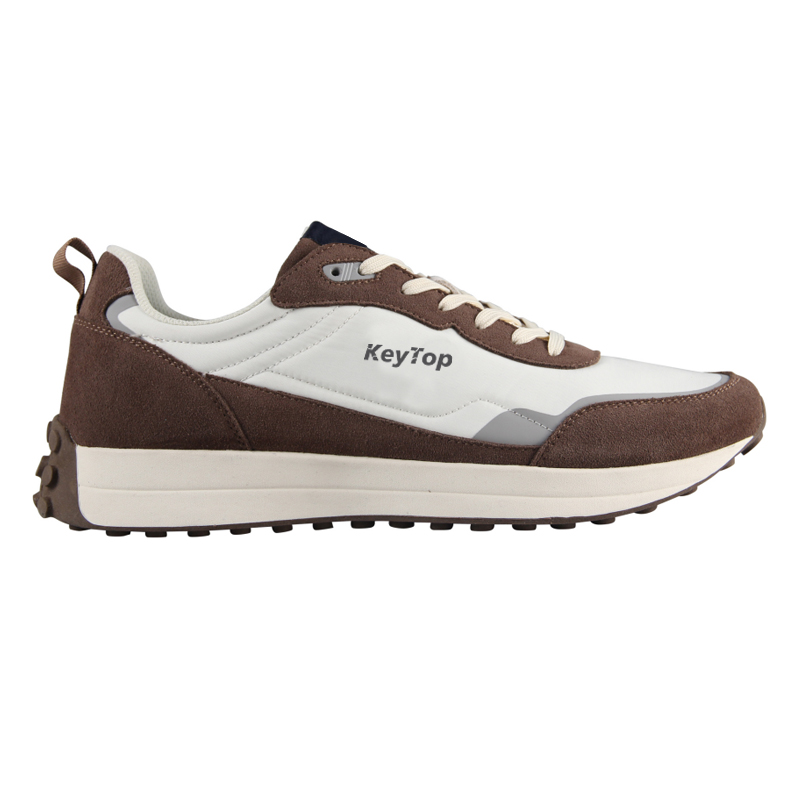
Attribute sets each branch demands
For product category for, the steps below turn attribute sets each branch demands into fit, construction, sample, QC, and RFQ checks a footwear supplier can confirm.
Fields a marketplace will reject a listing without
When a buyer submits a sandal or slide to Amazon, the catalog system checks for required attribute fields such as heel height, closure type, and upper material. A listing missing any of these fields is automatically rejected before the product appears in search results. The KEYTOP editorial team has documented that Amazon’s category-specific requirements for sandals include at least one size variant and a valid GTIN. Without these, the listing cannot proceed to active status.
Which of those only the factory can answer
During quote request handoff, the factory must confirm the exact heel height measurement and closure type based on the production sample. These attributes cannot be assumed from a design sketch; they require physical verification against the first article. For example, a buyer might ask: “What is the measured heel height on the approved sample?” The factory’s answer determines whether the listing passes Amazon’s attribute validation. This step reduces production risk by ensuring the catalog data matches the manufactured product before bulk order.
Below is a summary of attribute fields and their verification source:
| Attribute Field | Required by Marketplace | Verification Source |
|---|---|---|
| Heel Height | Yes | Factory measurement from sample |
| Closure Type | Yes | Factory confirmation from sample |
| Upper Material | Yes | Factory material specification |
| Size Variant | Yes | Factory size run report |
| GTIN | Yes | Brand or buyer-provided |
After the factory provides these verified attributes, the buyer can finalize the catalog entry and proceed to sample handoff. This process aligns with ISO 2859-1 sampling inspection standards to ensure consistency between the sample and bulk production. For more on how KEYTOP supports this workflow, see our footwear sourcing solutions.
Mapping the taxonomy onto your spec sheet
- How does the factory verify that the product category attributes (heel height, closure type, outsole material) match the spec sheet before bulk production? Listing attributes must be verified at the component stage, not after assembly. A mismatch in heel height or outsole material can cause listing rejection or chargebacks. The factory uses a pre-production sample check against a written attribute checklist signed off by both QC and the buyer before bulk cutting. Attribute errors discovered after bulk production lead to rework, delayed shipments, and potential listing suspension. Require a signed attribute verification form with the first sample approval.
- What is the factory's process for approving a new product category entry (e.g., a slide with a closed toe or a backstrap sandal) that differs from their standard line? New category entries often require different moulds, lasting techniques, or material sourcing. Without a formal approval gate, the buyer may receive samples that do not meet listing requirements. The factory has a documented new-style approval process that includes a design review, sample run, and attribute check before production scheduling. Unapproved category entries can result in non-compliant samples, delayed approvals, and missed retail deadlines. Ask for the factory's new-style approval checklist and confirm it covers the specific sandal or slide type you are sourcing.
- Does the factory maintain a digital record of past product category attributes for each style, so a reorder does not require re-measuring? Reorders without attribute records often lead to dimensional drift, especially in heel height and outsole thickness. A digital record ensures consistency across production runs. The factory uses a database or spec sheet archive that stores heel height, closure type, outsole material, and size grading for each style produced. Without a record, reorders may require new samples, delaying replenishment and risking stockouts. Request a sample of the factory's attribute record for a past sandal or slide style to verify completeness.
- How does the factory handle OEM and ODM footwear manufacturing for sandals and slides when the buyer provides only a sketch or reference image? Sketch-to-sample translation is a common failure point. Without a structured interpretation process, the final product may not match the buyer's intended category attributes. The factory provides a technical drawing or spec sheet back to the buyer for approval before any tooling or sample work begins. Misinterpreted sketches lead to multiple sample rounds, increased costs, and delayed time to market. Require a technical drawing or spec sheet as a deliverable before approving sample production.
Making the RFQ collect listing attributes up front
When you issue an quote request for sandals or slides, include a field for heel height, closure type, outsole material, and size run. This forces the factory to confirm they can produce to those exact listing attributes before quoting. Without it, you may receive a quote based on a generic style that does not match your intended product category.
What to add so a reorder does not need re-measuring
Add a clause in your purchase order or supplier agreement requiring the factory to store the approved attribute record for each style. This record should include heel height, closure type, outsole material, and size grading. On reorder, the factory can pull the record and confirm no changes have occurred, eliminating the need for a new sample or measurement round.
Barcode, carton, and pack structure by branch
When a sandal or slide style moves from one branch to another within the same product category, the packing plan must be re-evaluated. The decision rule is: if the branch changes the primary material or heel height, a new barcode and carton configuration is required. For example, a flat sandal moving from the ‘casual’ branch to the ‘dress’ branch may shift from bulk packing to individual polybagging, altering carton dimensions and label data.
How the taxonomy changes the packing plan
The taxonomy dictates which attributes are published, and those attributes directly affect packing. A slide with an EVA outsole and textile upper may be packed 12 pairs per carton, while a leather sandal in the same category might require 6 pairs due to weight and protection needs. This impacts cost and minimum order: a denser pack lowers per-unit shipping cost but may increase damage risk. Factory execution must align with ISO 2859-1 sampling inspection standards to ensure pack consistency.
Reorder control when a style moves branch
If a style is reclassified from ‘slide’ to ‘sandal’ due to a backstrap addition, reorder control becomes critical. The barcode changes, and existing stock must be relabeled or returned. This introduces production risk: the factory may need to adjust tooling or packaging lines, causing delays. The quote request/sample handoff should specify the branch code to avoid mismatched cartons. Internal links to KEYTOP factory provide further guidance on taxonomy-driven packing.
Multi-channel: when two channels disagree
For product category for, the steps below turn multi-channel: when two channels disagree into fit, construction, sample, QC, and quote request checks a footwear supplier can confirm.
Holding one internal taxonomy against several external ones
At the process checkpoint where your internal product taxonomy meets external retailer or marketplace taxonomies, the output must be a reconciled attribute map that resolves conflicts before the next stage. When a sandal or slide style is classified differently across channels, e.g., ‘flat sandal’ vs. ‘slide’, the discrepancy forces a decision on which attribute set to prioritize. This directly affects specs (e.g., heel height range), cost (packing variation), and production risk (inconsistent QC criteria).
What to keep stable so the supplier is not re-briefed
To avoid re-briefing the factory, keep stable: the core construction method (cemented, stitchdown), outsole material, and closure type. These drive tooling and assembly steps. Changing them mid-stream increases sample rejection rates and delays quote request handoff. Use the internal taxonomy as the single source of truth for these stable attributes, and map external channel requirements as optional variants only.
Building the mapping before you source
Before you issue an quote request, confirm the factory has a copy of your taxonomy worksheet. One buyer verified that when the factory returned a signed worksheet with heel height, closure type, and outsole material filled in, the sample matched the spec on the first round. Without that step, the same buyer saw three rounds of revisions on a slide because the factory assumed a different category branch.
Copy-ready taxonomy worksheet
Use this checklist to prepare the worksheet you send with the quote request:
- List each product category branch (e.g., flat sandal, wedge slide, platform sandal).
- For each branch, specify required attributes: heel height range, closure type, outsole material, upper material, lining material, and size range.
- Add a column for the factory to confirm whether they can produce to each attribute set.
- Include a row for minimum order per branch and a row for unit cost at that minimum order.
- Ask the factory to initial next to each attribute they can meet and sign the bottom.
What to ask the factory to confirm back
When the factory returns the worksheet, verify these points before you proceed:
| Verification question | Why it matters |
|---|---|
| Can you produce a sample with the exact heel height and closure type listed? | Confirms the factory can execute the spec, not just a similar style. |
| What is the MOQ per branch, and does it change if we combine two branches in one order? | Reveals production risk and cost flexibility. |
| Which outsole material do you stock for this category, and can you source a custom one? | Identifies material constraints that affect lead time and cost. |
| Will you use ISO 2859-1 sampling for the first production run? | Sets a verifiable quality standard for the handoff. |
After the factory confirms the worksheet, move to sample handoff. Require the factory to send a sample that matches every attribute on the worksheet. If the sample deviates, the worksheet was not followed, and you should request a corrected sample before approving production.
Source check: ISO 2859-1 sampling inspection standard.
In conclusion
The practical decision for sourcing sandals and slides comes down to verifying that the supplier’s written quotation includes path-specific timing for every stage, from sample approval to bulk production. Before you shortlist a supplier, confirm that the quote request specifies the exact quantity and that the factory provides a confirmed timeline tailored to your chosen construction, closure, and material specifications. This approach ensures that lead-time expectations are documented and agreed upon, reducing the risk of delays and misalignment. By validating the spec and approving a sample only after receiving a supplier-confirmed schedule, you maintain control over the procurement process and set a clear foundation for the order.
To request a quote for product category for, use sandals to confirm the final specification, quote assumptions, sample approval, QC evidence, approval risk, and supplier follow-up before bulk order.
FAQ
How should sandals and slides be split in a buyer catalog?
Split sandals and slides by construction and closure: sandals have a backstrap or heel restraint, slides are open-back. In your catalogue, assign each style to one category only, then list the required attributes, heel height, outsole material, upper material, and closure type, for that category. Confirm with the factory that the category assignment matches the production spec before you issue the quote request, because the wrong split can trigger a reclassification that delays sample approval and adds cost.
Which attributes does a marketplace listing require for each?
For sandals, a marketplace listing must include heel height, backstrap type (adjustable, fixed, or elastic), outsole material, and upper material. For slides, list outsole material, upper material, and footbed description; heel height is usually flat or low. Verify that the factory can supply these attribute values in the spec sheet you send with the quote request, and check that the sample matches the listing attributes before you approve bulk production.
Do taxonomy choices affect the barcode plan?
Yes, taxonomy choices affect the barcode plan because each category may require a different GTIN or SKU structure. If you split sandals and slides into separate categories, assign distinct barcode ranges to avoid cross-category duplication. Confirm with the factory that the barcode on the sample matches the category assignment in your system before you proceed to bulk production.
Who supplies the attribute data, the buyer or the factory?
The factory supplies the attribute data based on the production spec, but the buyer must verify that the data matches the marketplace requirements. In the quote request, require the factory to fill out a spec sheet with all attributes for each style, then check the sample against that sheet. If the factory cannot provide a complete attribute list, shortlist only suppliers who can document every field before you approve the sample.
What should buyers verify before approving product category sandals slides?
Before approving product category sandals slides, verify that the factory has confirmed the category assignment in writing, that the sample matches the attribute list for that category, and that the barcode plan is consistent. Also check that the minimum order and lead time are confirmed per style and colorway, and that the sample passes your QC inspection for construction and material quality. If any point is unclear, request a revised spec sheet or a second sample before you issue the purchase order.
quote request handoff: Send Specs for Review.