









Introduction
The shoe manufacturing process is the workflow that turns a buyer’s tech pack, reference sample, or product idea into approved samples and bulk production.
Footwear production needs staged decisions. Materials, fit, outsole, logo, packaging, QC, and shipment details must be confirmed before the order can move safely.
Buyers who understand the process can approve the right details at the right time and reduce sample mismatch, late changes, and shipping delays.
A shoe does not move from idea to container in one step. The practical workflow is development, sourcing, sample making, confirmation, line production, inspection, packing, and shipment.
Keytop’s documented process follows that structure. The available operating facts include 7-15 days for sampling, 35-45 days for bulk production, 1,000 pairs MOQ by category, and QC checkpoints at incoming materials, in-line inspection, and final inspection.
Industry Truth: Most bulk-order problems start before bulk production. They start when the buyer and factory did not confirm the sample, material, logo, or packaging clearly enough.
Quick Verdict: The Process Is Only Safe When Each Gate Has An Approval Record
The shoe manufacturing process should be judged by its control points, not by a simple list of factory steps. A buyer should know what must be approved before the order moves forward.
Use this process gate map:
| Production gate | Buyer approval record | Risk if missing |
|---|---|---|
| Tech-pack review | product scope, target quantity, category fit | wrong quote or unsuitable supplier |
| Sample development | material, construction, logo, fit notes | repeated sample revisions |
| Final sample approval | dated photos and final file names | sample-to-bulk mismatch |
| Bulk start | PO, packaging, carton, and shipment assumptions | late changes during production |
| Final inspection | QC result, packing proof, carton records | weak shipment-release decision |
If a supplier cannot explain these gates clearly, the buyer has not verified factory capability yet.
What The Shoe Manufacturing Process Covers
The process covers every step between the buyer’s first product input and the factory’s final shipment preparation.
Each stage protects the next stage. A clear tech pack supports sampling. A confirmed sample supports production. In-line QC protects final inspection. Accurate packaging protects shipment and retail receiving.
If one stage is skipped, the buyer may pay later through rework, rejected goods, or missed launch windows.
The process should be visible. A factory that only says “we can make it” is not giving enough control. A buyer needs to know who checks the material, when the sample is approved, how revisions are handled, and when the final inspection happens.
| Stage | Factory Work | Buyer Control Point |
|---|---|---|
| Tech-pack review | Check product category and feasibility | Confirm product scope and target market |
| Sourcing | Prepare materials and components | Approve material direction |
| Sample making | Build first sample | Review fit, look, logo, packaging direction |
| Sample revision | Correct sample details | Approve final sample |
| Bulk production | Run production line | Monitor milestone updates |
| Inspection | Check material, in-line, and final goods | Review inspection result |
| Packing | Apply box, labels, carton marks | Confirm shipment readiness |
Real-World Use Cases For Buyers
A manufacturing use case is the buyer’s reason for entering the process with a factory.
A private-label brand, retail buyer, and sourcing company each watch different control points. The process should still make those points clear for all of them.
A buyer can set expectations earlier when the process is mapped before deposit.
A brand owner developing a new SKU needs tech-pack review, sample making, sample revision, and final sample approval. The sample becomes the practical production reference.
A sourcing team comparing factories needs to see whether the supplier has an organized process or only a product catalog. A factory that can explain incoming material checks, in-line inspection, and final inspection is easier to audit.
An importer planning a retail launch needs timing. Keytop’s documented sampling lead time is 7-15 days, and documented bulk lead time is 35-45 days after confirmation. The buyer still needs exact dates for the specific order.
Send your product category, target quantity, logo scope, packaging needs, and delivery window. Keytop will review the project fit and confirm the next sampling step.
Common Process Mistakes Buyers Make
A process mistake is a missing approval or unclear instruction that becomes a production problem later.
Shoe production is sequential. A late decision in packaging or material can force revisions after the factory has already started work.
Late changes cost time, reduce supplier accountability, and can make the buyer accept compromises.
| Process Stage | Common Buyer Mistake | Result | Prevention |
|---|---|---|---|
| Product brief | Sending vague photos only | Inaccurate quote or wrong sample | Send tech pack or clear reference notes |
| Sampling | Not approving materials | Sample looks right but bulk changes | Approve material and color details |
| Revision | Making many late changes | Timeline slips | Group changes and confirm final sample |
| Production | No in-line check | Defects found too late | Ask for in-line inspection logic |
| Packing | Packaging finalized late | Shipment or marketplace delay | Confirm box, barcode, and carton marks early |
Step-By-Step Shoe Manufacturing Process
A step-by-step process gives buyers a practical view of what should happen and when approval is needed.
Each step reduces uncertainty before the next stage. The buyer should not wait until the end to check details that should have been confirmed at the beginning.
Clear steps help buyers manage schedule, cost, and quality from the first brief.
- Product brief and tech-pack review – 1 to 3 business days. The buyer sends product category, tech pack or reference photos, target quantity, market, materials, branding, and packaging notes. The factory checks whether the project fits its normal scope.
- Material and component sourcing – timing depends on availability. The factory checks PU, mesh, EVA, rubber, textile, synthetic combinations, outsole options, trims, labels, and packaging components.
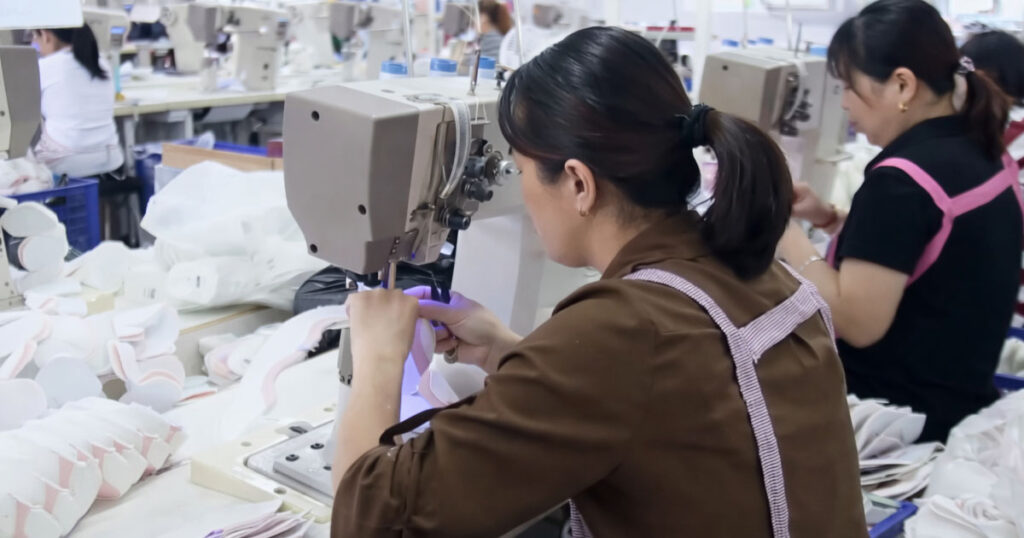
- Sample making – 7 to 15 days as Keytop baseline. The sample proves product direction, material feel, construction, logo placement, and early packaging direction.
- Sample revision and confirmation – buyer-dependent timing. The buyer reviews the sample and gives clear change notes. Production should not start until the final sample is approved.
- Bulk production – 35 to 45 days as Keytop baseline. The production line follows the confirmed sample, order details, and packaging plan.
- QC checks – during and before shipment. Keytop’s documented QC structure covers incoming materials, in-line inspection, and final inspection.
- Packing and shipment readiness – before container release. The factory checks box artwork, barcode, carton marks, polybags, inserts, care cards, packing list, and finished goods count.
Buyer process checklist:
- [ ] Product category and target market are clear.
- [ ] Tech pack or reference sample is complete enough for review.
- [ ] Material and color are confirmed.
- [ ] Logo and packaging scope are confirmed.
- [ ] Sample is reviewed and revised before bulk.
- [ ] Confirmed sample is used as production reference.
- [ ] QC checkpoints are agreed before production.
- [ ] Shipment and carton requirements are confirmed before packing.
Documents Buyers Should Keep During Production
Production documents are the files, approvals, and records that define what the factory should make and what the buyer has approved.
Footwear production involves many decisions across product, material, logo, packaging, and shipment. If these decisions are scattered across chat messages, the factory and buyer can lose track of the final standard.
Good documentation reduces disputes and helps the buyer inspect the bulk order against clear references.
Keep a simple project folder with these records:
| Document | What It Controls | When To Confirm |
|---|---|---|
| Tech pack or product brief | product structure, material, size, color | before sample |
| Material approval | upper, lining, outsole, trims | before final sample |
| Logo proof | placement, size, color, method | before sample confirmation |
| Packaging artwork | box, barcode, inserts, carton marks | before line production |
| Approved sample photos | final product reference | before bulk starts |
| Purchase order | quantity, size run, price, shipment terms | before deposit |
| QC record | inspection checkpoints and result | before shipment release |
This does not need to be complicated. A clear PDF folder, dated email approval, and confirmed sample photos can prevent many arguments later.
Communication Rhythm For OEM Footwear Orders
Communication rhythm is the planned update schedule between buyer and factory during sampling and bulk production.
Footwear orders can run for several weeks. If updates are not scheduled, the buyer may only discover problems at the end.
A basic update rhythm gives the buyer control without slowing the factory down.
Use this rhythm for a normal OEM order:
- Kickoff update – after order confirmation. Confirm product, quantity, sample status, material status, and expected next milestone.
- Sample update – during the 7-15 day sample window. Share progress photos or questions if the product needs buyer input.
- Approval update – after sample review. Record buyer changes, confirm final sample, and define whether another sample is needed.
- Production start update – before line production. Confirm material, packaging, and planned production window.
- In-line update – during bulk production. Share progress and flag any issue early.
- Final inspection update – before shipment. Share inspection result, packing status, carton count, and shipment readiness.
WhatsApp, email, or video calls can all work. The key is not the tool. The key is whether decisions are recorded clearly enough for production.
FAQs For Buyers
Manufacturing FAQs answer the questions buyers ask when they do not yet know how factory workflow works.
These questions usually involve timing, approval, sample control, packaging, and inspection.
Good answers help the buyer prepare a better brief and avoid late-stage confusion.
What is the first step in shoe manufacturing?
The first step is product brief or tech-pack review. The factory needs product, quantity, market, material, branding, and packaging information before it can judge feasibility.
How long does shoe sampling take?
Keytop’s documented sample lead time is 7-15 days. Timing depends on material availability, design complexity, logo method, and sample revision needs.
When should packaging be confirmed?
Packaging should be discussed before or during sampling. Shoebox artwork, barcodes, carton marks, inserts, and stickers can affect final shipment readiness.
What QC checks matter most?
Incoming material checks, in-line inspection, and final inspection before shipment are the core checkpoints. Final inspection alone is not enough for a controlled order.
Can the buyer change the design after sample approval?
Changes may require new samples, revised cost, or timeline changes. The approved sample should be treated as the production reference.
Conclusion And Next Steps
A controlled manufacturing process is the buyer’s main protection between idea and shipment.
Each stage creates a decision record: brief, material, sample, approval, production, inspection, packing, and shipment.
The clearer the process, the lower the risk of surprise cost, weak quality, or missed launch timing.
Send your tech pack, target quantity, category, market, logo scope, and packaging requirements. Keytop can review the project path and confirm the next sample step.