



Private-label footwear fails when the buyer treats branding as a small add-on. For a factory, the brand is part of the order spec.
A private-label shoe order should not move to sample or deposit until the buyer has confirmed the product, logo surfaces, packaging, approval rules, MOQ, lead time assumptions, and QC checkpoints. If those decisions are scattered across emails and image files, the first sample may look close, but the bulk order can still miss the brand standard.
For Keytop buyers, the practical decision is this: choose a private label shoe manufacturer that can turn your product idea into a controlled spec sheet, sample approval record, packaging plan, and bulk-production reference.
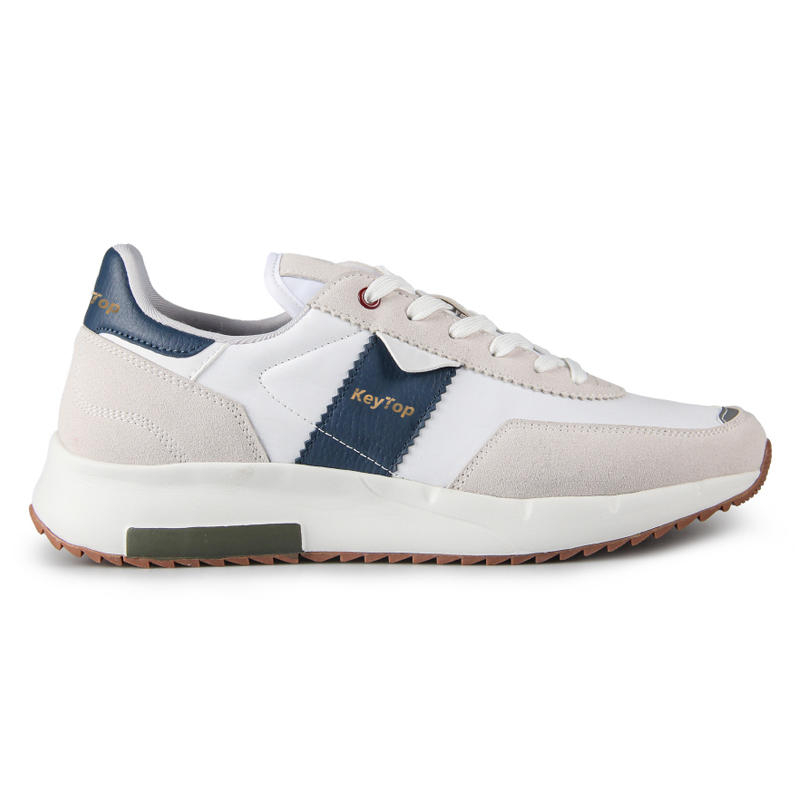
Keytop’s confirmed customization scope includes silhouette direction, upper materials, outsole direction, colorways, trims, logo placement, insole print, outsole branding, woven labels, hangtags, embossing, debossing, shoebox artwork, carton marks, barcodes, polybags, stickers, inserts, and care cards. Confirmed commercial baselines include a 1,000-pair MOQ by category, 7-15 days for samples, 35-45 days for bulk production, and QC at incoming materials, in-line inspection, and final inspection before shipment.
This guide helps brand owners and ecommerce teams prepare a private-label order that is ready for RFQ, sampling, and factory review.
Quick Verdict: Plan The Brand System Before You Ask For A Final Quote
A private label shoe manufacturer should be evaluated by how well it controls product specs and brand approvals, not only by whether it can place a logo on a shoe.
Before you ask for a final quote, decide what belongs to the product and what belongs to the brand system. The product includes silhouette, upper, outsole, color, size run, and trims. The brand system includes insole print, outsole mark, woven label, hangtag, shoebox, barcode, carton mark, insert card, and any retail packaging file.
Use this decision map:
| Buyer situation | What to confirm first | Why it matters |
|---|---|---|
| You have only reference photos | Product category, material direction, target market, and quantity | The factory cannot quote brand-ready production from mood images alone |
| You have a tech pack | File handling, sample path, logo surfaces, packaging files, and MOQ | Full files should be shared only after factory fit is clear |
| You need ecommerce packaging | Barcode, polybag, box, insert, carton mark, SKU label | Receiving can fail even when the shoes are acceptable |
| You need retail private label | Box artwork, carton ratio, size run, inspection scope, repeat-order records | Retail buyers need consistency across cartons and reorders |
| You are testing a first brand launch | Limit SKU count and lock visible branding surfaces early | Too many variants can make a 1,000-pair order hard to manage |
If the supplier treats all branding as “no problem” without asking for files, placement, method, size, color, and packaging timing, the order is not yet controlled.
Private Label Spec Confirmation Table
Use this table before sample payment. A supplier that can complete it is more likely to understand the real order.
| Spec area | Buyer should provide | Factory should confirm | Approval record needed |
|---|---|---|---|
| Product category | Sneaker, casual shoe, boot, sandal, slipper, slide, or other | Whether the product fits normal production range | Category and construction note |
| Style reference | Photos, tech pack, sample, or product link | Feasibility and possible changes | Marked reference images |
| Upper and lining | Material direction or acceptable options | Material availability and sample assumptions | Material swatch or written material note |
| Outsole direction | Existing look, new direction, or open to factory options | Whether existing outsole can work | Outsole reference and sample note |
| Colorway | Pantone, image reference, or sample color | Color matching process and limits | Color approval image or swatch |
| Logo surfaces | Insole, outsole, upper, tongue, label, box, carton | Logo method, size, placement, and file format | Marked logo placement file |
| Packaging | Shoebox, polybag, barcode, insert, sticker, carton mark | Packaging file deadline and packing method | Packaging artwork approval |
| Quantity and size run | Pairs by style, color, and size | MOQ fit and size-ratio feasibility | SKU and size-run sheet |
| QC checkpoints | Material, sample, in-line, final, packing | What is checked and when | Inspection scope note |
This table gives the buyer and factory one shared view. It also makes quote comparison easier because each supplier is responding to the same order, not a different interpretation.
Approval Change-Control Checklist
Private-label orders need change control because small changes can affect cost, timing, sample approval, and packaging.
Use this checklist whenever a design, logo, material, or packaging detail changes after the first quote:
- What changed: product, material, color, logo, packaging, size run, or carton plan?
- Who requested the change: buyer, factory, retailer, or packaging team?
- Does the change require a new sample or only written confirmation?
- Does the change affect MOQ, unit cost, sample time, bulk lead time, or packaging artwork?
- Which file version is now final?
- Which physical sample or photo is the production reference?
- Who approves the change on the buyer side?
- Has the factory confirmed the revised instruction before bulk production starts?
Do not rely on a short “OK” message for brand-critical changes. Use dated files, marked images, and a final approved sample record. That protects both the buyer and the factory if questions appear during production.
Send your product category, target quantity, logo scope, packaging needs, and delivery window. Keytop will review the project fit and confirm the next sampling step.
Confirm Logo And Packaging Surfaces Before Sampling
Logo placement is not one decision. Each surface uses a different method and approval risk.
A private-label order may include insole print, outsole logo, upper embossing, woven label, hangtag, shoebox artwork, carton marks, barcode labels, inserts, and stickers. Some are product decisions; some are packaging decisions; some affect warehouse receiving.
Confirm these surfaces before sampling:
| Brand surface | Buyer question | Risk if left late |
|---|---|---|
| Insole logo | What size, color, and position? | Logo looks off-brand or wears poorly |
| Outsole mark | Is the logo molded, printed, embossed, or omitted? | Requires new approval or different tooling assumption |
| Upper logo | Is it embroidery, label, embossing, debossing, or print? | Changes sample method and cost |
| Woven label or hangtag | What file, size, and attachment point? | Wrong placement or missing brand element |
| Shoebox | What artwork, barcode, size, and finish? | Retail presentation and receiving problems |
| Carton mark | What SKU, color, size run, buyer mark, and destination? | Receiving delay or relabeling cost |
For a first order, it is usually smarter to lock the most visible and operationally important brand elements first: insole, box, barcode, carton mark, and one product logo surface. Add more complex branding after the buyer confirms market demand.
private label shoe manufacturers
Match MOQ To SKU Count, Not Just Total Pairs
MOQ becomes risky when the buyer counts total pairs but ignores styles, colors, and sizes.
Keytop’s confirmed baseline is 1,000 pairs by category. That baseline still needs order-level confirmation. A 1,000-pair first order can be manageable when it has one clear style and a controlled size run. It becomes harder when the buyer splits it across many colorways, logo variations, or packaging versions.
Before approving MOQ, ask:
- How many styles are in the first order?
- How many colorways does each style need?
- Does each colorway need the same packaging?
- What size range and size ratio does the target market need?
- Are logo and packaging costs included or quoted separately?
- Does the factory need material minimums for the selected upper, outsole, or packaging?
- What changes if the buyer adds one more colorway?
The goal is not only to meet the factory minimum. The goal is to avoid a first order that creates weak inventory, slow packaging approval, and unclear sample control.
Review Sample Approval Before Bulk Starts
The approved sample is the private-label buyer’s strongest control point.
For branded shoes, the sample should confirm more than the shape. It should confirm product construction, material feel, color, logo position, packaging direction, size expectation, and finish standard. If packaging is not ready when the shoe sample is approved, the buyer should keep packaging approval as a separate open item with a deadline.
Use this sample approval structure:
| Approval item | Confirm before bulk? | Notes |
|---|---|---|
| Product shape and construction | Yes | Match reference or approved adjustment |
| Upper and lining material | Yes | Confirm final or substitute sample status |
| Outsole and fit direction | Yes | Confirm if more sizes need review |
| Logo position and method | Yes | Check size, color, placement, and clarity |
| Colorway | Yes | Record approved color reference |
| Packaging artwork | Before packing starts | Box, barcode, carton mark, inserts |
| QC scope | Before production starts | Material, in-line, final, packing checks |
If the buyer approves a sample with open issues, those issues should be listed separately. Otherwise the factory may treat the sample as final while the buyer still expects changes.
File Handling And Design Risk Controls
Private-label buyers should discuss file handling before sending complete design files.
Do not publish or rely on vague promises such as “your design is safe” unless the exact process is confirmed. A practical factory conversation should cover who receives the tech pack, whether NDA terms are available, which files are required for feasibility review, and when final files become production references.
Use a staged sharing process:
- Share category, reference style, and commercial quantity first.
- Ask whether the factory’s product range fits the project.
- Discuss NDA or file-handling terms before sending complete files.
- Send only the files needed for sample development.
- Mark final approved versions before bulk starts.
- Avoid new file versions after production approval unless cost and timing are re-confirmed.
This approach does not replace legal advice. It gives the buyer operational control so the factory is not working from mixed file versions.
FAQs For Private Label Buyers
What should I prepare before contacting a private label shoe manufacturer?
Prepare product category, reference photos or tech pack, target quantity, size range, logo surfaces, packaging needs, target market, and launch timeline. A stronger brief gives the factory a more useful quote.
Can Keytop add my logo to both the shoes and packaging?
Keytop’s documented customization scope includes logo placement, insole print, outsole branding, woven labels, hangtags, shoebox artwork, carton marks, barcodes, stickers, inserts, and care cards. The exact method should be confirmed by style and order plan.
Should I approve a sample before bulk production?
Yes. The approved sample should become the production reference for product, material, color, logo, and finish quality. Packaging approval may need a separate record if artwork is not final at sample approval.
How do I keep private-label cost under control?
Limit the first order to a controlled style, color, size run, and packaging plan. Cost can rise when buyers add many logo methods, packaging versions, material changes, or late sample revisions.
How do I protect my design files?
Ask about NDA terms, file handling, and version control before sending full files. Share category and reference direction first, then send detailed files only after factory fit is clear.
Final Decision: Make The Factory Confirm The Brand Plan
A private-label shoe manufacturer should not only say it can make shoes with your logo. It should help you lock the product spec, brand surfaces, packaging files, sample approval, MOQ, QC, and production reference.
That is the difference between a branded sample and a controlled private-label order.
Send Keytop your product category, tech pack or reference images, target quantity, logo scope, packaging needs, size run, and target market. The team can review whether the order fits Keytop’s lifestyle-footwear range and confirm the next sampling step.