










A factory can quote one construction while the fit sample proves another if buyers never freeze intended use, size-run rules, and approval ownership before sampling.
A usable factory answer states which fit, construction, material, and wear checks must pass before bulk production.
Use the checkpoints below to align fit evidence, construction notes, QC proof, and commercial assumptions before bulk production.
Direct answer: For sneaker lace eyelet stitching sample checks, release the order only after the intended use, approved construction, test record, commercial terms, and sign-off responsibility all match. If one item remains unresolved, return it to the responsible buyer or supplier before bulk production.
Copy this sneaker lace eyelet stitching sample checks approval record into the RFQ file. Keep every checked item on the same revision before releasing the order.
- ☐ Final specification and intended use
- ☐ Supplier feasibility and documented exceptions
- ☐ Sample or inspection evidence
- ☐ Commercial assumptions, owner, decision, and date
Move the sneaker lace eyelet stitching sample checks order forward only when each gate leaves written evidence for the next. Return an unresolved specification, sample, or quote exception to its owner before bulk production.
For importers and private-label footwear brands, keep sneaker lace eyelet stitching sample checks quote-ready: specs to send, proof to request, sample checks to approve, and reorder notes to retain.
Define the Sneaker Fastening Configuration
For sneaker lace eyelet stitching sample checks, compare Define the Sneaker Fastening Configuration against one RFQ revision. Each row should identify the requirement, approval evidence, and buyer action before production.
| Specification | Quality control | Verification method | Risk to avoid | Buyer action |
|---|---|---|---|---|
| Sample approval | Physical sample matches spec revision for stitch density, thread type, eyelet count, reinforcement placement. | Compare supplier's written confirmation against marked sample and RFQ; document sample ID, spec revision, material codes, approval owner. | Approving bulk production without reconciling sample against spec revision causes reorder drift and material waste. | Request the supplier to submit written confirmation of stitch density, thread type, and reinforcement placement against physical sample and RFQ. |
| Material / substrate | Eyelet material, thread composition, and substrate reinforcement match approved specification and RFQ. | Cross-reference material codes on the sample tag with the spec sheet; request supplier's material declaration for thread type and eyelet metal composition. | Substituting a lower-grade thread or thinner eyelet metal reduces pull-out strength and accelerates wear during repeated lacing. | Ask the supplier to provide material data sheets for thread, eyelet, and reinforcement substrate before sample approval. |
| Finish or color control | Eyelet plating, thread color, and reinforcement tape shade match the approved color standard under buyer-approved viewing conditions. | Conduct a visual comparison of the sample against the approved color chip or Pantone reference under a standard light booth. | A mismatched eyelet finish or thread color makes the sneaker look inconsistent across pairs, leading to customer complaints and markdowns. | Ask the supplier to include a color-standard reference card with the sample and confirm the lighting condition used for approval. |
| Packing format | Lace configuration, eyelet covers, and reinforcement components are packed per the approved packing spec and RFQ. | Inspect the sample packing against the approved packing list: count components, verify labeling, and check for protective inserts. | Missing or incorrect packing components delay assembly at the distribution center and increase labor cost for repacking. | Request the supplier to submit a packing list with the sample and confirm the packing format matches the RFQ line items. |
For sneaker lace eyelet stitching sample checks, use Define the Sneaker Fastening Configuration as the decision scope. Read the rows as one approval sequence. Start with sample approval because approving bulk production without reconciling sample against spec revision causes reorder drift and material waste. Verify it by asking the supplier to compare supplier's written confirmation against marked sample and rfq; document sample id, spec revision, material codes, approval owner.
Keep the sneaker lace eyelet stitching sample checks supplier response, marked sample, and approval owner under the same revision number. If any proof conflicts with the approved record, hold the quote, sample, or production release until the supplier explains the deviation in writing. Before closing the checkpoint, reconcile the latest drawing, sample, quotation, and approval comments, identify which record controls if they disagree, and document the resolution. Carry the signed Define the Sneaker Fastening Configuration table into the purchase order and production handoff so the same checks support quote comparison, sample approval, shipment release, and later reorders.
Lock Lace Eyelet and Reinforcement Specs
| Option | Best fit | Trade-off | Risk to avoid | Verification | Follow-up |
|---|---|---|---|---|---|
| Current specification | Matches the approved RFQ revision and marked sample for stitch density, thread type, eyelet count, and reinforcement placement | Requires written confirmation from supplier that QC plan references the exact spec revision; no deviation allowed without documented approval | Approving bulk production without reconciling physical sample against spec revision causes reorder drift and material waste | Compare supplier's written confirmation of stitch density, thread type, and reinforcement placement against physical sample and RFQ | Document sample ID, spec revision, material codes, and approval owner under one controlled baseline before production release |
| Alternative specification | Uses a different eyelet count, thread type, or reinforcement method than the current spec, but still within the same product category | May require new sample approval and pull-test report; baseline MOQ of 1,000 pairs per category still applies | Accepting alternative without written deviation approval can lead to sorting, rework, schedule delay, or cost dispute | Request supplier to state the alternative in writing on the RFQ response and confirm how it changes stitch density or eyelet placement | Hold quote or sample approval until the alternative is explained in writing and reconciled against the approved record |
| Custom option | Buyer-defined eyelet spacing, reinforcement patch, or lace configuration not covered by the current or alternative spec | Requires a new sample lead time of 7-15 days after spec confirmation; bulk production lead time of 35-45 days after sample approval | Splitting materials, trims, or colorways can change sampling work, inspection scope, setup assumptions, and quoted cost even when total pair count is unchanged | Confirm the custom option matches the approved sample and RFQ; request a pull-test report if the supplier cites a method such as SATRA TM174 | Attach the signed custom spec record to the purchase specification and inspection brief before bulk release |
| Safer fallback | Uses a proven eyelet and reinforcement configuration from a previous approved production run, reducing sample risk | May not match the buyer's updated design intent; must still be verified against the current RFQ revision | Assuming the fallback is automatically compliant without comparing against the current spec revision can cause approval gaps | Compare the fallback configuration against the approved sample and RFQ; document any deviation before approving bulk production | Confirm MOQ and order quantity by color, width, artwork, and packing route, then document the sample ID and spec revision under one controlled baseline |
For sneaker lace eyelet stitching sample checks, evaluate Lock Lace Eyelet and Reinforcement Specs as one decision scope. Use this decision matrix as an approval sequence, not as a supplier claim. For current specification, a poor decision can mean approving bulk production without reconciling physical sample against spec revision causes reorder drift and material waste. Ask the supplier to compare supplier's written confirmation of stitch density, thread type, and reinforcement placement against physical sample and rfq, then document sample id, spec revision, material codes, and approval owner under one controlled baseline before production release.
For the current specification checkpoint in sneaker lace eyelet stitching sample checks, keep the supplier response, marked sample, approved specification, quotation, and approval owner under the same revision number. If the evidence conflicts with the approved record, hold the quote, sample, or production release until the deviation is explained in writing. Carry the signed decision record into the purchase order, production handoff, shipment release, and later reorder review so every team works from the same baseline.
Use solutions to align the related specifications and RFQ inputs.
RFQ checkpoint
Check the product route for sizes, structures, materials, finishes, and RFQ details before sampling sneaker lace eyelet stitching sample checks.
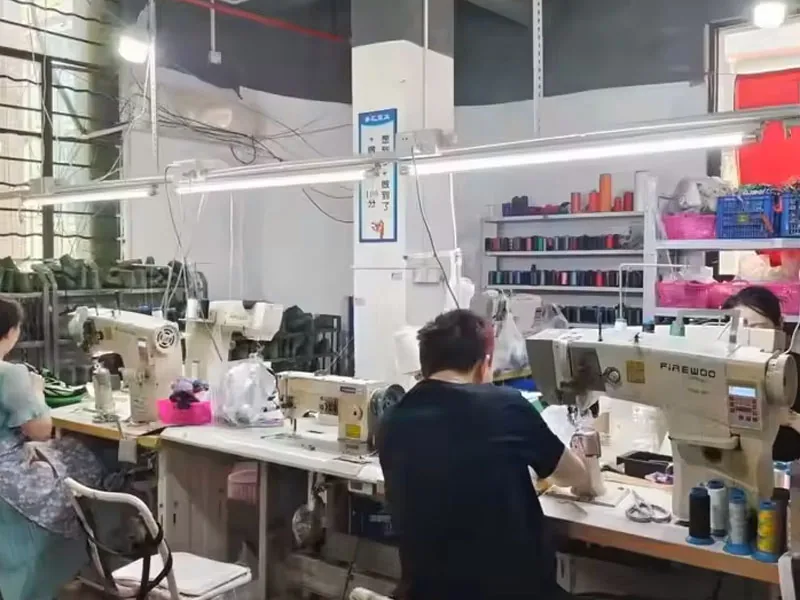
Image note: existing KEYTOP media provides project context only; it is not article-specific approval evidence.
Inspect Stitching Alignment and Symmetry
Start Inspect Stitching Alignment and Symmetry with evidence for sneaker lace eyelet stitching sample checks:
- Stitch density per inch on lace eyelet reinforcement: Deviations cause eyelet tearing under repeated lacing, leading to returns or field failure Compare supplier's written stitch count against the marked sample using a stitch gauge Approving bulk production with incorrect density creates sorting or rework costs Document the measured count and sample ID in the approval record before production release
- Thread type and color match to approved spec: Wrong thread affects durability and appearance; thread breaks during lacing Check the supplier's thread supplier certificate and compare to the RFQ material code Bulk thread substitution without approval leads to rework or discount claims Hold sample approval until the supplier confirms thread spec in writing
- Reinforcement placement behind each eyelet: Missing or shifted reinforcement causes eyelet pullout under tension Feel the backing layer through the eyelet hole and compare to the construction diagram Approving without verification results in field failure and chargebacks Request a cut-section photo of the eyelet area from the sample before sign-off
Use footwear products to align the related specifications and RFQ inputs.
Run Pull and Repeated-Lacing Sample Checks
The main failure mode in Run Pull and Repeated-Lacing Sample Checks is approving sneaker lace eyelet stitching sample checks before the supplier has resolved the listed evidence gaps.
- Supplier cannot demonstrate a pull-test method for eyelet stitching. Without a verified pull-test method, stitch or eyelet detachment may occur during lacing, leading to returns and brand damage.
- Stitch density on the physical sample differs from the approved spec revision. Inconsistent stitch density weakens eyelet reinforcement, causing lace tears or misalignment in bulk. Compare the sample's stitch count per inch against the spec revision and RFQ, and flag any deviation.
- Supplier QC plan references a different spec revision than the approved sample. Using the wrong revision can cause bulk production to match outdated specs, leading to rework and schedule delays.
- No documented approval owner or sample ID for the eyelet stitching check. Without an owner, responsibility for reconciling sample against spec is unclear, risking approval drift.
Additional RFQ items include supplier cannot provide a repeated-lacing test sample or evidence of durability. Eyelet stitching may fail under repeated lacing, causing field failures and customer complaints. Request a repeated-lacing test sample or report that simulates typical use cycles.
Use OEM and ODM footwear manufacturing to align the sample and production handoff.
Record Approved Details for Bulk Inspection
Open with the proof: the approved sample tag must carry the RFQ-confirmed stitch count and eyelet reinforcement spec. Without this record, bulk production cannot be verified against the buyer’s requirements.
Use this practical checklist during sample handoff:
- Confirm the stitch count per inch matches the RFQ-confirmed value (not a fixed number, but the buyer’s stated requirement).
- Verify eyelet reinforcement type (e.g., metal ring, plastic insert, or stitched buttonhole) as per the approved tech pack.
- Measure the eyelet inner diameter against the buyer’s specified dimension (not a preset size, but the RFQ-confirmed measurement).
- Check that the lacing configuration (e.g., number of eyelets, spacing) aligns with the sample approval form.
Additional RFQ items include ensure the sample tag includes the supplier’s reference, date, and buyer’s sign-off.
During bulk inspection, the factory must use this recorded data to set up machines and verify first-piece output. A mismatch between the approved sample and bulk production increases rework cost and delays shipment. The KEYTOP editorial team writes B2B footwear sourcing guides from approved company facts, and brand capability relevant to this topic: casual sneakers. For more on our process, see KEYTOP factory.
Conclusion: Release the Order Only After the Evidence Matches the Approved Sample
The final approval for sneaker lace eyelet stitching sample checks depends on matching the physical sample to the approved specification and RFQ. Before releasing the order, compare the supplier’s written confirmation of stitch density, thread type, eyelet count, and reinforcement placement against the marked sample. Verify that the supplier’s QC plan references the correct spec revision, and request a pull-test report if the supplier cites a method such as SATRA TM174. Document the sample ID, spec revision, material codes, and approval owner under one controlled baseline. Confirm MOQ and order quantity by color, width, artwork, and packing route to ensure the production handoff matches the approved evidence.
To request a quote, visit casual sneakers products and confirm the final specification, quote assumptions, sample approval, QC evidence, approval risk, and supplier follow-up before bulk order.
Sneaker Lace Eyelet and Stitching Sample Checks FAQ
What should buyers verify before approving sneaker lace eyelet stitching sample checks?
Only if the physical sample tag carries the RFQ-confirmed stitch count, thread type, eyelet count, and reinforcement placement. Compare the supplier’s written confirmation against the marked sample and the approved specification. Verify that the supplier’s QC plan references the correct spec revision, and request a pull-test report if the supplier cites a method such as SATRA TM174. Document the sample ID, spec revision, material codes, and approval owner under one controlled baseline. If any evidence conflicts, hold the sample or production release until the supplier explains the deviation in writing. Confirm MOQ and order quantity by color, width, artwork, and packing route.
Does the MOQ match sourcing and production conditions?
Confirm the MOQ per style, colorway, size run, material, packaging, and production schedule. For example, a baseline MOQ of 1,000 pairs per category may apply, but the buyer should verify the exact number in the RFQ. Sample lead time typically starts after the buyer confirms usable specs, and bulk production lead time begins after sample approval and production slot confirmation. Shortlist suppliers that provide written confirmation of these conditions in the quote, and verify that the order quantity matches the approved sample evidence before releasing the purchase order.
Poll: Do you lace up you shoes over or under the eyelets?
This question is not relevant to B2B sneaker lace eyelet stitching sample checks. For procurement, focus on verifying the eyelet configuration, stitch density, and reinforcement placement against the approved specification and RFQ. The buyer should document the lacing method as part of the fastening configuration in the tech pack, and confirm that the supplier’s sample matches that configuration before approving bulk production.
RFQ handoff: For sneaker lace eyelet stitching sample checks, share product size, material, artwork, quantity, sample need, packing method, and deadline so the RFQ can be reviewed before sample approval. Send Specs for Review.
Source check: ISO 2859-1 sampling inspection standard; Footwear Inspection: Complete Guide to Quality Control and Insp…. For the Sneaker Lace Eyelet and Stitching Sample Approval decision, use these research sources as context, then record the project-specific acceptance rule, evidence owner, and approval step in the RFQ or quality file.