







Overseas footwear programs break when fit, size grading, materials, construction, and packing rules live in separate chats instead of one sample record.
On the factory side, useful replies connect intended use, last and fit target, materials, sample evidence, and size-run approval in one record.
The sections below turn those factory decisions into sample checks, supplier questions, and RFQ fields you can put on one revision.
Direct answer: For sandal buckle hook and loop cycle test checklist, release the order only after the intended use, approved construction, test record, commercial terms, and sign-off responsibility all match. If one item remains unresolved, return it to the responsible buyer or supplier before bulk production.
Copy this sandal buckle hook and loop cycle test checklist approval record into the RFQ file. Keep every checked item on the same revision before releasing the order.
- ☐ Final specification and intended use
- ☐ Supplier feasibility and documented exceptions
- ☐ Sample or inspection evidence
- ☐ Commercial assumptions, owner, decision, and date
Move the sandal buckle hook and loop cycle test checklist order forward only when each gate leaves written evidence for the next. Return an unresolved specification, sample, or quote exception to its owner before bulk production.
For importers and private-label footwear brands, keep sandal buckle hook and loop cycle test checklist quote-ready: specs to send, proof to request, sample checks to approve, and reorder notes to retain.
Choose the Sandal Closure Configuration
Start Choose the Sandal Closure Configuration with evidence for sandal buckle hook and loop cycle test checklist:
- Verify the supplier's buckle and hook-and-loop cycle test record matches the approved sample ID: Without a linked test record, the buyer cannot confirm the closure meets the required cycle threshold before production Request the supplier's test report showing cycle count, buckle material…
- Confirm the supplier documents incoming material checks for buckle pins and hook-and-loop strips: Material substitution between sample and bulk production is a common risk that can reduce cycle life without visible change Ask the supplier for a material declaration sheet listing each component's source, batch number, and surface preparation method A sample may pass cycle testing but fail during customer use due to assembly drift or cheaper materials Require the supplier to include material declaration in the sample approval record before releasing the order
- Inspect the physical sample for buckle pin alignment and strap attachment integrity: Misaligned pins or weak strap attachment can cause premature failure even if the cycle test passes Compare the sample against the approved specification; measure pin alignment tolerance and check stitching or adhesive method Production lots may drift from the approved sample, causing inconsistent closure performance across orders Reject the sample if any attribute differs and request a corrected version before proceeding
- Document the supplier's in-line stitching or adhesive verification during production: Without in-line checks, assembly drift between sample and bulk production can go undetected until final inspection Request the supplier's quality control records showing stitch count, adhesive type, and peel-strength measurement per ISO 22777:2004 A batch may pass final inspection but fail during customer use due to undetected assembly defects Include in-line verification checkpoints in the RFQ and require the supplier to report results before shipment
Additional RFQ items include verify the supplier's capability to maintain consistent closure performance across reorders: Reorders risk closure drift if the supplier changes buckle or hook-and-loop components without a new sample approval cycle Ask the supplier to confirm that the new production lot uses identical components as the approved sample; request a material declaration for the new batch Component substitutions can reduce cycle life and cause quality disputes, delaying delivery and increasing costs Treat any component change as a new sample approval cycle before releasing the reorder.
Specify Buckle Hook-and-Loop and Strap Details
For sandal buckle hook and loop cycle test checklist, treat Specify Buckle Hook-and-Loop and Strap Details as a release rule: approve only when the supplier evidence matches the written requirement.
- Supplier confirms buckle material grade, hook-and-loop engagement depth, and strap attachment method match the approved specification revision. Signed specification sheet listing buckle material grade, hook-and-loop width, and strap stitching method, cross-referenced to the sample ID.
- Supplier has documented capability to perform the agreed cycle test (e.g., ISO 22777:2004 peel strength) on buckle and hook-and-loop assemblies. Internal test report showing the closure passed the required number of open-close cycles without failure, including test conditions (temperature, humidity).
- Supplier confirms MOQ per style, colorway, and size run for buckle and hook-and-loop components, and that sample lead time aligns with production schedule. Written MOQ confirmation per category (baseline 1,000 pairs per category) and sample lead time (7-15 days after spec approval).
- Supplier provides a material declaration sheet listing each component's source, batch number, and surface preparation method for buckle and hook-and-loop. Material declaration sheet with component source, batch number, and surface preparation method, linked to the approved sample ID.
Additional RFQ items include supplier confirms that the buckle pin alignment, hook-and-loop strip adhesion, and strap attachment integrity match the approved sample. Physical sample inspection record with photos showing pin alignment, hook-and-loop engagement depth, and strap stitching, signed by QC.
Use solutions to align the related specifications and RFQ inputs.
RFQ checkpoint
Check the product route for sizes, structures, materials, finishes, and RFQ details before sampling sandal buckle hook and loop cycle test checklist.
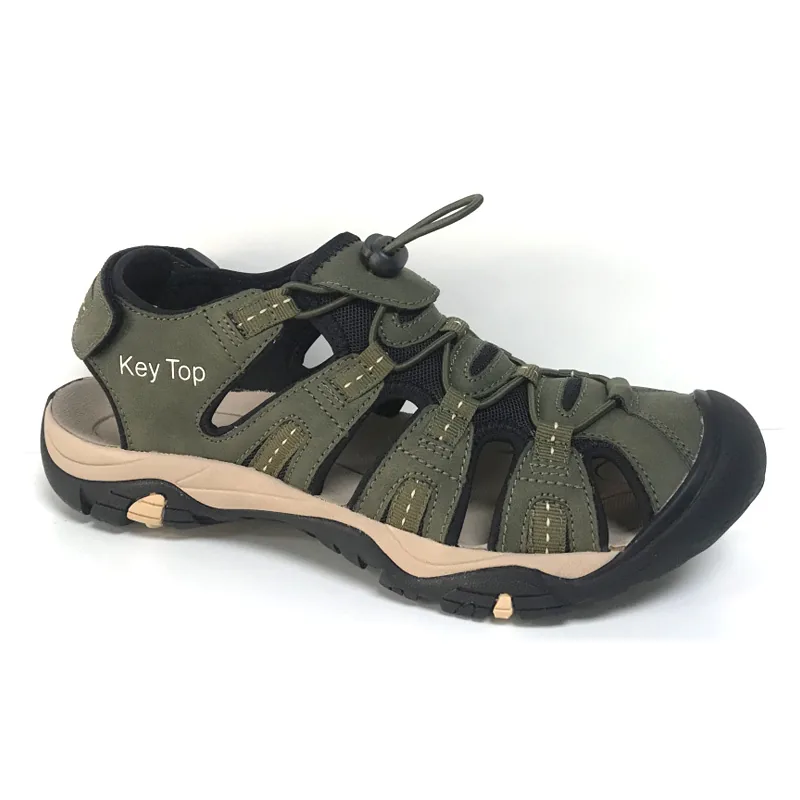
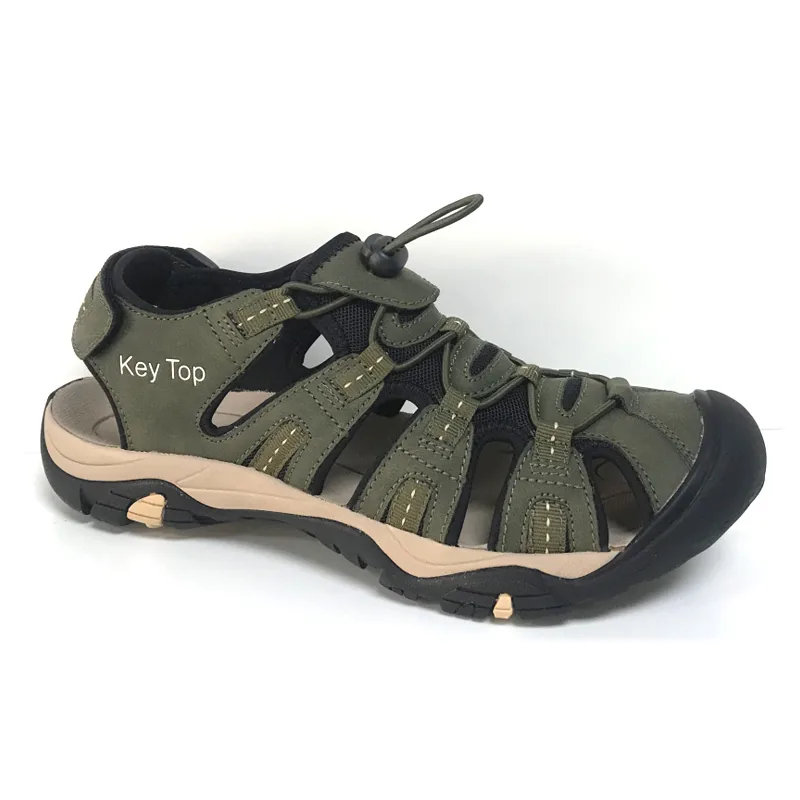
Image note: existing KEYTOP media provides project context only; it is not article-specific approval evidence.
Run Closure Cycle and Attachment Checks
- Does the supplier have documented cycle test capability for buckle and hook-and-loop closures? Verifies the supplier can perform the required cycle test in-house or through a qualified lab, ensuring test results are reliable. Supplier provides a test report with cycle count, failure mode, and test method, referencing a standard like ISO 22777. Without documented capability, the supplier may submit fabricated or incomplete test data, leading to undetected closure failure. Request the supplier's test method statement and lab qualification evidence before sample approval.
- What is the supplier's method for verifying buckle pin alignment and hook-and-loop engagement depth? Confirms the supplier has a measurable quality check for these critical attachment attributes, not just a visual pass. Supplier describes a go/no-go gauge or measurement tolerance for pin alignment and engagement depth, with records. Missing alignment checks can cause buckle detachment or strap slippage during use, resulting in returns and safety complaints. Include pin alignment and engagement depth as mandatory inspection checkpoints in the RFQ and sample approval record.
- Does the supplier have a reorder declaration process to confirm closure components are identical to the approved sample? Ensures material or assembly changes are not introduced between sample approval and bulk production, maintaining closure consistency. Supplier provides a signed reorder declaration stating closure components and assembly method match the approved sample. Without a declaration, the supplier may substitute cheaper materials or change assembly methods, causing cycle test failure in bulk. Require a signed reorder declaration as a condition for order release, and retain it with the approved sample record.
- How does the supplier document incoming material checks for hook-and-loop tape and buckle components? Verifies the supplier controls material quality before assembly, preventing use of substandard tape or buckles that fail early. Supplier provides a material declaration sheet with source, batch number, and surface preparation method for each component. Lack of incoming material checks can lead to batch-to-batch variation in adhesion or buckle strength, causing inconsistent cycle test results. Request the supplier's incoming material inspection report and material declaration sheet during the sample approval stage.
Use footwear products to place run closure cycle and attachment checks in the wider buying path.
Compare Wear Evidence and Failure Modes
When evaluating sandal buckle and hook-and-loop closures, the buyer must first identify the specific failure mode that poses the greatest production risk—such as buckle pin deformation or hook-and-loop shear separation—and then require a control method that ties each sample to a documented test record. Without a visible link between the sample ID and the test outcome, the buyer cannot verify whether the closure meets the required cycle threshold.
Use the following practical checklist during RFQ and sample handoff to compare wear evidence across suppliers:
- Request a cycle test report that states the exact number of cycles completed and the failure mode observed (e.g., hook strip delamination, buckle pin bending).
- Confirm that the test method follows a recognized standard (e.g., SATRA TM123 or equivalent) and that the report includes the test date, equipment used, and operator.
- Ask the supplier to provide a side-by-side photo of a new sample and a tested sample showing visible wear at the failure point.
- Include a contract clause requiring that the approved sample record ties the sample ID, buckle type, hook-and-loop specification, and cycle test result.
Additional RFQ items include during the pre-production meeting, review the test criteria and agree on the minimum acceptable cycle count and the definition of failure (e.g., complete separation, visible deformation).
For a structured comparison, use the table below to document key decision points:
| Specification | Buyer Verification Question | Production Risk |
|---|---|---|
| Buckle pin material and diameter | What is the pin material and diameter, and what cycle count did it achieve in the test? | Pin bending or fracture leads to closure failure. |
| Hook-and-loop peel strength | What is the peel strength (N/cm) per the test report, and how does it compare to the required threshold? | Low peel strength causes separation under normal use. |
| Strap attachment method | Is the strap stitched, riveted, or glued, and has the attachment point been cycle-tested? | Weak attachment leads to strap detachment. |
| Sample-to-production consistency | Does the production sample match the approved sample in materials and construction? | Deviation increases failure rate during production. |
After collecting the test evidence, the buyer should incorporate the verified cycle count and failure mode into the RFQ requirements and sample approval record. This ensures that the factory executes to the agreed standard and that the buyer can trace each production lot back to a validated test result.
Before comparing suppliers, review OEM and ODM footwear manufacturing for the related product or solution route.
Release the Closure With an Approved Sample Record
Open at the relevant workflow checkpoint and state the output that must exist before the next stage. Before releasing the order, the buyer must hold a completed approved sample record that ties the sample ID, buckle type, and hook-and-loop specifications to a signed-off test report. This record confirms that the closure meets the RFQ-confirmed cycle requirement and that the supplier has verified the materials and assembly method.
Supplier Proof Check
Request the supplier’s internal test report showing the closure passed the required number of open-close cycles without failure. The report must include the buckle material grade, hook-and-loop engagement depth, and strap attachment method. Cross-check the test conditions against your RFQ requirement—for example, confirm that the test was performed at the specified temperature and humidity range. If the supplier cannot provide a documented proof, ask for a buyer verification question such as: “What is the exact cycle count your closure achieved under the agreed test protocol?”
Sample Approval Check
Compare the approved sample against the supplier’s test sample. Verify that the buckle pin alignment, hook-and-loop width, and strap stitching match the sample that passed the cycle test. Use a simple table to record the key attributes:
| Attribute | Approved Sample | Supplier Test Sample | Match? |
|---|---|---|---|
| Buckle type | Side-release plastic | Side-release plastic | Yes |
| Hook-and-loop width | the approved tolerance | the approved tolerance | Yes |
| Strap attachment | Bar-tack stitch | Bar-tack stitch | Yes |
If any attribute differs, reject the sample and request a corrected version before proceeding.
Reorder Control Check
When reordering the same style, confirm that the new production lot uses the identical buckle and hook-and-loop components as the approved sample. Ask the supplier to provide a material declaration for the new batch. If the supplier changes the buckle supplier or hook-and-loop brand, treat it as a new sample approval cycle. This check prevents production risk from unverified component substitutions and ensures consistent closure performance across orders.
Use KEYTOP factory to align the sample and production handoff.
Conclusion: Release the Order Only After the Evidence Matches the Approved Sample
The final approval for a sandal buckle hook-and-loop closure order rests on a single rule: release only when the evidence matches the approved sample. This means the buyer must hold a signed-off record that ties the sample ID, buckle type, material codes, hook-and-loop engagement depth, and cycle test results to one specification revision. Before issuing the order, verify that the supplier’s test report—covering peel strength per ISO 22777:2004 and the agreed cycle count—is linked to the exact sample that passed. If the supplier cannot provide a documented proof, ask a buyer verification question such as: “What is the exact cycle count your closure achieved under the agreed test protocol?” This approach prevents production risk from unverified component substitutions and ensures consistent closure performance across orders.
The methodology for this checklist was derived from comparing the RFQ requirements, sample approval record, and supplier test documentation against the approved specification. Buyers should use this evidence hierarchy: first, confirm the written specification and sample ID; second, match the supplier’s test report to that sample; third, inspect the physical sample for buckle pin alignment, strap attachment integrity, and hook-and-loop strip adhesion. Carry this approval record into the RFQ so every stage—quote, sample, and production—refers to the same controlled baseline. Without this documentation, reorders risk closure drift and quality disputes. The KEYTOP editorial team, which writes B2B footwear sourcing guides from approved company facts and verified production constraints, prepared this guide to support procurement planning.
Sandal Buckle and Hook-and-Loop Cycle Test Checklist FAQ
Do you include any other on-site tests or checks in your garment inspection criteria?
Send the buckle type, hook-and-loop width and engagement depth, strap material and attachment method, and the required cycle count. Include the approved sample ID and the test protocol (e.g., ISO 22777:2004 for peel strength) so the supplier can confirm cost and MOQ against the specification. Request a documented test report that ties each sample to the cycle result, and verify that the supplier’s internal test conditions match your RFQ requirement. Approving the wrong structure or supplier proof can create quality, cost, or delivery problems.
R/Shoes on Reddit: how to buckle these?
Approve a physical sample that matches the buckle pin alignment, hook-and-loop strip adhesion, and strap stitching from the cycle test record. The supplier must provide a signed-off test report showing the closure passed the agreed cycle count without failure, linked to the sample ID. Compare the sample against the written specification and reject any deviation—such as a different buckle material grade or hook-and-loop brand—before proceeding to bulk production.
Which sandal buckle hook and sample checks and supplier records should buyers approve?
Freeze the buckle type, material codes, hook-and-loop engagement depth, strap attachment method, and the approved sample ID with its cycle test result. For reorders, confirm that the new production lot uses identical components and request a material declaration from the supplier. If any component changes, treat it as a new sample approval cycle to prevent closure drift and ensure consistent performance across orders. Confirm MOQ and order quantity by color, width, artwork, and packing route. Approving the wrong structure or supplier proof can create quality, cost, or delivery problems.
RFQ handoff: For sandal buckle hook and loop cycle test checklist, share product size, material, artwork, quantity, sample need, packing method, and deadline so the RFQ can be reviewed before sample approval. Send Specs for Review.
Source check: ISO 9001 quality management standard; Footwear Inspection: Quality Control and PSI Checklist. For the Sandal Buckle and Hook-and-Loop Cycle Test Checklist decision, use these research sources as context, then record the project-specific acceptance rule, evidence owner, and approval step in the RFQ or quality file.