
Bulk-shoe orders become difficult to quote when SKU count, size run, colorways, and carton allocation are held in separate assumptions. Lock one quantity matrix showing pairs by style, size, and color, then connect it to carton packing, tolerance, and sample approval before comparing suppliers.
This checklist helps sourcing teams reconcile that SKU matrix with factory capacity, QC checkpoints, carton labels, and reorder records before approving bulk production.
Direct answer: For bulk shoes, buyers should verify samples, materials, print, tolerances, certifications, and bulk-production risk.
What shoes inputs buyers should prepare for a quote
The buyer needs to decide which supplier or factory signals are strong enough for a bulk shoe supplier shortlist: what to confirm, what supplier proof to request, and which RFQ, sample, or approval step comes next.
- What types of footwear does your factory regularly produce, and what is your typical monthly capacity? Confirms the supplier’s experience with your product category (e.g., sports, hiking, casual) and whether they can handle your order volume. Supplier lists specific categories (e.g., sports shoes, hiking boots) and gives a capacity range that aligns with your order quantity. Risk of mismatched production capability leading to quality issues, delays, or inability to scale. Shortlist suppliers whose capability matches your product type and request a factory profile or production line photos.
- How do you verify material quality and production consistency before bulk shipment? Ensures the supplier has a systematic quality control process, not just final inspection. Supplier describes in-process checks (e.g., material testing, inline QC, random sampling) and offers third-party inspection options. Without verification, you may receive defective goods or inconsistent quality across the order. Request a copy of their QC checklist or standard operating procedure for your product type.
- What approvals or samples are required before you start bulk production, and what are the approval timelines? Avoids production starting without your sign-off, which could lock in undesirable specs or materials. Supplier provides a clear approval gate: sample approval, material confirmation, and packaging approval, each with a timeline. Starting production without approval can lead to costly rework or rejection of the entire batch. Define a written approval process with deadlines in your purchase agreement.
- What is your process for updating buyers during production, and how do you handle changes or delays? Establishes communication cadence and accountability for production milestones. Supplier offers regular updates (e.g., weekly reports, photos) and a clear change order procedure. Lack of updates causes surprises, missed deadlines, and strained relationships. Agree on reporting frequency and escalation contacts before order placement.
- What is your minimum order quantity per style, and does the proposed trial meet each style, color and size minimum? Confirms whether your planned order volume meets the supplier’s MOQ, and if a smaller run is possible for testing. Supplier states MOQ per style, color and size in writing (e.g., at KEYTOP, 1,000 pairs per style, per color and per size, with no mixing to reach it). A quantity below KEYTOP’s applicable family minimum cannot be accepted by mixing variants or adding a surcharge. Compare your order forecast against the MOQ and revise the program or quantity if a variant does not meet the confirmed minimum.
Which shoes assumptions change cost and timing
- Material specification compliance: Using wrong material grade increases cost and delays production when substitution is needed. Cross-check supplier material certificate against your approved spec sheet before production start. Bulk run may fail lab test or require costly rework. Approve material only after receiving third-party lab report matching spec.
- Size grading and fit tolerance: Incorrect size grading causes insole adjustments or rejected pairs, affecting cost and timeline. Measure sample size run using calibrated foot forms against your graded spec. Entire container may be off-spec for target market, leading to returns. Document acceptable fit deviation in inspection checklist and share with supplier.
- Sample approval risk: Skipping sample approval step often leads to expensive rework in bulk production. Require counter-sample that matches all approved conditions before bulk production. Full production may deviate from approved sample without detection. Hold production until counter-sample is signed off by buyer.
- Supplier lacks inline quality checks for casual shoes: Defects pass unnoticed until final inspection, causing rework and shipment delays. Require documented inline QC checkpoints at lasting, sole attachment, and final finish. Submit QC plan showing pass/fail thresholds per station for bulk orders. Validate QC plan during sample approval and before production start.
- Verification method relies on final visual inspection only: Hidden issues like adhesive failure or sizing drift are missed until too late. Insist on dimensional checks, peel test, and size grading during production. Request 3D measurement records and peel test results from last three bulk runs. Incorporate those verification steps into the pre-production sample sign-off.
- Approval risk: sample sign-off granted without confirming production materials: Sample materials may differ from bulk, leading to mismatched color, fit, or durability. Hold approval until bulk material certificates match the sample bill of materials. Request material supplier invoices and test reports for the exact production batch. Cross-check bulk material specs against approved sample before authorizing cutting.
- Buyer follow-up is inconsistent after sample approval: Production assumptions drift without periodic check-ins, causing last-minute surprises. Schedule weekly production status calls and review QC reports at key milestones. Ask for weekly photo updates of the production line and in-process inspection logs. Set a calendar with clear checkpoints: cutting, stitching, lasting, final assembly.
- Supplier capability not proven for your style complexity or volume: Inexperienced factories misjudge tooling, cycle time, or yield, blowing cost and timeline. Request a factory capability statement and references for similar casual shoes products. Collect photos of past runs, machine list, and lead time records for comparable orders. Verify those references via phone or email before committing to a bulk order.
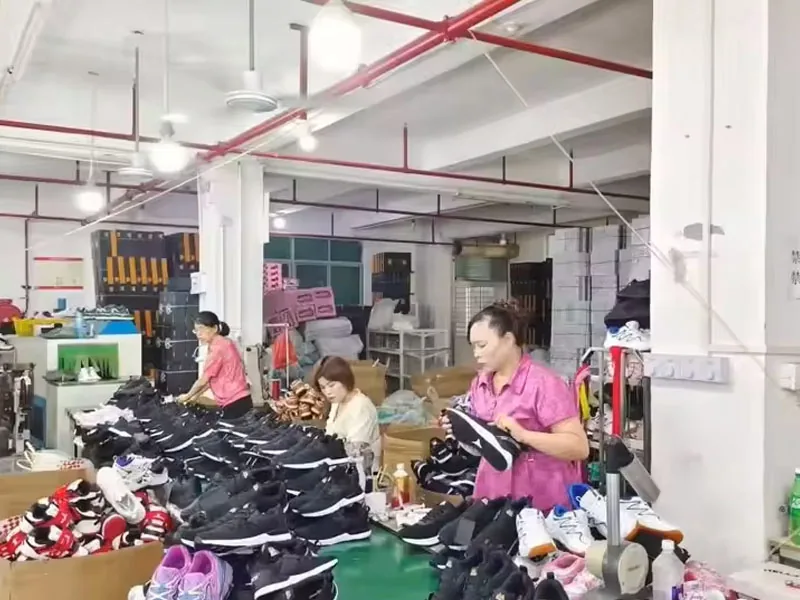
Which shoes quote assumptions must match
- Supplier can meet the specified size run and colorway breakdown for the bulk order. Production capacity sheet showing line allocation and daily output per style. Factory production planner or account manager. Order delays or partial shipments if capacity is overbooked. Verify the capacity sheet against your order volume and request a line reservation letter.
- Materials and components match the approved sample specifications. Material test report and supplier declaration of conformity for upper, outsole, and lining. Factory quality department or material supplier. Inconsistent product quality or failure in wear testing. Cross-check test report parameters against the sample approval record and request a bulk material sample.
- In-process and final inspection procedures are documented and followed. QC checklist with pass/fail criteria for each production stage and final inspection report. Factory quality control manager or third-party inspector. Defective goods shipped without detection. Review the checklist for your critical-to-quality attributes and schedule a mid-production inspection.
- Supplier has experience producing similar footwear sourcing solutions for comparable order volumes. Client reference list and photos of past bulk production runs for similar styles. Sales or account manager. Learning curve delays or quality issues with new construction methods. Contact at least two references and request a factory visit or video walkthrough of the production line.
How the shoes size run changes unit cost
When a buyer orders bulk shoes without a fixed size-run ratio, factories often default to a standard spread that may not match your market demand. This mismatch can inflate unit cost through wasted materials and extra labor for odd-size adjustments. The control is a size-run allocation checklist that locks in ratios before production.
Use this practical checklist to align cost and execution:
- Specs: Confirm size-run percentages (e.g., US 7–12) based on your sales data or regional norms.
- Cost or minimum order: Request a per-size cost breakdown; non-standard ratios may raise the minimum order per SKU.
- Production risk: Check that the factory can handle odd sizes without extra tooling charges.
- Factory execution: Require a signed size-run matrix in the work order to avoid last-minute changes.
- RFQ/sample handoff: Attach the matrix to the quote request and sample request to ensure cost accuracy.
For more on bulk shoe specifications, visit our OEM and ODM footwear manufacturing.
Which shoes shipment terms to fix in the RFQ
At this process checkpoint, the buyer must have a confirmed quote request that includes shipment terms, size-run ratios, and carton allocation rules before moving to production handoff. Without these fixed, a factory may default to a standard spread that does not match your market demand.
Decision criteria to confirm
- Verify that the quote request specifies the exact size-run ratio (e.g., 3:4:3 for small/medium/large) per SKU, not a generic average.
- Confirm carton allocation: how many pairs per carton and whether mixed SKUs are allowed in one carton.
- Define the shipment incoterm (e.g., FOB, CIF) and port of loading to avoid cost surprises.
RFQ details to send
- Ensure the quote request includes a line for “size-run breakdown” with buyer-approved percentages.
- Add a field for “carton mix rule” (e.g., no more than two sizes per carton).
- State the maximum carton weight and dimensions to fit your logistics constraints.
Production handoff details
- Before production starts, the factory must sign off on the size-run and carton allocation table.
- Include a clause that any deviation from the agreed allocation requires buyer written approval.
- Attach a sample packing list to the quote request as a template for the factory to follow.
Use this buyer worksheet for the shipment terms. The entries below are illustrative inputs, not supplier results or required defaults; replace them with the actual size, carton and shipping plan before approval:
| Term | Buyer Requirement | Factory Confirmation |
|---|---|---|
| Size allocation per style and color | 3:4:3 (S/M/L) | Yes / No |
| Pairs per carton | 12 pairs | Yes / No |
| Mixed SKUs per carton | Not allowed | Yes / No |
| Incoterm | FOB Xiamen or Shenzhen | Yes / No |
After the quote request is signed, the buyer should ask the factory to submit a pre-production sample with the exact carton allocation to verify compliance. This step reduces production risk and ensures the bulk shipment matches your order.
Source check: ISO 9001 quality management standard; 10 Questions Every Brand Should Ask Before Hiring a Shoe Manufa…; FinancialContent – 10 Questions Every Brand Should Ask Before H….
In conclusion
The final approval for a bulk shoe order rests on verifying that every specification, from size-run ratios to carton allocations, matches the approved sample and purchase order. Before you shortlist a supplier, check that their minimum order aligns with your order volume, confirm lead times against your production schedule, and document any allocation changes in writing to avoid costly deviations.
Compare the supplier’s quote request response against your confirmed requirements, and verify sample quality against the approved reference. By systematically checking these gates—specifications, cost, lead time, and QC proof—you reduce risk and ensure a smooth handoff from sample approval to bulk production.
Shoes FAQ
What should be checked when one SKU spans mixed carton packs?
When a single SKU is packed in mixed carton configurations, the buyer must verify that each carton’s content label matches the factory’s packing list exactly. Check that the size-run ratio per carton aligns with the overall order specification, and document any variance for approval before shipment.
A key approval risk is that mixed packs can hide short-shipped sizes or incorrect counts, so request a carton-by-carton breakdown from the supplier and compare it against your purchase order totals. Always ask for photos of sealed and open cartons during QC inspection to confirm labeling accuracy.
How can carton allocations be reconciled with purchase-order totals?
Reconcile carton allocations with purchase-order totals by requesting a detailed packing list from the factory that shows the quantity per carton per size. Cross-check this against your PO line items and flag each quantity mismatch and document any exception accepted in writing before shipment.
The buyer should also verify that the total carton count multiplied by the declared per-carton quantity equals the PO total, and ask for a sample carton label to ensure barcode and size data are correct. This step reduces the risk of receiving misallocated inventory that delays distribution.
Which allocation changes require buyer approval?
Any allocation change that alters the size-run ratio, colorway split, or total pair count per carton requires buyer approval before production. This includes shifting pairs between cartons to meet shipping constraints or adjusting pack configurations after the quote request is confirmed.
The buyer should document all approved changes in writing and request an updated packing list from the supplier. Without this approval, the buyer risks receiving shoes that do not match the intended retail or distribution plan, leading to costly rework or markdowns.
How should a factory handle a request using another brand’s identity?
KEYTOP accepts original design direction, authorized assets or a usable tech pack for the footwear manufacturing request. If another party’s brand identity appears in the brief, establish the buyer’s permission for the proposed use before development; do not treat a reference photo as authorization or as a request for a protected-brand copy.
Keep the relevant written permission with the artwork and order scope. A branded-stock wholesale request belongs to the appropriate authorized commercial channel, and this factory-production checklist does not establish that KEYTOP supplies that stock or can authenticate another brand’s goods.
What should buyers verify before approving shoes?
Before approving bulk shoes, the buyer reviews that the sample matches the approved specification for materials, construction, sizing, and color. Check that the factory has submitted a pre-production sample and that any QC test results, such as sole adhesion or material durability, are documented.
A critical approval risk is that production units may deviate from the approved sample, so request a mid-production inspection or a sealed sample from the first production run. Confirm the lead time and minimum order with the supplier, and ensure that all packaging and labeling requirements are met before issuing final approval.
quote request handoff: Send Specs for Review.