







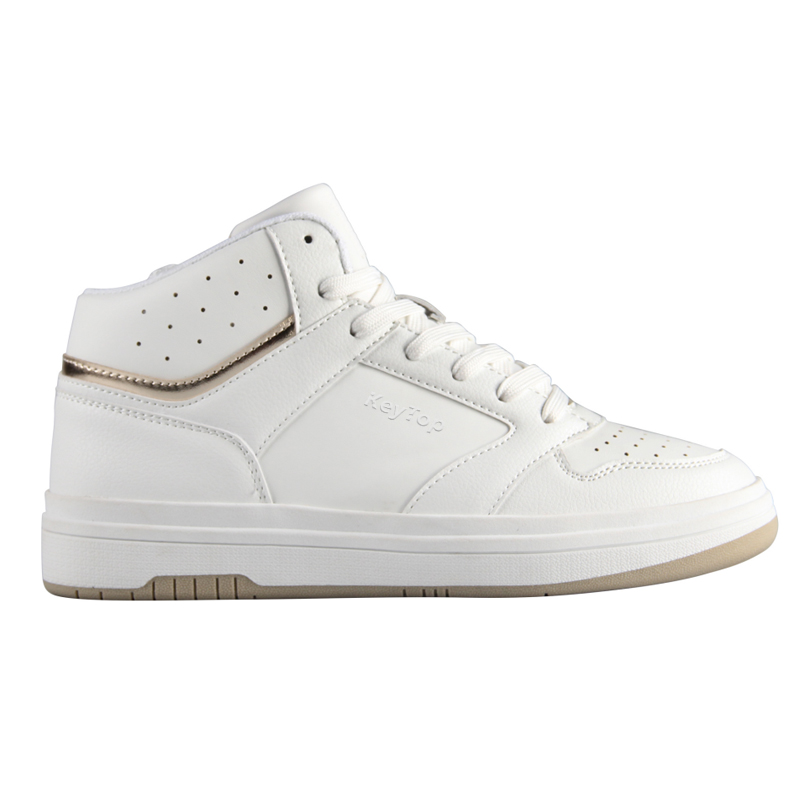
A custom sneaker quote is only reliable when the buyer has defined the parts that make the sneaker expensive.
One reference photo is not enough. Upper material, panel complexity, outsole direction, logo method, size run, packaging, sample revisions, and QC requirements can all change the quote. A low first number may only mean the factory made assumptions that the buyer has not reviewed.
For Keytop buyers, the practical decision is this: estimate custom sneaker cost by separating design choices from production assumptions before asking for a final quote.
Keytop’s documented sneaker range includes court sneakers, running-inspired lifestyle sneakers, chunky sneakers, knit/mesh sneakers, slip-on casual shoes, and canvas/vulcanized shoes. Keytop should be positioned for commercial lifestyle sneakers, not professional technical performance running, basketball, or football footwear. Confirmed commercial baselines include a 1,000-pair MOQ by category, 7-15 days for samples, 35-45 days for bulk production, and QC at incoming materials, in-line inspection, and final inspection before shipment.
This guide helps brand owners, retailers, and sourcing teams prepare a sneaker RFQ that lets factories quote on the same assumptions.
Quick Verdict: Sneaker Cost Changes When The Buyer Changes The Spec
The biggest custom sneaker cost drivers are upper material, outsole direction, logo method, packaging, MOQ structure, sample revisions, and QC scope.
If you want accurate pricing, do not ask “how much for this sneaker?” Ask the factory to price a defined sneaker plan. The plan should include sneaker type, material direction, outsole approach, logo surfaces, packaging, quantity, size run, target market, and timeline.
Use this fast decision table:
| Buyer decision | Lower-cost direction | Higher-cost direction | What to ask the factory |
|---|---|---|---|
| Upper material | Standard PU, canvas, mesh, textile options | Mixed panels, special textures, complex overlays | Which materials are normally available for this sneaker type? |
| Outsole | Existing outsole option | New outsole direction or custom mold review | Can an existing outsole meet the look? |
| Logo | Insole print or simple label | Emboss, deboss, upper mark, outsole branding, multi-surface branding | Which logo methods affect sample cost or timing? |
| Packaging | Standard box or simple carton mark | Custom shoebox, inserts, barcode, multiple packaging files | What packaging files are needed before bulk? |
| SKU plan | One style, controlled colorway, clear size run | Many colors, broad size run, mixed packaging | How does MOQ apply to this SKU plan? |
| Revision path | One clear sample approval round | Late material, logo, outsole, or packaging changes | Which changes require another sample? |
Cost control starts before sampling. Once the sample is already in progress, every unclear detail can become a revision.
Custom Sneaker Cost Breakdown Table
Use this table to prepare your internal budget and RFQ. It does not provide exact prices because exact pricing depends on the confirmed spec, order quantity, materials, and factory review.
| Cost bucket | What affects it | Buyer control action |
|---|---|---|
| Upper materials | PU, mesh, knit, canvas, textile, overlays, lining, trims | Choose target material direction before quote |
| Outsole | Existing sole option, new direction, thickness, visual profile | Ask whether existing tooling can support the design |
| Construction complexity | Panel count, stitching detail, layered upper, padding, reinforcement | Simplify first launch if budget is strict |
| Logo method | Insole print, woven label, tongue label, embossing, debossing, outsole mark | Lock logo surfaces before sampling |
| Packaging | Shoebox, barcode, insert, tissue, sticker, carton mark | Include packaging scope in first RFQ |
| MOQ and size run | Style count, color count, size ratio, order volume | Build SKU plan around realistic first-order quantity |
| Sample revisions | Material changes, logo changes, fit changes, outsole changes | Keep a dated sample revision record |
| QC and packing checks | Material check, in-line check, final inspection, carton review | Confirm inspection scope before deposit |
The buyer’s job is to decide which cost buckets are brand-critical and which can stay simple. For many first launches, visible branding and packaging matter more than a fully custom outsole.
Quote Preparation Checklist For Custom Sneaker Buyers
A quote-ready sneaker brief should let the factory understand the product without guessing.
Before contacting suppliers, prepare:
- Sneaker type: court, running-inspired lifestyle, chunky, knit/mesh, slip-on, canvas, or vulcanized direction.
- Reference material: tech pack, photos, existing sample, or product link.
- Upper direction: PU, mesh, textile, canvas, knit, or open to factory suggestion.
- Outsole direction: existing option acceptable, new look required, or to be discussed.
- Logo plan: insole, tongue, upper, outsole, label, box, carton, or insert.
- Packaging plan: standard box, custom box, polybag, barcode, carton mark, sticker, insert.
- Quantity plan: pairs by style, color, and size run.
- Market: Europe, North America, Australia & New Zealand, Middle East, South America, or other.
- Timeline: target sample date, launch date, or shipment window.
- Inspection needs: material check, in-line inspection, final inspection, packing review.
If any field is unknown, mark it as unknown. Do not let the factory guess silently. A good supplier can advise, but the buyer should know which assumptions are being used in the quote.
Send your product category, target quantity, logo scope, packaging needs, and delivery window. Keytop will review the project fit and confirm the next sampling step.
Decide Existing Components Versus New Development
Existing components can reduce cost and timing when the buyer’s design target allows flexibility.
For custom sneakers, the outsole is often the biggest decision. If the brand can use an existing outsole profile and focus customization on upper material, colorway, logo, insole, box, and carton, the first order is usually easier to manage. If the outsole shape is a core brand feature, the buyer should expect more development review before sample approval.
Use this decision matrix:
| Use existing components when… | Consider deeper custom development when… |
|---|---|
| You are testing a first market launch | The outsole or silhouette is core to brand identity |
| The target price is strict | Existing options cannot match the design |
| Speed to sample matters | The buyer has enough volume to justify development review |
| Brand difference comes from color, material, logo, and packaging | Retail channel requires a distinct construction |
| The buyer wants to reduce sample uncertainty | The design is already validated and needs a long-term program |
This does not mean existing components make the product generic. A controlled combination of upper material, color blocking, logo surfaces, insole print, packaging, and carton presentation can still create a strong private-label sneaker for ecommerce or retail.
Compare Sneaker Quotes On The Same Assumptions
Two sneaker quotes are not comparable unless the assumptions match.
One supplier may assume standard PU, existing outsole, basic insole logo, and standard box. Another may include mixed materials, upper logo, custom packaging, and more inspection detail. The higher quote may be more complete, not necessarily more expensive.
Use this quote comparison structure:
| Quote field | Supplier A | Supplier B | Buyer decision |
|---|---|---|---|
| Upper material | Stated / unclear | Stated / unclear | Ask for material sample or direction |
| Outsole | Existing / new / unclear | Existing / new / unclear | Confirm tooling or component assumption |
| Logo surfaces | Listed / vague | Listed / vague | Make logo scope equal |
| Packaging | Standard / custom / unclear | Standard / custom / unclear | Confirm box, barcode, carton mark |
| MOQ | By style/color/size? | By style/color/size? | Check if SKU plan is workable |
| Sample time | 7-15 baseline or other | 7-15 baseline or other | Ask when the clock starts |
| Bulk lead time | After sample approval? | After sample approval? | Confirm production-start trigger |
| QC checkpoints | Incoming, in-line, final? | Incoming, in-line, final? | Do not compare vague QC with defined QC |
If a quote is much lower, ask what it excludes. The missing item is often packaging, logo method, material assumption, outsole decision, sample revision, or inspection scope.
Control Sample Revisions Before They Control Cost
Sample revisions are normal. Uncontrolled revisions are expensive.
A buyer should decide which changes are essential before requesting another sample. A material change, logo method change, outsole direction change, packaging file change, or size-run change can each affect timing and cost.
Use a sample revision record with these fields:
- Sample version and date.
- What the sample was meant to prove.
- Approved items.
- Rejected items.
- Required changes.
- Whether a new sample is needed.
- Whether the change affects cost, MOQ, or lead time.
- Final approval owner.
For Keytop projects, treat the 7-15 day sample lead time as a baseline that needs order-level confirmation. Timing can change when materials, branding, outsole direction, packaging, or revisions are not finalized.
FAQs For Custom Sneaker Buyers
What makes custom sneakers more expensive?
Upper material, outsole direction, logo method, packaging, MOQ structure, size run, sample revisions, and QC scope are the main cost drivers. The more decisions are left open, the less reliable the first quote becomes.
Do I need a new outsole mold for custom sneakers?
Not always. Many buyers should first ask whether an existing outsole option can support the target look. New outsole development should be reviewed only after the buyer understands cost, timing, and volume implications.
What should I include in a custom sneaker RFQ?
Include sneaker type, reference photos or tech pack, upper material direction, outsole preference, logo surfaces, packaging needs, quantity, size run, target market, and delivery window.
How long does custom sneaker sampling take?
Keytop’s confirmed sample lead time is 7-15 days. The exact timeline depends on material availability, outsole direction, logo work, packaging files, and revision rounds.
Can Keytop make professional performance sneakers?
Keytop should be positioned for commercial lifestyle sneakers, not professional technical performance running, basketball, or football shoes. Buyers with performance claims need to confirm scope and proof requirements before proceeding.
Final Decision: Price The Real Sneaker, Not The Photo
A custom sneaker quote should be built from production assumptions, not just a reference image.
The buyer controls cost by defining the upper, outsole, logo, packaging, MOQ, sample approval, and QC expectations before quote comparison. That gives each factory the same order to price and helps the buyer avoid quote gaps that appear after sample work starts.
Send Keytop your sneaker type, reference images or tech pack, material direction, outsole preference, logo scope, packaging plan, size run, target quantity, and market. The team can review whether the project fits Keytop’s casual sneaker range and confirm the next sample step.