
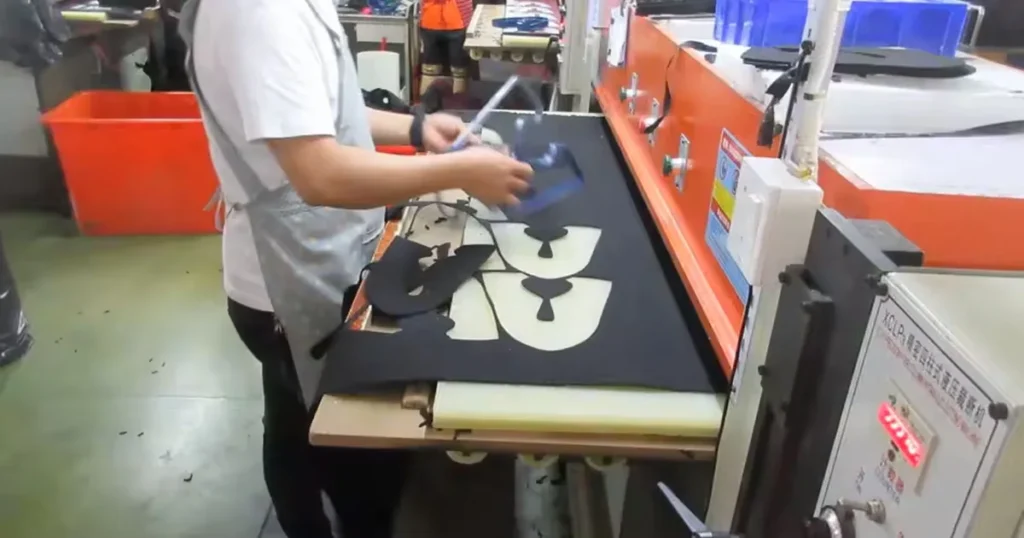
Shoe bonding test evidence needs a written specification before the buyer can verify samples, materials, print, tolerances, certifications, and bulk-production risk; otherwise suppliers may quote different product and approval assumptions. For lot-level acceptance, the scorecard’s sampling section follows ISO 2859-1 attributes sampling — the inputs and procedure are agreed separately, as described later in this guide.
Bonding strength is the one footwear property a buyer cannot judge by eye. It has to arrive as test records with named methods.
Direct answer: Approve shoe bonding test evidence only when the production-intent sample, test evidence, tolerances, and release record all refer to the same controlled revision.
Define the bonding construction and test scope
| Requirement | Factory control | Evidence to verify | Order risk | RFQ follow-up |
|---|---|---|---|---|
| Material / substrate | Upper, outsole, midsole, lining, adhesive family, and primer compatibility defined | Inspect material swatches; test peel on approved construction samples | Unapproved substrate substitution invalidates bonding evidence and quote assumptions | Request RFQ (request for quotation) with substrate matrix and adhesive control plan |
| Sample approval | Golden sample locks bonded area, process window, and acceptance criteria | Sample-approve retained pairs after peel testing and visual inspection | Production may follow an untested process despite sample signoff | Approve sample only with retained pair and test record |
| Width or size tolerance | Bond line width, lasted margin, and size grading tolerances specified | Measure bonded margins across size-set samples and record deviations | Tolerance drift can weaken adhesion on edge sizes | Ask for sample size set before supplier shortlist |
| Finish or color control | Color, texture, embossing, and coating exposure to adhesive confirmed | Inspect finish panels after bonding test and rub exposure | Finish migration can mask weak adhesion or cause visual rejection | Approve finish standard only after bonded sample review |
| Packing format | Packing method protects bonded zones from compression, heat, and moisture | Inspect trial packing and sample-test pairs after transit simulation | Poor packing can create apparent bonding failures during receiving inspection | Request RFQ packing basis and supplier follow-up on controls |
The comparison turns on whether the supplier can connect construction choices to a controlled test scope before commercial approval. A buyer should treat bonding evidence as usable only when it matches the intended materials, adhesive route, sample status, tolerance logic, finish handling, and packing exposure. Approval then becomes a sourcing gate, not a lab note. Confirm all commercial numbers, including order threshold and timing assumptions, in the written RFQ.
If the scope is loose, the next quotation may price a different construction from the one tested, leaving quality liability unclear when production issues appear. The buyer’s follow-up is to request a written RFQ package that links samples, test method, factory controls, and acceptance records. Shortlist suppliers that can keep those records traceable through sampling and bulk approval, and push supplier follow-up where evidence depends on assumptions.
Request supplier bonding evidence
The buyer needs to decide which supplier or factory signals are strong enough for a bonding-evidence shortlist: what to confirm, what supplier proof to request, and which RFQ, sample, or approval step comes next.
- What bond-test method does the supplier use for casual shoes products? Verifies the supplier has a repeatable, documented procedure for sole adhesion that matches your material stack. Supplier names a standard method (e.g., peel-strength test per SATRA TM411) and provides a written procedure. Without a defined method, bond results are not comparable across batches, risking delamination in the field. Request a copy of the written bond-test procedure and confirm it covers your upper and sole materials.
- Can the supplier share bond-test reports from the last three bulk runs of a similar construction? Confirms the supplier consistently achieves acceptable bond strength under production conditions, not just in a lab. Reports show pass results with peel-force values above your minimum threshold for each run. A single sample approval may not reflect production variability; hidden batch failures can cause returns. Compare the reported values against your specification and review failures, their corrective actions and the evidence from later runs; an undisclosed clean history is not a substitute for traceable records.
- What destructive bond-test plan is agreed for this lot? Identify the lot, construction and material pairings, then ask the testing provider to record the method edition, specimen preparation, conditioning and sample allocation. Retain the report identity, measured result and failure mode against the buyer-approved criterion. Keep this destructive-test plan separate from any attributes-sampling decision for the lot.
- Who performs the proposed adhesion test? Confirm whether a competent in-house or external laboratory can apply the method to this construction, identify specimens and conditions, and maintain relevant calibration records. An owned laboratory or annual third-party audit is not a universal qualification requirement. Check any claimed accreditation scope, reporting responsibility and the actual turnaround/cost before accepting the test plan.
- How does the supplier handle bond-test failures during production? Reveals the supplier's corrective action process and whether they will halt production to fix the root cause. Supplier has a documented non-conformance procedure that includes root-cause analysis and re-testing before shipment. Without a clear failure protocol, defective shoes may be shipped or reworked without your knowledge. Approve the non-conformance procedure in writing and require a failure report for any bond-test deviation.
- Supplier cannot provide a bond-test report from a recent bulk run of casual shoes products. Without a production-level bond test, the adhesive performance on your specific upper and sole materials is unverified, risking delamination in the field. Ask for the test report that matches your shoe construction type, not a generic lab sample. A written bond-test report with peel-strength values for the exact material combination you plan to use. Compare the reported values against your minimum acceptable peel strength before shortlisting.
- Supplier uses a different adhesive or primer than what was tested in the submitted bond report. Adhesive chemistry changes directly affect bond durability; a report for one system does not guarantee performance for another. Request a new bond test using the exact adhesive, primer, and curing cycle specified for your order. A signed material declaration listing the adhesive brand, type, and application method used in the test. Verify the declared materials match your approved specification before sample approval.
- Supplier's bond-test sample was prepared in a lab, not on the production line. Laboratory and production samples can have different preparation and conditioning; identify the actual sample origin before applying its result to the order. Ask whether the test sample was cut from a production run or a hand-made lab piece. A dated production record or batch number linking the test sample to a specific bulk run. If lab-only, require a new test from the first production trial before approving the order.
- Supplier cannot show a documented bond-test procedure or standard they follow. Without a repeatable method, you cannot compare results across batches or verify that the test meets your quality requirements. Ask for the written procedure, including sample preparation, conditioning, and test speed. A copy of the supplier's internal bond-test work instruction or the standard they reference. Ask the laboratory to confirm that the selected method edition applies to this completed construction and record the agreed specimen preparation and assessment criterion. The public SATRA TM411 scope excludes narrow-strap sandals. Ask the laboratory to check the width cutoff in the selected method edition against the actual sandal construction before accepting the test plan.
Review evidence quality and exceptions
- Verify the supplier's bonding test report covers all upper-sole combinations in the order: A missing material pair may delaminate during wear, causing returns and chargebacks Cross-reference the test report's material list against the BOM (bill of materials) for each colorway Approving incomplete evidence leads to bond failure in one or more SKUs Request a supplemental test for any omitted upper-sole combination before sample sign-off
- Document the test method and standard cited in the supplier's evidence: If method applicability, units or acceptance criteria are unclear, keep the result unresolved until the technical reviewer confirms the basis; a non-standard method is not automatically void for every audit Check that the report names a recognized standard (e.g., SATRA TM411) and lists peel-force values Ambiguous test methods block pass/fail decisions and delay production scheduling Shortlist only suppliers whose reports include a named standard and measurable results
- Check for red flags that require retesting before bulk approval: Batches with different adhesive lots or cure times may not match the original test performance Compare the test report's adhesive batch number, cure time, and substrate preparation notes against production specs Approving a bond test from a different production run risks full-batch delamination Require a new bond test from the actual bulk material lot before releasing production
- Compare the supplier's bond-test capability against your order volume and lead time: A supplier that cannot test every material combination within your schedule creates a bottleneck Ask the supplier how many bond tests they can run per day and whether they have in-house lab equipment Testing delays push back sample approval and bulk production start dates Document the supplier's test capacity in the quote request and confirm it fits your timeline
- Supplier has a documented bond test procedure for each upper and sole combination: Written bond test report from the last bulk run that includes peel strength values and adhesive batch number Supplier quality or lab manager Without a documented procedure, bond failure may not be caught until finished goods arrive Verify the report covers the exact upper material and sole compound you plan to use
- Bond test results fall within your agreed minimum peel strength threshold: Signed test report showing the peel result with its reported unit and specimen width and the pass/fail criteria used Supplier QC (quality control) or third-party lab Accepting results without a threshold means you cannot reject weak bonds later Compare the reported value against your specification sheet before approving the sample
- Supplier can retest when material or adhesive batch changes: A retest protocol that lists which changes trigger a new bond test and the turnaround time Supplier production or process engineer A change in adhesive batch can reduce bond strength without a retest Add a clause to your purchase order requiring a new test for any adhesive or upper material change
- Supplier has the equipment and staff to run bond tests in-house: Equipment list showing a peel tester or tensile machine and the last calibration certificate Supplier quality manager Outsourced testing adds lead time and may delay production if results are late Schedule a video walkthrough of the test area during your supplier evaluation
- Bond test reports are stored and traceable per production lot: Sample of a lot-specific test record with the date, operator name, and result Supplier document control or QA team Without lot traceability, a bond failure in the field cannot be linked back to a specific run Request a copy of the traceability system procedure and confirm it covers footwear sourcing solutions
Compare suppliers on bonding control
At the supplier comparison checkpoint, the output before sourcing moves to sampling should be a ranked evidence file: each factory’s bonding control method, test proof, quotation assumptions, and sample handoff duties are visible in one place.
- Ask each supplier to restate the quote request bonding specification, including material pairing, surface preparation, adhesive system, and the buyer’s acceptance question for the shoe bonding test.
- Compare process-risk controls: incoming material checks, operator instructions, curing or pressing records, and how nonconforming pairs are isolated before packing.
- For sports shoes, request evidence that the proposed control plan matches the outsole, upper, and wear-stress expectations of the approved sample.
- Before quote request-to-sample handoff, confirm who signs the test record, who stores the retained sample, and which change requests reopen bonding review.
If the supplier cites an International Standard or a single-side PUR adhesive for OEM (original equipment manufacturer) and ODM (original design manufacturer) footwear manufacturing, treat it as a verification cue, not approval by itself; the buyer still needs matching samples, visual evidence or reports, and a signed quote request record.
Lock bulk and reorder change control
- Verify material and adhesive substitution protocol: Approved upper, lining, adhesive, and sole compound specifications for each style Written substitution policy listing allowable alternative materials and bond-test pass/fail criteria Unapproved substitutions can cause bond failure or delamination in reorder runs Compare substitution list against original tech pack before bulk approval
- Confirm production lead-time scheduling for reorder change control: Reorder quantity and any material or colorway changes from initial bulk order Supplier-confirmed timing for material procurement, sample re-approval, and production slot Missing path-specific timing may delay delivery or force air freight costs Request written quotation with schedule milestones before locking reorder
- Inspect bond-test approval record for production consistency: Approved bond-test report from initial bulk run, including peel-strength values and adhesive batch Updated bond-test record for reorder materials, signed by QC manager Adhesive batch changes without retesting can weaken bond strength across colorways File approved record with tech pack and flag any deviation for buyer review
- Document MOQ and order quantity alignment for reorder: Confirmed reorder quantity per style, colorway, and size run Written confirmation that each style, color and size in the reorder meets the MOQ : KEYTOP casual sneakers, casual shoes, boots and outdoor footwear require 1,000 pairs per style, color and size, with no mixing. KEYTOP sandals, slippers and slides require 1,500 pairs per style, color and size, with no mixing Each style, color and size must meet the applicable KEYTOP minimum; adding a surcharge or assuming prior approval does not create an exception Verify MOQ condition in supplier quotation before issuing purchase order
- Schedule buyer follow-up inspection for reorder bulk run: Inspection criteria: bond strength, adhesive coverage, and visual defect tolerance Inspection date and QC checklist aligned to approved bond-test record Delayed inspection may miss bond defects that appear after production line changeover Confirm inspection date with supplier and share checklist before bulk start
Material and adhesive substitutions
When a reorder requires a different upper material or adhesive batch, the supplier must provide a written substitution policy with bond-test pass/fail criteria. This records which substitutions require renewed evaluation; it does not guarantee freedom from bond failure. Compare the substitution list against the original tech pack before approving bulk production.
Approval record for production
The approved bond-test report from the initial bulk run serves as the baseline for reorder quality. The supplier must update this record with new peel-strength values and adhesive batch details, signed by the QC manager. File the updated record with the tech pack and flag any deviation for buyer review. This supports comparison with the approved baseline; changed materials and process conditions still require evaluation and can introduce defects.
Method scope: SATRA TM411 sole-bond peel scope. Confirm the selected edition and construction applicability with the laboratory and retain the actual result. For lot sampling, separately agree the inputs and procedure described by ISO 2859-1 attributes sampling.
In conclusion
The final approval of a shoe bonding test supplier comes down to checking that the evidence you collected covers every stage from adhesive specification to production lot traceability. Compare each supplier’s documented matrix against your required test methods, peel strength thresholds, and substrate preparation records. Verify that the cost and MOQ commitments align with the bonding quality you need, and that the supplier’s lead time allows for sample approval before bulk production. Shortlist only those suppliers who provide complete, verifiable bonding test evidence and a clear evidence file, then request a quote to move forward with the most qualified partner.
To request a quote, visit footwear products and confirm the final specification, quote assumptions, sample approval, QC evidence, approval risk, and supplier follow-up before bulk order.
Shoe bonding evidence FAQ
Can one test cover every colorway?
Only if each colorway uses the same upper material, adhesive, and sole compound. A pigment change alone can alter surface energy and bond strength, so the buyer should shortlist only suppliers that offer colorway-specific bond test results or commit to testing each colorway during sample approval. Confirm the number of colorway tests required in the quote request and verify that the supplier documents the test method and peel value for each color.
What should buyers confirm before approval?
Buyers should confirm that the supplier provides a written bond test report specifying the test standard, sample construction, and peel force values, and that the report matches the exact upper-sole combination and adhesive used in the production order. Check the cost and minimum order impact if multiple colorways or material variations require separate tests, and verify the lead time for sample preparation and testing. Compare reports from shortlisted suppliers to identify risk in bond consistency, and request a physical sample for QC verification before approving the bulk run. Document the approved bond specification in the sample approval record so reorders remain traceable.
Next step: Send Specs for Review.