
The sourcing record for due diligence: product selection is incomplete until it confirms the right product type, structure, material, or specification.
Which factory fits depends on construction, not category. A cemented sneaker and a vulcanized one often need different production lines.
Direct answer: For due diligence: product selection, buyers should choose the right product type, structure, material, or specification.
Define the Buyer Requirement
Compare Define the Buyer Requirement for due diligence product against one RFQ revision. Each row should identify the requirement, approval evidence, and buyer action before production.
| Requirement | Factory control | Evidence to verify | Order risk | RFQ follow-up |
|---|---|---|---|---|
| Sample approval | Factory submits pre-production sample with spec sheet for dimensional, material, and construction check. | Measure sample against approved spec using calipers, weight scale, and color standard under buyer-approved viewing conditions. | Approving an unverified sample may lead to bulk shipment rejection due to hidden deviations in material or assembly. | Request pre-production sample with signed spec sheet; approve only after full dimensional and material match. |
| MOQ and order quantity | Factory confirms its MOQ in writing (for KEYTOP, 1,000 pairs per style, color and size for casual sneakers, casual shoes, boots and outdoor footwear, and 1,500 pairs per style, color and size for sandals, slippers and slides; styles, colors and sizes cannot be mixed to reach the minimum). | Check factory's MOQ policy in writing; confirm per-style breakdown and colorway split before RFQ submission. | A KEYTOP allocation below the applicable minimum is not an accepted order basis; revise the quantity or requested scope before seeking a production slot. | Document MOQ per style and colorway in RFQ; request written confirmation of size-run and packaging minimums. |
| Material / substrate | Factory sources substrate from approved tanneries or mills with material code and test report for each lot. | Request material data sheet and third-party test report for composition, thickness, and abrasion resistance. | Substituting unapproved substrate may compromise durability, colorfastness, or regulatory compliance. | Approve material code and test report before production; include substrate substitution clause in contract. |
| Width or size tolerance | Factory uses graded size molds and in-line measurement to hold width within the buyer-approved tolerance per size step. | Measure sample across size run using calibrated last or 3D scanner; compare to spec tolerance table. | Out-of-tolerance width may cause fit failures, returns, or brand reputation damage in retail channels. | Request size-run sample set; verify width tolerance per size before approving bulk production. |
| Finish or color control | Factory applies finish under controlled humidity and temperature; color is matched to approved standard under buyer-approved viewing conditions. | Use spectrophotometer to measure buyer-approved color tolerance against approved color chip; check finish adhesion via tape test. | Color drift or finish peeling in bulk may trigger chargebacks or markdowns from retail buyers. | Approve color standard and finish sample; request in-line color check report per production batch. |
For due diligence product, use Define the Buyer Requirement as the decision scope. Read the rows as one approval sequence. Start with sample approval; use the risk and buyer-action columns to decide whether its evidence is sufficient. Verify it with the inspection method and approval evidence recorded in the table.
For this due diligence product sourcing record, keep the supplier response, marked sample, and approval owner under the same revision number. If any proof conflicts with the approved record, hold the quote, sample, or production release until the supplier explains the deviation in writing. Before closing the checkpoint, reconcile the latest drawing, sample, quotation, and approval comments, identify which record controls if they disagree, and document the resolution. Carry the signed Define the Buyer Requirement table into the purchase order and production handoff so the same checks support quote comparison, sample approval, shipment release, and later reorders.
Compare the Available Routes
| Option | Best fit | Trade-off | Risk to avoid | Verification | Follow-up |
|---|---|---|---|---|---|
| Current specification | Matches existing production line setup at the factory. | Limited to materials and construction already in use. | Spec may not align with factory's verified production history. | Cross-reference spec against factory's production records. | Request production samples under current spec. |
| Alternative specification | Offers cost savings or faster lead time from available materials. | May require requalification and sample approval cycle. | Alternative could miss market or regulatory requirements. | Compare alternative spec against buyer's requirement checklist. | Submit alternative spec for factory feasibility review. |
| Custom option | Tailored to buyer's exact design and performance needs. | Longer development timeline and higher minimum order quantity. | Custom spec may not be manufacturable at scale. | Request engineering study and sample from the sample room. | Sign NDA and share detailed spec package for quotation. |
| Safer fallback | Proven standard spec already produced for other buyers. | Less differentiation in the market for footwear products. | Fallback may not satisfy target customer expectations. | Confirm factory has produced identical spec within last agreed validity window. | Request reference samples and production records for review. |
For current specification, a poor decision can mean spec may not align with factory's verified production history. Ask the supplier to cross-reference spec against factory's production records, then request production samples under current spec.
For due diligence product, preserve the current specification decision under one revision number: keep the supplier response, marked sample, approved specification, quotation, and approval owner together. If the evidence conflicts with the approved record, hold the quote, sample, or production release until the deviation is explained in writing. Carry that signed Compare the Available Routes record into the purchase order, production handoff, shipment release, and later reorder review so every team works from the same baseline.
Review the Required Proof
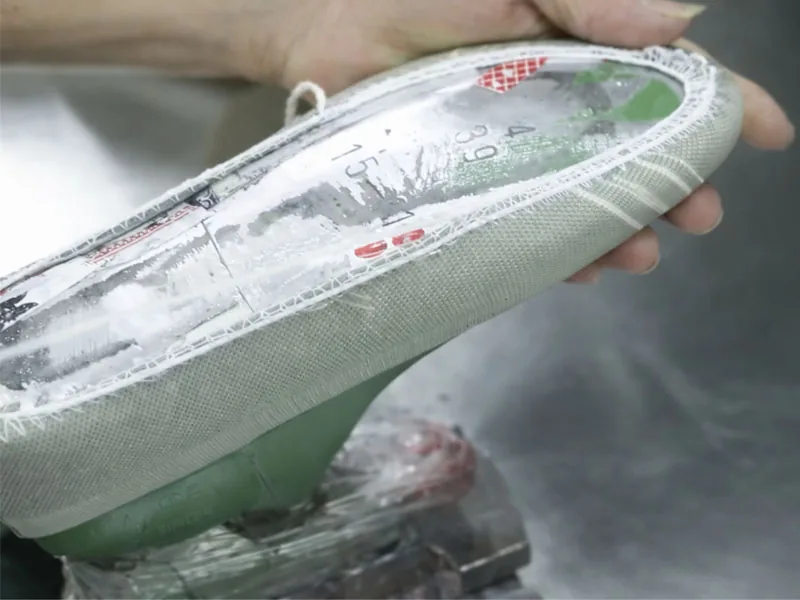
For casual sneakers products, start by confirming the factory’s spec sheet matches your RFQ revision. Request a sealed sample with a signed QC record, including material code, color standard, and size run. Verify packaging detail and production timeline are documented. Use this checklist to review proof:
- Spec sheet matches quote request revision (confirm material, color, size, packaging).
- Sealed sample with signed QC record (measurements, test results).
- Production timeline with milestones (sample approval, bulk start, shipment).
- Cost breakdown per unit (material, labor, overhead, profit).
- MOQ confirmed in writing.
After reviewing proof, assess production risk by asking: Does the factory have confirmed capability for your spec? If not, request a revised sample or alternative material. For quote request/sample handoff, ensure all documents are signed and dated. This step reduces risk of non-compliance and delays.
Build the Decision Asset
For private label footwear programs, the steps below turn the decision matrix into supplier proof: sample ownership, QC records, lead-time logic, and change-control responsibility.
Complete the decision matrix
Use this blank buyer record for each shortlisted supplier; it contains no supplier results or rankings. Enter the legal supplier identity, requirement revision and the actual evidence returned. Assess sample/specification match, comparable quotation scope, applicable MOQ, identified production records and dated responsibilities. Keep missing evidence open rather than filling a score from a brochure or assuming that one sample proves a future lot.
| Requirement | Supplier identity: buyer to enter | Evidence: buyer to enter | Decision: buyer to enter |
|---|---|---|---|
| Spec sheet match | Not entered | Actual RFQ revision, material/color/size and sample identity: not entered | Open |
| Cost per unit | Not entered | Dated quote and included/excluded scope: not entered | Open |
| MOQ basis | Not entered | Applicable style/color/size quantity breakdown: not entered | Open |
| Production risk | Not entered | Identified past lot, criteria and disposition: not entered | Open |
| Factory execution | Not entered | Named responsibility, dated sample and production milestones: not entered | Open |
Use this matrix as an approval sequence, not as a simple comparison. Each row must be verified with buyer verification questions, such as: ‘Can you provide a sample that matches the approved color standard and size run?’ or ‘What is your confirmed production timeline for this order?’ Only when all rows are completed and cross-checked against the quote request should you proceed to the next stage. This decision asset becomes the single source of truth for your final factory selection.
Prepare Comparable RFQ Inputs
- Does the factory have documented experience producing comparable footwear categories? Confirms that the supplier can handle the construction, materials, and assembly methods your product requires. A portfolio of past orders for similar styles, including references for the same sole type, upper material, and size run. Approving a factory without category experience leads to sample delays, material waste, and off-spec bulk production. Request three past order summaries with photos, order quantity, and any quality records before shortlisting.
- What is the factory's standard verification method for material and component compliance? Ensures that incoming materials meet your specified color, thickness, and performance requirements before cutting. A documented incoming inspection procedure with pass/fail criteria and a retained sample log for each batch. Without a verification method, out-of-spec materials enter production and cause rejection at final inspection. Ask for a copy of the most recent incoming inspection report for the material type you plan to specify.
- What is the approval gate for first-article samples before bulk production? Establishes a clear checkpoint where you sign off on fit, construction, and appearance before the factory commits to cutting. A written sample-approval process that includes a sign-off form, measurement report, and photo record for each sample. Skipping a formal approval gate allows the factory to proceed with unapproved samples, leading to costly rework or rejected goods. Require a sample-approval checklist in the quote request and confirm the factory will hold production until you issue written approval.
- How does the factory handle quality control during the production run? Verifies that inline checks catch defects early rather than relying solely on final inspection. Inline QC checks at cutting, stitching, lasting, and finishing stages with documented defect rates and corrective actions. A factory with only end-of-line QC may produce thousands of defective pairs before the problem is detected. Request a QC process flow chart and ask for the most recent inline inspection report for a similar order.
- What is the buyer's follow-up action after receiving the factory's quality documentation? Ensures that you act on the evidence provided rather than filing it without review. A clear plan to cross-check the factory's documentation against your own specifications and sample records. Failing to review documentation means you may approve a supplier whose actual output does not match the paperwork. Schedule a documentation review within three business days of receipt and flag any discrepancies to the factory immediately.
Lock specifications, quantities, and approval gates
Before sending an quote request, confirm the product specs, target MOQ, and approval milestones with the factory. Use KEYTOP to verify that the chosen style, colorway, size run, material, and packaging align with the supplier's production capabilities. Locking these inputs early prevents misalignment and rework during sample approval.
Source scope: ISO 2859-1 lot-sampling scope supports inspection-plan questions; it does not establish supplier MOQ, price, capability or the results in a buyer comparison record. Obtain those facts from the actual supplier quotation and identified records.
In conclusion
The final approval in factory due diligence rests on cross-referencing the product type against verified production lines, confirmed specification sheets, and the supplier’s documented quality controls. Before moving to sample approval, check that the factory’s MOQ aligns with your order volume and that the lead time window matches your procurement schedule. Compare the cost breakdown against the agreed spec, verify that the supplier can demonstrate system-enforced QA gates, and document each approval step. Only when these checks are complete should you shortlist the supplier and request a quote for the confirmed production run.
To request a quote for due diligence product, use KEYTOP factory to confirm the final specification, quote assumptions, sample approval, QC evidence, approval risk, and supplier follow-up before bulk order.
Frequently Asked Questions
How should a b2b buyer choose product type?
Only if you first shortlist product categories that match your target market and production capability. For each shortlisted category, check the factory’s specification sheet for material, size run, and construction method, then compare the cost and minimum order against your budget. Verify that the factory has recent experience producing that exact product type by requesting a sample and reviewing its QC record before you commit to a full order.
Which supplier proof should buyers request for shoe factory due diligence?
Request documented proof of the factory’s production capability for your specific shoe type, including a sample approval report and a QC checklist from a recent comparable order. Confirm the sample lead time—typically between 7 and 15 days after specs are confirmed—and ask for a cost breakdown that covers materials, tooling, and labor. To reduce supplier risk, also request a reference from a buyer who placed a similar order and verify the factory’s defect rate and on-time delivery record.
What should buyers lock before approving product selection checklist?
Before approving the product selection checklist, lock the final specification sheet with approved materials, colorways, size run, packaging, and artwork, then document the target minimum order and production lead time—typically 35 to 45 days after specifications, sample approval, material assumptions, packaging and production slot are confirmed. Compare the factory’s quoted cost per pair against your budget and confirm that the QC inspection plan covers in-line and final random checks. Finally, approve the sample and issue the quote request with a clear delivery schedule and payment terms.
quote request handoff: Send Specs for Review.